

Austrian Military Frontier
Austrian Military Frontier
German name
Austrian Military Frontier, Habsburg Military Frontier; obsolete terms: Military Frontier and Konfin
Names in other languages
Latin: Confinium militare; Bosnian/Croatian/Serbian: Војнакрајина/Vojna krajina; Hungarian: Katonai határőrvidék; Romanian: Graniţa militară
Etymology
Two factors gave rise to the name ‘Austrian Military Frontier’. On the one hand, the region’s geographical location on the outer border of the Habsburg Monarchy with the Ottoman Empire, making it a borderland; and on the other hand, the military-strategic tasks associated with the border region in terms of defence policy. The term is therefore based on the functionally intertwined components of ‘military’ and ‘border’.
Location and topography
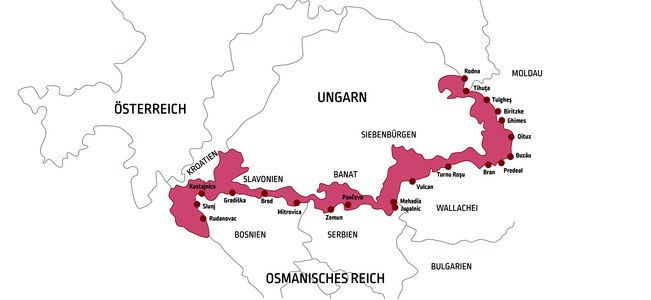
The Austrian Military Frontier was a historical administrative unit of the Habsburg Monarchy and , at the height of its expansion from the second half of the 18th century onwards, comprised a belt approximately 1,600 km long, stretching from the Adriatic Sea to the Carpathian Arc. The territory extended across parts of Croatia, Slavonia, Syrmia, the Banat and Transylvania, covering an area of approximately 50,000 km². The Military Frontier was topographically extremely diverse. In addition to the flat hinterland near the coast, it consisted of densely forested mountainous regions.
Historical Geography
The territory of the Austrian Military Frontier bordered the Ottoman Empire and the Venetian Overseas Empire. Together with the Habsburg Monarchy, these two powers formed the Triplex confinium. The region around Sichelburg (Žumberačka Gora), situated in what is now the Croatian-Slovenian border area, was regarded as the original territory of the Military Frontier. From around 1530, refugees from the Ottoman Empire – the Uskoks – were allocated settlement areas within this territory. Over the following nearly 250 years, this territory was expanded on a large scale on several occasions. Building on initial administrative structures, such as the creation of the Warasdin and Karlstadt Generalates in 1578, the region to the west was integrated to include Lika, whilst to the east it was extended to encompass the Slavonian Military Frontier along the Sava as far as Belgrade (Beograd), as well as the Banat and Transylvanian Military Frontiers. By 1881, the Austrian Military Frontier had been dissolved and the territory incorporated into the civil jurisdiction of the Habsburg Monarchy .
Nicknames
The Austrian Military Frontier is also known as the ‘epidemic cordon’ or ‘cordon sanitaire ’. This stems from the measures introduced in the 18th century to prevent the spread of epidemics within the Military Frontier. Occasionally, it is also referred to as the ‘Habsburg Limes’, in reference to the Roman Limes, the fortified border wall of the Roman Empire.
Population
The population of the Habsburg Military Frontier was colloquially referred to as ‘Grenzer’, ‘border soldiers’ or ‘defence farmers’. These Grenzer and their families formed a society with a structure unique in Europe. The communities settled there in the 16th century, primarily Orthodox Vlachs, were granted special privileges which laid the foundations for the developing society of border guards. In return for their willingness to perform military service to fortify the border, the settlers were granted tax-free land to cultivate. In the years that followed, these privileges (Statuta Valachorum 1630) were consolidated and, in parallel with the territorial expansion of the Military Frontier, extended to other population groups. The zadruga (household communion), a complexly structured South Slavic form of extended family, influenced the legal organisation of the Military Frontier in its later existence. This household structure is based on the principles of patrilineality, patrilocality and seniority.[1] This variant of a complex Military Frontier household—which was not always the dominant form—is characterised by the designation of a head of household, the pater familias. All male family members are related to him, subordinate to him, and remain within the jointly managed household (household communion) after marriage. With the exception of the head of the household, all these men were obliged to perform military service as part of a household communion. The Viennese court promoted a social order that did not envisage a civilian population in the border region. In the 18th century, however, the Viennese court was forced to make compromises. Consequently, mixed regimental districts emerged in Transylvania , comprising military border villages and civilian villages. A shortage of population led to several villages in the Banat military border section being settled by veterans and invalids. Around 1800, the population of the Military Frontier is estimated to have been around 824,000 people.[2] In 1803, the male population comprised 230,069 Orthodox, 184,259 Roman Catholics, 21,589 Uniates and 18,338 Protestants/Unitarians.[3] With the gradual dissolution of the Military Frontier, the social and family circumstances of the frontier families changed. Their social prestige as ‘the Emperor’s frontiersmen’ – and thus a defining feature of their identity – was lost. As the border guard community was henceforth subject to civil jurisdiction, the dissolution of the military border led in many places to the disappearance of the zadruga, which simultaneously meant a division of property and altered the basis of their income.
16th to 17th centuries: Free farmer and soldier
In the 16th century, the border region with the Ottoman Empire had been abandoned by its inhabitants and lay in ruins as a result of frequent armed conflicts. After the Ottomans had withdrawn, the Habsburg authorities began to repopulate the region. For reasons of security, the provincial estates within Austria (Carniola, Carinthia, Styria) were keen to have a well-fortified border to ward off the Ottomans; consequently, from 1578 onwards, they made enormous financial resources available for the expansion of border fortresses and defences. In order to cultivate the depopulated land and protect the border, incentives also had to be created for potential settlers. In accordance with the guiding principle ‘Free farmer and soldier’ (according to Karl Kaser)[4] these settlers were now granted tax-free land for their own use—as a kind of military fief—in return for performing unpaid military service along the border cordon. The military border system brought about a breakdown of the parallel early modern manorial structures in the region and afforded the border dwellers a certain degree of freedom within the otherwise impenetrable, restrictive social order, at the expense of the respective local landlords, albeit under military jurisdiction. The Croatian counties of Lika and Krbava, which had been largely absorbed into the Ottoman Sanjak of Lika in 1527, returned to Habsburg rule following the unsuccessful Ottoman siege of Vienna in 1683. Lika, which had been depopulated in the wake of the hostilities, was resettled in several waves and integrated into the Military Frontier in 1712. The Inner-Austrian Court War Council, based in Graz, assumed responsibility as the central administrative authority for the administration and maintenance of the military infrastructure and fortresses within the Military Frontier. This estates-based authority was also responsible for personnel matters, such as the appointment of company commanders. The latter were subordinate to the generals and comprised a military unit, which in turn consisted of border guards from several border villages. In 1705, the Inner-Austrian Court War Council was placed under the authority of the Vienna Court War Council, which subsequently gradually assumed overall supervision of all matters concerning the Austrian Military Frontier.
18th to 19th centuries: From defensive farmers to professional soldiers
With the conclusion of the Treaty of Peace and the Economic Treaty of Passarowitz (Serbian: Пожаревац / Požarevac) between the Sublime Porte and the Court of Vienna in 1718, contacts between the two adversaries intensified as a result of the accompanying improvement in diplomatic relations and economic conditions. In the ensuing period of economic recovery, the well-known – albeit now diminished – military threat posed by the Ottomans was replaced by a danger in the medical sphere. The Habsburg monarch Charles VI (1685–1740) saw the military as a means of implementing effective epidemic prevention right at the monarchy’s external border, within the Military Frontier. Both this circumstance and the desire to strengthen central authority in the face of local elites ultimately led, under Maria Theresa (1717–1780) to the territorial expansion of the Military Frontier, rather than its dissolution, as sought by local elites, particularly in Hungary and Croatia. Furthermore, since the 17th century, the system of a standing army – that is, the maintenance by the early modern state of an army permanently ready for deployment – had become established. This development had implications for the militiamen in the Military Frontier. Efforts to standardise imperial military power led to the complete militarisation of the Military Frontier territories and their border communities. The existing border units were reorganised into regiments to facilitate their incorporation into the Habsburg army; these were now subject to stricter military discipline and placed under the command of generals. The military border guards were subsequently frequently deployed on European theatres of war and constituted an important source of manpower for the army. From 1807 onwards, a uniform military border law (Grenzgrundgesetz) was intended to exert an even greater influence on border households, for example by prohibiting the division of household communities in order to make as many men as possible available for the border regiments. However, at least one male labourer (pater familias) had to continue to be allowed to remain in the household to provide for its economic needs. The reforms of 1848–49 brought about a significant paradigm shift in the social framework of the military border system. Following the emancipation of peasants in the civilian areas of the monarchy, civilian peasants were now also free, though without having to perform military service for their country in return. The demilitarisation of the border zone was further accelerated by national and economic interests.
Military history: Cordon Militaire
Duty at the Cordon Militaire, the monarchy’s external border, was the border guards’ primary task. They were required to patrol day and night between designated cordon posts along the external border in order to prevent threats and illegal border crossings. To carry out this duty at the border, the border guards had to leave their border villages and travel varying distances. From the 18th century onwards, their remit expanded to include, in addition to border and military operations, various duties for the common good of the regimental district and tasks in support of the regiment, such as the transport of regimental funds, weapons and ammunition, or acting as a draught animal team. The military administrative structure was now organised into regimental districts, including staff locations. The border soldiers themselves were organised into border infantry regiments, border hussar regiments or border dragoon regiments, which in turn were composed of companies or squadrons. Self-government in militarised villages took place under military supervision and was subject to military jurisdiction (judicum delegatum militare/mixtum), meaning that, for example, marriages or school attendance outside the military frontier were only permitted with the authorisation of the military authorities.
Disease prevention: cordon sanitaire
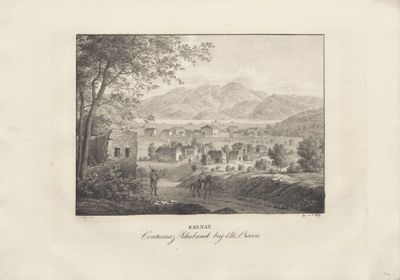
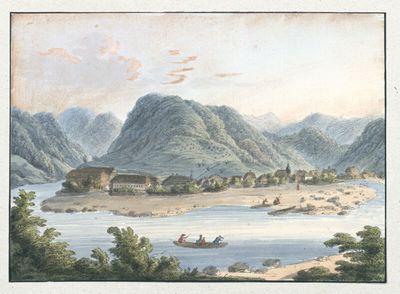
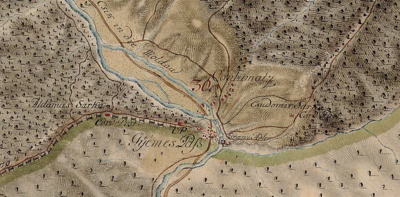
With the outbreak of bubonic plague (caused by the pathogen Yersinia pestis) in the Ottoman Empire , the cordon sanitaire was classified according to three levels of risk. During periods when there were no cases of the plague in European Turkey, the number of soldiers stood at approximately 4,000; approximately 7,000 men when there were cases of the plague in Constantinople, and approximately 11,000 men when there was a documented risk of the plague in the immediate border regions, such as the Danube principalities.[5] From 1807 onwards, the service was organised into four generalates.
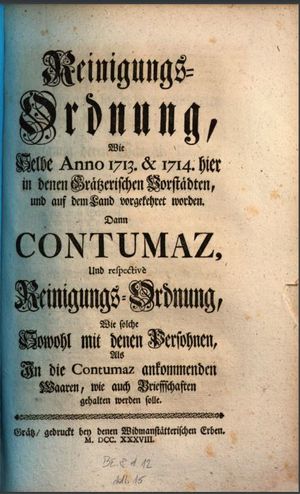
The Habsburg ‘cordon sanitaire’ had an impact on the whole of Europe. The constant patrolling by border guards along the outer frontier of the Monarchy formed the basis for the Vienna Court’s strategy to contain epidemics. In the area of the Military Frontier, a ‘medicalised border’ was to be established by the end of the 1730s, which remained an essential instrument for controlling infectious diseases within the Monarchy well into the 19th century. Economic relations with the Ottoman Empire , which had intensified since 1718, increased the epidemic threat to the Habsburg Monarchy. As a preventive measure, so-called ‘contumazen’ – that is, quarantine stations – were established at all key points of entry, becoming the focal points of medical control within the Austrian Military Frontier. All travellers, animals and goods were required to spend a specified period in quarantine (40, 28 or 21 days) at these facilities in order to enter the country legally. There, medical examinations were carried out in accordance with contemporary scientific understanding (miasma theory versus contagion theory), and hygiene measures such as ventilation, fumigation and washing were applied. Depending on the level of epidemic risk, the external border could be completely closed and all entries prevented. Successful completion of quarantine was documented with a health certificate, the ‘Sanitätsfede’. This complex and costly procedure was implemented by the cordon service of the border guards. In 1776, the Court War Council assumed overall supervision and control of the ‘Contumazen’ of the Austrian Military Frontier. The Habsburg preventive practices in the Military Frontier perfected the tried-and-tested measures of maritime quarantine (Venice, Trieste) by introducing land-based quarantines as permanent institutions. The military, as a human resource, and the Military Frontier, as a demarcated administrative area, provided the conditions necessary for a permanent sanitary cordon.
Memory and the culture of remembrance
Whilst Croats and Serbs had jointly defended the monarchy’s external borders under the umbrella of the Austrian Military Frontier as the Emperor’s border guards, a series of events overshadowed this past ‘shared’ history from a national perspective, causing the institution of the Military Frontier to fade from the collective memory. In the Krajina region, ethnic divisions arose during the Nazi era, when the Croatian Ustasha, instrumentalised by Adolf Hitler, persecuted Serbs in order to realise their goal of a ‘Serb-free’ Croatia. Towards the end of the 20th century, following the establishment of the Republic of Croatia, a territorial secession took place at the hands of Serbian insurgents, who declared an area known as the Republic of Serbian Krajina (Serbian: Република СрпскаКрајина/Republika Srpska Krajina) to be independent. Here, the term ‘Krajina’ was used as a shortened form of ‘Vojna Krajina ’. Large parts of this territory coincided with the older sections of the historic military border. The conflict was accompanied by ‘ethnic cleansing’, looting and massacres of the predominantly Croatian civilian population. Between 1991 and 1995, flight and expulsion were responsible for the repeated depopulation of the area
- Joseph Heinrich Benigni von Mildenberg: A Statistical Sketch of the Transylvanian Military Frontier. Hermannstadt 1834.
- Géza Dávid, Pál Fodor (eds.): Ottomans, Hungarians, and Habsburgs in Central Europe. The Military Confines in the Era of Ottoman Conquest. Leiden–Boston–Cologne 2000.
- Hannes Grandits: Family and Social Change in Rural Croatia (18th–20th Centuries). Vienna–Cologne–Weimar 2002.
- Hannes Grandits: Krajina. Historical Dimensions of the Conflict. In: East–West Counter-Information 2 (1995), pp. 31–35.
- Military History Museum (ed.): The Imperial-Royal Military Frontier. Essays on its History. Vienna 1973.
- Sandra Hirsch, Csaba Horváth, Angela Lumezeanu, Vlad Popovici: Digital Framework for the History of the Austrian Military Border in Transylvania. In: Studia UBB digitalia 64/2 (2019), pp. 5–53.
- Carl Bernhard von Hitzinger: Statistics of the Military Frontier of the Austrian Empire. An Attempt. 3 vols. Vienna 1817–1823.
- Ivana Horbec, Dubravko Habek: War Invalids and Disabled Soldiers in the Habsburg Army: The Case of the Đurđevac Regiment in 1860/61. In: RAD CASA – Medical Sciences 540, 48/49 (2019), pp. 86–91.
- Catherine Horel: Soldiers between National Fronts. The Dissolution of the Military Frontier and the Development of the Royal Hungarian Landwehr (Honvéd) in Croatia-Slavonia 1868–1914. Vienna 2009.
- Jelena Ilić Mandić: БАНАТСКА ВОЈНА KRAJINA (1764–1800) [Banatska vojna krajina (1764–1800)]. Belgrade 2020.
- Sabine Jesner: Habsburg borderland policy in the Transylvanian Military Frontier (1760–1830). Defence and prevention strategies. PhD thesis. Graz 2013.
- Sabine Jesner: Habsburg border quarantines until 1837. An epidemiological ‘iron curtain’? In: Sevasti Trubeta, Christian Promitzer, Paul Weindling (eds.): Medicalising borders. Selection, Containment and Quarantine since 1800. Manchester 2021. pp. 31–55.
- Karl Kaser: Free Peasant and Soldier. The Militarisation of Agrarian Society on the Croatian-Slavonian Military Frontier (1535–1881). Vienna 1997.
- Karl Kaser (ed.), Household and Family in the Balkans: Two Decades of Historical Family Research at the University of Graz. Vienna–Berlin 2012.
- Erna Lesky: The Austrian Plague Front on the Imperial-Royal Military Frontier. In: Saeculum 8 (1957), pp. 82–106.
- Drago Roksandić, Nataša Štefanec (eds.): Constructing Border Societies on the Triplex Confinium. Budapest 2000.
- Erik Roth: The Systematically Planned Settlements in the German Banat Military Frontier District 1765–1821. Munich 1988.
- František Vanicek: A Special History of the Military Frontier. Drawn from original sources and source works. 4 vols. Vienna 1875.
Notes
[1] Patrilineality refers to the succession of inheritance through the male line, from fathers to sons. The practice of moving into the husband’s household after marriage is known as patrilocality, and the concept of seniority encompasses the principle of giving precedence to older individuals.
[2] Carl Bernhard Edler von Hietzinger: Statistics on the Military Borders of the Austrian Empire. An Attempt. Part One. Vienna 1817, p. 174.
[3] The remainder consisted of the female population, which, however, does not appear separately in the statistics. Carl Bernhard Edler von Hietzinger: Statistics on the Military Borders of the Austrian Empire. An Attempt. Part One. Vienna 1817, p. 249.
[4] Karl Kaser: Free Peasant and Soldier. The Militarisation of Agrarian Society on the Croatian-Slavonian Military Frontier (1535–1881). Vienna–Cologne–Weimar 1997.
[5] Lesky, Erna: The Austrian Plague Front on the Imperial-Royal Military Frontier. In: Saeculum 8 (1957), pp. 82–106, here p. 89.
Citation
Sabine Jesner: The Austrian Military Frontier. In: Online Encyclopaedia on the Culture and History of Germans in Eastern Europe, 2024. URL: ome-lexikon.uni-oldenburg.de/p107787 (as at 10 July 2024).
Terms of use for this article
Copyright © University of Oldenburg and the Federal Institute for the Culture and History of Germans in Eastern Europe (BKGE), all rights reserved. This work was produced as part of the project ‘Online Encyclopaedia on the Culture and History of Germans in Eastern Europe’ and may be reproduced and published provided the rights holders’ consent has been obtained. Please contact:
If you have any specialist comments or additions to the text, please contact the editorial team, citing relevant literature and source references.