

Hermannstadt/Sibiu
Hermannstadt/Sibiu
Names in other languages
Nagyszeben [Hungarian], Härmestadt [Sibiu-Saxon], Villa Hermani, Cibinium [Latin], Sibin [Turkish]
Etymology
The German form of the name suggests that the town was founded by a man named Hermann, a suggestion also reflected in the earliest Latin form, *Villa Hermani* (1223); this *Hermanstorf* (1241) became *Hermannstadt* during the transition to the late Middle Ages (first recorded in 1401). The Latin (Cibinium 1191, first documented mention), Hungarian and Romanian forms of the name are of uncertain origin; they most likely derive from a toponym or hydronym (the river Zibin/Cibin/Szeben) used by border guards of a different ethnic group (Szeklers?) who were stationed here before the arrival of the German settlers.
Location
Hermannstadt lies at 45° 48’ north latitude and 24° 9’ east longitude on the plateau at the northern foot of the Southern Carpathians, just before the exit of the Rotenturm Pass, which forms a central link between Transylvania and Wallachia to the south. The old quarters are situated at a point where a step in the terrain divides the landscape into two distinct levels, giving rise to the historic Upper Town and Lower Town. The River Zibin/Cibin flows to the north of the town; a number of smaller streams, which have now disappeared or been channelled, once flowed through the town and provided the basis for a sophisticated system of water defences.
Political and administrative affiliation
Romania. Sibiu is the capital of the county of the same name (Sibiu County).
Common symbolism
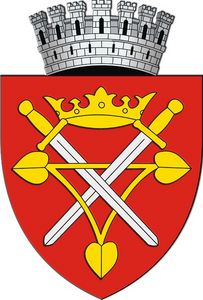
The earliest seal and coat of arms symbolism is identical to that of the Province of Sibiu. The provincial seal of 1302 depicts four men holding a gable crown, but by the second half of that century, the symbolism that was to endure had already become established: a crown of lilies above a triangle of lime leaves. Around the same time, a coat of arms had emerged for the town community (civium de villa Hermanni, 1367): a crown of lilies resting (usually) on the crossguards of two crossed, downward-pointing swords. From the end of the 15th century, a modified coat of arms began to appear, combining elements from the provincial and town coats of arms: the crown of lilies, swords and lime leaves (forming a downward-pointing triangle) appear together here and were preserved in this form for centuries as the town’s coat of arms. Even during the socialist era, this coat of arms was retained, alongside other symbols, in the lower part of the shield. Following the political transition, the historic coat of arms on a red shield once again became the town’s sole coat of arms, often supplemented above the shield by a castle crown with seven towers. The interpretation of the downward-pointing crossed swords as the oath-swords of the first settlers ‘ad retinendam coronam [Hungariae]’, which were subsequently said to have been taken to the outermost reaches of the settlement area at Broos/Orăştie in the west and Draas/Drăuşeni in the east, cannot be historically substantiated.
Archaeological significance
Archaeological excavations carried out within the city limits, particularly in the decades following the fall of the Berlin Wall in 1989, have shed light on the city’s founding and its medieval history; no earlier settlement sites have been found. Key excavation sites included the Rotunda and the medieval burial grounds and buildings on Huetplatz/Piața Huet. Important archaeological findings had already been made around 1900 during the construction of the town’s water supply system.
The Middle Ages and the Modern Era
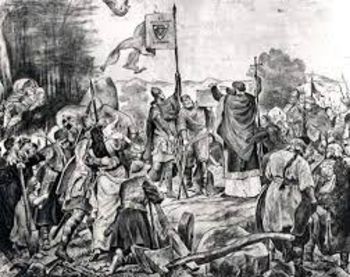

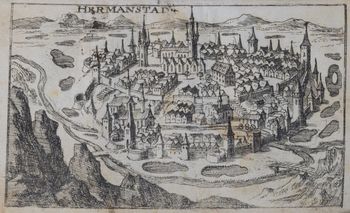
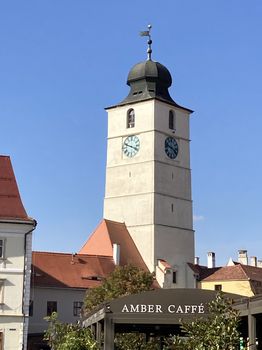
It is thought that the first settlement of border guards was established in the area that would later become the Lower Town around 1100; no other settlements within the town’s boundaries are known. The actual founding of the town is thought to have taken place shortly after the arrival of the first hospites – settlers from the western provinces of the Holy Roman Empire – around 1150, as archaeological finds also confirm. The initially small settlement (villa Hermani in 1223 and 1235, Hermannsdorf) gradually assumed the status of a regional centre, as indicated by the establishment of a provostry for the western settlers in 1191 and the designation of the county as ‘comitatus Chybinensis’ in the charter confirming the settlers’ rights (Andreanum) of 1224. It is thought that a Premonstratensian monastery was founded as early as the second half of the 12th century; it was mentioned in 1235 but ceased to be recorded after the Mongol raid of 1241. As an economic hub, the town probably competed for a time at the outset with the presumably larger Heltau/Cisnădie; but in political, administrative and ecclesiastical terms, the advantage seemed to have been decided in favour of Sibiu as early as the beginning of the 13th century; indeed, this German form of the name appears to have become established for the town in the 14th century. This was facilitated by the long-distance routes crossing here in east-west and north-south directions, not far from a Carpathian mountain pass. The town underwent rapid development as a centre of trade and craftsmanship, particularly in the 14th century, as the Hungarian kings deliberately promoted the towns: Whilst on the upper plateau (Upper Town), merchants, tenants of royal privileges, secular and ecclesiastical officials, together with wealthy craftsmen, settled on the upper plateau (Upper Town), whilst the lower plateau towards the Zibin/Cibin (Lower Town) was primarily home to craftsmen. Sibiu (first referred to as ‘civitas’ in 1326) attained its final form in the second half of the 14th century following several phases of expansion; this form was heavily fortified: on the one hand by multiple walls, towers and massive gates, and on the other by an extensive and ingenious system of water defences. In addition to privileged long-distance trade and a highly diversified artisan class (the guild regulations of 1376 list 19 guilds and 25 trades) the holders of the coinage monopoly also brought great wealth to the town through the processing of precious metals from the Transylvanian Western Mountains; the town was constantly receiving an influx of settlers, predominantly from the Upper German region. With 80 hectares of fortified area, Sibiu was one of the largest towns in the Danube-Carpathian region. The wealth of a self-assured citizenry was evident, for example, in the Romanesque St Mary’s Church, which was converted into a Gothic hall church from 1320 onwards.
During the 14th century, the town faced serious competition from Kronstadt/Brașov, which from the 15th century onwards led to a pronounced rivalry over markets and influence. However, the province of Sibiu, with its legal system based on the Andreanum of 1224, had become so firmly established that, in the course of the 14th century, the Two Seats joined with Mediaș/Mediaș and the Nösnerland region with Bistritz/Bistrița joined it, and Kronstadt, together with the Burzenland region, followed suit in 1422. The town thus became the ‘capital and Hermannstadt’ of the ‘Saxon Nation’, which was gradually establishing itself as a provincial estate; following the establishment of a representative assembly, the Saxon Nation University, in 1485, the representatives of all affiliated administrative units met regularly for assemblies. Thus, the individual Saxon seats and districts established their own courts in Hermannstadt, and at these gatherings the German ‘regional language’ was used – a kind of common Saxon dialect on which the representatives, who otherwise spoke widely divergent linguistic variants, were able to agree. Hermannstadt played a special role within the Nationsuniversität in that the councillors were also members of the university, and the mayor or royal judge of Hermannstadt held the Chair and represented the Nationsuniversität between the meetings of all the representatives. Similar to developments in other Central European towns, social tensions arose in Sibiu between the growing artisan class and the politically dominant council, leading around 1500 to the establishment of an outer council (Hundertmannschaft, Kommunität).
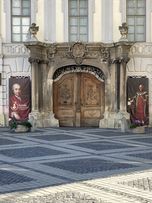
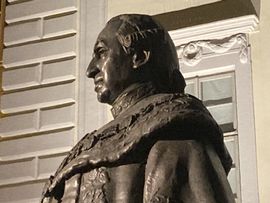
Although Sibiu remained the seat of the Saxon Nation, it nevertheless suffered a number of setbacks during the 16th and 17th centuries: During the civil war-like conditions in Hungary and Transylvania following the Battle of Mohács in 1526, the town isolated itself for a long time by siding with the Habsburg pretender to the throne, thereby suffering its first losses of influence and wealth; this was followed by the Protestant Reformation, which originated in Kronstadt and reached Sibiu somewhat later; as a result, the church leadership withdrew from the town. Finally, between 1610 and 1613, the town was completely occupied and its inhabitants expelled by the despotically ruling Transylvanian Prince Gabriel Báthory, from which it recovered only gradually under the unfavourable conditions of Ottoman suzerainty over the Principality of Transylvania in the 17th century. In contrast, Austrian rule over the Principality of Transylvania brought the town a noticeable revival from the end of the 17th century, and certainly by 1711, as the central provincial authorities (Gubernium), including the seat of the Commander-General for Transylvania , were relocated here , and cultural and social life increasingly took its cue from Vienna. Only aggressive attempts at re-Catholicisation, despite the guaranteed freedom of religion, clouded relations with the representatives of the House of Austria. This alignment with the new provincial rule reached its peak during the term of office of the only Saxon to serve as Governor of Transylvania, Samuel von Brukenthal, from 1777 to 1787, whose palace on the Großer Ring has been a defining feature of the cityscape ever since.

The 19th and 20th centuries
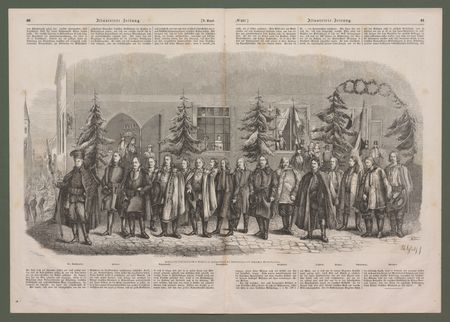
With the relocation of most central administrative functions around 1800, Sibiu once again became more of a capital for the Saxon nation, which was now actively working to strengthen its identity in order to secure its very existence – and so it established its own headquarters in the Hecht House on the Großer Ring. It was against this backdrop that the nation’s own law academy was established in 1844. At the same time, the city had to contend with an increase in residents speaking other languages, particularly Romanians, who were moving in from the suburbs into the city centre, whose gates and, in some cases, walls were gradually being demolished to make way for new urban planning concepts. Technologically, Sibiu was among the most progressive cities in the Monarchy; it had a hydroelectric power station built at an early stage, thereby enabling a wide range of electricity-powered enterprises, even though the city developed only into a regional economic centre. In the second half of the century, the seat of the Protestant regional church was moved here, meaning that even after the dissolution of Saxon administrative autonomy in 1876, Sibiu remained the undisputed centre of the Saxons, who continued to dominate the city well into the late interwar period. It was only the ethnic organisation, whichhad been brought into line with Nazi Germany , that deliberately moved its headquarters out of the city. As early as the interwar period, the demographic composition of the population had shifted in favour of the Romanians, a trend that intensified after the war due to massive state support for industrialisation. It was only with the political transition and mass emigration that the Germans largely disappeared as a noticeable element from the cityscape, returning, in a sense, with the election of Klaus Johannis as mayor as the candidate of the Democratic Forum of Germans in Romania in 2000; since then, they have not only continuously held this office (most recently in the local elections in June 2024), but have also held the majority on the city council, even though the German minority accounts for less than one per cent of the city’s population.
Administrative history
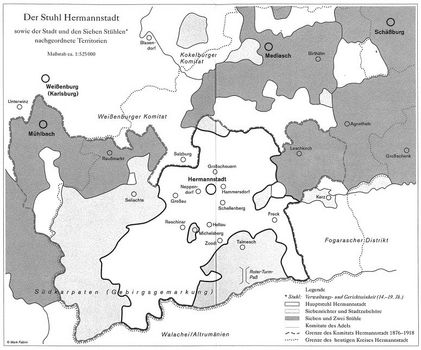
Documentary evidence dating from 1191 and 1224 already attests to the town’s role as a religious and administrative centre, a function which has been maintained and expanded over the centuries: in the early 14th century, the ‘Hermannstadt Province’ (Provincia Cibiniensis) emerged the Sibiu See as the centre of the Seven Sees (eight including the See itself, mentioned in 1324), constituting the legal jurisdiction of the Saxons on the basis of the Andreanum; this was soon joined by further sees and districts. As such, it also served as the court of appeal for the entire jurisdiction and, at times, for Klausenburg/Cluj, before intractable cases were referred to the King’s Council. In the Andreanum of 1224, the Count (comes) of Sibiu, appointed by the King, is designated as the highest administrative official of the legal jurisdiction. In ecclesiastical terms, Sibiu lost its prominent status when, following the Reformation and modelled on the Wittenberg example, the new superintendent moved his seat to Birthälm/Biertan in 1572 (the bishop’s seat did not return until 1867). It remained, however, the seat of the Saxon National University as the supreme representative body of the Saxon Nation, where either the mayor or the royal judge of Sibiu held the Chair (over the centuries, the term ‘Sachsencomes’ came to be used for the latter). Furthermore, the Diet of the Principality of Transylvania was often convened in Sibiu during the 16th and 17th centuries. Following two brief interruptions in the 1780s and 1850s, Saxon administrative autonomy came to a definitive end as a result of the Hungarian administrative reform of 1876. Hermannstadt became a town with an ‘organised magistracy’ and has since remained the seat of a Hungarian county of the same name; during the Romanian period, it was the seat of a county (județ), briefly interrupted after the Second World War, when administrative units modelled on the Soviet system were introduced and Sibiu belonged to the Kronstadt district. Since the political transition, Sibiu has been the seat of both the Democratic Forum of Germans in Sibiu and the Forum for Transylvania (Regional Forum) and the Forum for Romania (National Forum).
Population
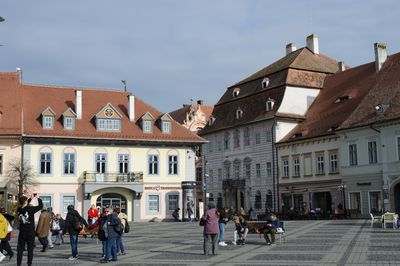
The population of Sibiu remained almost exclusively German over the centuries, no doubt partly due to the lack of any substantial suburbs. The number of suburbs, just like that of Romanian-speaking residents, only began to increase in the 18th century, but remained at a low level; in the second half of the 19th century, key institutions of the Transylvanian Romanians (political, cultural and economic) were established in Sibiu, partly because of the Romanian hinterland in the Mărginimea Sibiului region, but possibly also because it was the town with the lowest proportion of Hungarian inhabitants. A Jewish community also formed here in the 19th century; its membership increased significantly during the Second World War due to refugees fleeing from neighbouring regions, but after the war, as a result of emigration – primarily to Israel – it dwindled to just a few remaining members even before that of the German population.
The fact that Sibiu possessed the largest walled urban area in Transylvania also hindered demographic development for a long time; added to this were two historically significant downturns: first, in the 1530s, due to years of political and military self-isolation and the accompanying economic stagnation, if not actual regression; and another in 1610–13 as a result of the complete depopulation of the town by the aforementioned despotic prince, necessitating a gradual reconstruction during politically unstable times. The original demographic and economic parity with Kronstadt could not be regained in the centuries that followed.
Urban population by language group
1901 | 1930 | 1956 | 1992 | 2011 | |
|---|---|---|---|---|---|
| Total | 29,577 | 55,224 | 90,534 | 169,656 | 147,245 |
| German | 55% | 47% | 27% | 3% | 0.8% |
| Romanians | 24% | 37% | 67% | 95% | 95% |
| Hungary | 19% | 12% | 5% | 2% | 1.5% |
| Jews | 1% | 2% | 1% | 0% | 0% |
| Other | 1% | 2% | 0% | 0% | 2.4 per cent[1] |
Economic history
Whilst the Middle Ages were characterised by long-distance trade, the precious metals trade and craftsmanship, in the Early Modern period the leasing of royal prerogatives and estate management came to play an increasingly significant role in the urban economy, whilst craftsmanship, though it remained strong, primarily produced for the local and regional markets. Trade gradually shifted to other groups operating across regions, such as the Armenian and so-called Greek merchants, who maintained branches in the town. In the 18th century, the civil service and the military emerged as new pillars of the urban economy, until, in the 19th century, craft workshops in Sibiu gradually developed into larger enterprises, aided in part by new technologies powered by electricity. During the socialist era, industrialisation was heavily promoted, but a significant economic upturn did not materialise until after the political transition and, in particular, after 2000, with the establishment of numerous Western companies in Sibiu and the surrounding area.
Social history
Even though it is generally accepted that the first settlement was in the Lower Town, the Upper Town established itself early on as the home of the socially and politically prominent families, who sought to settle around the Great Ring. The individual streets in the Upper Town were also characterised by craftsmen, although in the long term a certain social hierarchy between the Upper and Lower Towns became established. A rural-style suburb did not develop. In the emerging suburbs, the population consisted mainly of Saxons and, above all, Romanians, until – with the urban expansion from the 19th century onwards – on the one hand the city’s German middle classes settled in the suburbs (for example on the Hallerwiese), and, on the other hand, many German workers and small business owners who were moving in had to be accommodated in housing estates (particularly in the first half of the 20th century). During the interwar period, the influx of Romanian migrants continued steadily, before rising sharply after the Second World War, making it necessary to build several new blocks of flats (such as Hipodrom).
Church history
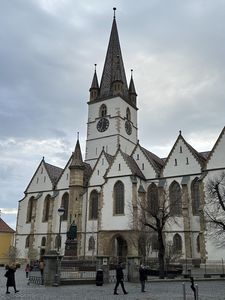
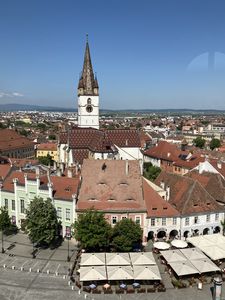
The town first appears in records in 1191 with the mention of an exempt provostry for the German settlers. A Premonstratensian monastery is thought to have been established there around the same time (mentioned in 1235, disappeared after 1241). The early settlers first built a rotunda on the edge of the upper terrace (churchyard, now Huetplatz) (now gone, marked on the paving), then, adjacent to it, a Romanesque Church of St Mary (partially converted from 1480 into a late-Gothic hall church with a gallery, completed around 1520; today the Protestant parish church). The churchyard was also the site of the provost’s residence (named after the Hungarian patron saint Ladislaus). Further chapels were built in the vicinity of the churchyard and, outside it, monasteries of the Dominicans (near the Kreuzkapelle in front of today’s railway station) and the Franciscans (Elisabethgasse). In the late Middle Ages, nunneries belonging to both orders were added, and the Dominicans relocated their monastery to the walled area for security reasons (later occupied by the Ursulines). With the Reformation leading to a conservative form of Lutheranism, the churches became Protestant, the monasteries were dissolved, and other denominations were merely tolerated within the city limits. It was not until Austrian rule began at the end of the 17th century that Catholicism returned; under pressure from the military, old monastic complexes had to be reopened, and the Jesuits built a imposing Baroque church on the Großer Ring, directly opposite the Protestant parish church. As a result of Emperor Joseph II’s reforms, other denominations were also able to erect places of worship: the Reformed, for instance, in Fleischergasse, and the United and Orthodox Romanians in the suburbs, until a former Greek house of prayer, also in Fleischergasse, was converted into an Orthodox cathedral. In the meantime, Sibiu had also gained central importance in ecclesiastical terms, first when the Orthodox Metropolis of Transylvania was established here, and finally when the Evangelical Church A.B. also moved its bishop’s seat here. A Jewish community emerged in the 19th century and built a synagogue on the outskirts of the Upper Town. This structure has essentially remained intact to the present day, except that the religious composition of the population has changed significantly and – particularly following the fall of the Berlin Wall – a number of new Orthodox churches have been built in the new neighbourhoods. Hermannstadt has repeatedly hosted global and European church congresses (the 3rd Ecumenical Assembly in 2007, the CPCE in 2024, amongst others).
City population by denomination (per cent)
1910 | 2000 | |
|---|---|---|
| Evangelical A.B. | 42 | 1 |
| Roman Catholic | 20 | 2 |
| Greek/Romanian Orthodox | 18 | 91 |
| Greek Catholic | 8 | 1 |
| Reformed | 7 | 1 |
| Mosaic | 4 | 0[1] |
Special cultural institutions
One of the city’s unique features is the very first public museum in south-eastern Europe, now officially known as the ‘Brukenthal National Museum’. The collections of the former governor of Transylvania, Samuel von Brukenthal, were bequeathed to the Protestant parish on the condition that they be made accessible to the public, which took place in 1817. For a long time, the library formed the most important part of the collections. Until 1945, it served as a kind of national library for the Transylvanian Saxons, as it collected all written material relating to and produced by them (from the 1960s onwards, this role was taken over by the Transylvanian Library in Gundelsheim, Germany); the Brukenthal Library took over most of Sibiu’s historical libraries, including the so-called Chapel Library, a significant collection belonging to the Protestant grammar school. In 2005, the museum and the collections that had existed up to 1945 were returned to their rightful owner, the Protestant parish of Sibiu; it was not until 2024 that the necessary legal framework for this step was put in place, providing for joint responsibility between the state and the church for the administration and management of the museum in future. Other museums in the town are structurally linked to the Brukenthal Museum, including the Historical Museum in the Old Town Hall (Altembergerhaus), the Natural History Museum (the building and collections of the former Transylvanian Society for Natural Sciences in Sibiu) and the August von Spieß Hunting Museum.
The archive is considerably older than the Brukenthal Museum: at the heart of what is now the Sibiu State Archive (Direcția Județeană Sibiu a Arhivelor Naționale) lies the archive of the Saxon Nation and the City of Sibiu. At the beginning of the 20th century, the Saxon National University foundation had a modern archive building constructed at the rear of the Hechthaus plot on the Marem Ring, its headquarters, on Armbrustergasse/str. Arhivelor, where numerous additional archival records from Saxon secular and ecclesiastical institutions, as well as estates, were housed. Following expropriation, the archive continued to operate as the State Archive and was supplemented with further material, including church registers that had been forcibly collected and the transfer of the Brukenthal Museum’s manuscript collection. Following the fall of the Berlin Wall, whilst the archive building was returned to the Protestant Regional Church, the collections were not; as a result, the building – which is in need of renovation – has been unable to adequately safeguard the valuable collections dating back to the 13th century, as the owner lacks the funds for its upkeep.
In a sense, running parallel to the Saxon institutions, the ‘Astra’ was founded in 1861 – Asociația Transilvană pentru Literatura Română şi Cultura Poporului Român (Transylvanian Society for Romanian Literature and the Culture of the Romanian People) – was founded in 1861, which quickly developed into a central cultural institution for the Transylvanian Romanians. It possesses significant library and archive collections, as well as an extensive press archive. The historic Astra headquarters, situated in the park at the entrance to Heltauergasse, now houses the Astra Library, which has been elevated to the status of a district library.
Building on the Astra tradition (after the museum collections, which had been assembled since the beginning of the century, were expropriated by the communist regime), the Astra Museum (Muzeul Astra), which operates what is now Romania’s largest open-air museum – currently undergoing continuous expansion – in the Young Forest/Dumbrava Sibiului, and also maintains a presence in the city with the ‘Treasure Chest’/Casa Artei on the Small Square/Piața Mică.
History of Education and Science
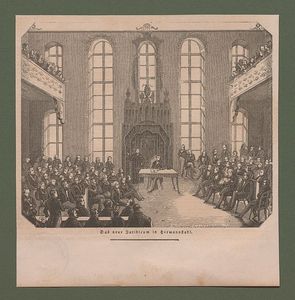
The oldest school in Sibiu is first recorded in 1380; from an early stage, it prepared pupils for study at universities elsewhere. During the Humanist period, it was transformed into an academic grammar school; today, the Brukenthal School is a ‘National College’ and one of the country’s schools offering the German Abitur at native-language level. The ‘Gheorghe Lazăr’ National College also boasts a long tradition; it has been Romanian-speaking since the First World War, but prior to that it was the Hungarian State Grammar School, succeeding the Jesuit College founded in 1692. In the 18th century, Samuel von Brukenthal sought to establish a Protestant university in Sibiu, but the project was thwarted by the Saxon secular and ecclesiastical authorities. In 1844, a law academy was founded to train the next generation for the institutions of the Saxon Nation; this was later taken over by the Hungarian state but closed in 1887. Following earlier efforts, the Orthodox priestly training courses were increasingly institutionalised from 1850 onwards and moved to new premises in Fleischergasse/Str. Mitropoliei, where the ‘Academia Andreiană’ (named after Metropolitan Andrei Schaguna) has operated continuously ever since and remains the seat of the Orthodox Theological School to this day. The second attempt to establish a university in Sibiu, this time for the Germans of Greater Romania, failed immediately after the First World War. In 1920, following the annexation of Transylvania to Romania, an officers’ school was established; this was granted university status in 1991 and is today, under the name Academia Forțelor Terestre ‘Nicolae Bălcescu’, one of the Romanian military’s leading training institutions. It was not until 1940 that Sibiu became a university town, as the University of Cluj had fled there following the forced cession of Northern Transylvania to Hungary and remained there until the end of the war. From 1941 to 1944, Sibiu was home to the ‘Research Institute of the German Ethnic Group in Romania’, an institution brought into line with the Nazi People’s Organisation; this institute gradually took over all the academic institutions and media outlets of the Germans in Romania and , for the first time, offered institutionalised research opportunities. From 1955, a branch of the Protestant Theological Institute of Cluj (founded in 1948) operated in the Protestant Bishop’s Palace in Sibiu for the training of Protestant pastors. In 1956, a branch institute of the Romanian Academy was founded in Sibiu with the aim of researching the culture and history of the country’s German minorities in their interplay with the Romanian majority society (today: Institute for Humanities of the Romanian Academy/Academia Română, Institutul de Cercetări socio-umane). In 1969, a School of Philology (including German and English Studies) and History was opened in Sibiu as a branch of the University of Cluj. This was followed by further subjects such as Economics, Education, law and engineering, so that immediately after the fall of communism in March 1990, a full university (now the Lucian Blaga University of Sibiu) could be established, which was subsequently joined by other higher education institutions, such as the two institutes for Protestant and Orthodox theology . From 1998 to 2021, a private Romanian-German university operated here; there are also other private higher education institutions. A total of 28,000 young people are studying in the city, leaving a lasting mark on the cityscape.
Art History
The collections of the Burkenthal Museum are regarded as the premier destination for works of art from a wide range of periods, as the founder’s already significant collections, numerous acquisitions and donations right up to the expropriation in the period that followed – and, in particular, a systematic expansion of the collection of contemporary art has taken place over recent decades. The city’s architecture features significantly more Gothic monuments than other towns in Transylvania; however, following rather modest periods of the Baroque and Classicist eras, there is comparatively little 19th-century Historicism to be found. Thanks to consistent renovation work since the turn of the millennium, the old quarters are now in an excellent state of repair.
Literature and music
As early as the end of the 18th century, a professional (German) theatre was established in Sibiu, which has been part of the city’s cultural life ever since and has contributed to a lively engagement with contemporary literary trends. Bookshops, which also emerged in the 18th century, played a part in this, whilst in the following century a thriving publishing industry (initially primarily German-language, later also Romanian-language) publishing scene emerged, which supplied large parts of Transylvania and produced a significant proportion of the diverse periodical literature. All this disappeared relatively quickly after the autumn of 1944; however, following the political transition, a (German-language) printing works and publishing house was re-established in Sibiu, and a new (German-language) book trade network developed from there. Today’s Romanian ‘Radu Stanca’ State Theatre has an active German section. Whilst musical traditions can be traced back a long way in church and school contexts, they became established in bourgeois circles in the 18th century through regular musical evenings (such as the Collegium Musicum at Brukenthal, documented from 1774, which met twice a week). In the 19th century, music and singing societies were added, followed in 1931 by the Bach Choir of the Protestant parish. A State Philharmonic Orchestra has existed in the city since 1949; today it is based in the Thalia Hall in the ‘Dicker Turm’ (Thick Tower) of the city walls.
Military history
Apart from its medieval and early modern history up to the end of the 17th century, when Sibiu was a self-defended and impregnable city-state, the town acquired supra-regional military significance with the arrival of Austrian troops from 1687 onwards. Hermannstadt became the seat of the Commanding General for Transylvania, and , much to the chagrin of the citizens, the Austrian soldiers were billeted in their homes; to remedy this situation, the town eventually built an infantry barracks at its own expense around 1800, situated in front of the Heltauer Gate, which was later demolished. The military base of the Austro-Hungarian Army, situated directly on the imperial border, was continually expanded, so that on the eve of the First World War, thirteen different military units – in addition to a corps command and a reserve district command – made Hermannstadt the largest military base in Transylvania . During Romania’s invasion of Transylvania in 1916 , the emergency garrison of the town – which had otherwise been almost completely abandoned by the military – managed to deceive the Romanian troops until reinforcements arrived and secured the town and region once more. After the First World War, the Romanian army established one of its main bases here in the newly acquired territories, including the only officers’ training school apart from the one in Bucharest (Bucureşti) . To this day, Sibiu has remained an important military base and has been integrated into NATO structures since 2004.
Culture of remembrance
The town plays a central role, particularly in the culture of remembrance of the Transylvanian Saxons, as ‘Haupt- und Hermannstadt’, and is also one of those places in Transylvania where the German name is better known than the Romanian one, even within the German-speaking world. This perception of the city as a collective centre has, if anything, become even more firmly established in the decades since the political transition, despite the worldwide dispersion of its inhabitants, given the political and ecclesiastical institutions based here. At the same time, the Transylvanian Romanians also have significant ties to this town, particularly from a (cultural) historical perspective, as do the Orthodox community, who regard it as a regional centre. Unlike other Transylvanian towns, however, Sibiu is not associated with moments of tension between Transylvanian population groups; consequently, the town’s monuments are not politically charged but can largely be regarded as mutually compatible. This may also help to explain the long-standing political arrangement described above, whereby the German minority has been entrusted with the administration of the city by a Romanian majority.
4. Outlook
Since the turn of the millennium, Sibiu has made a name for itself both as a major and thriving business centre and as a university city; it hosts a wide range of national and international festivals and major events, and has become a real tourist magnet. Although the German minority remains small, it is exceptionally active and exerts a cultural, linguistic, economic and political influence that extends far beyond the city.
Bibliography
- Hermann and Alida Fabini: Sibiu. A Portrait of a City in Transylvania. Sibiu, Heidelberg 2000.
- Hermann Fabini: Gothic Architecture in Sibiu. Cologne, Vienna 1989.
- Konrad Gündisch: The Patriciate of Transylvanian Towns in the Middle Ages. Cologne, Weimar, Vienna 1993.
- Rosemarie Hochstrasser: The Transylvanian-Saxon Community and its Structural Transformation 1867–1992. With particular reference to conditions in Sibiu and Brenndorf. Sibiu, Heidelberg 1992.
- Christoph Machat (ed.): Topography of Monuments in Transylvania. Vol. 5.1.1. Sibiu, Cologne 1999.
- Mária Pakucs: Sibiu – Hermannstadt. The Oriental Trade in Sixteenth-Century Transylvania. Cologne, Weimar, Vienna 2007.
- Sources on the History of the City of Hermannstadt. Edited by the Arbeitskreis für Siebenbürgische Landeskunde e.V., Heidelberg. 8 vols. to date. Hermannstadt, Heidelberg 1880–2023.
- Harald Roth: Sibiu. A Brief History of a City in Transylvania. Cologne, Weimar, Vienna 2006.
- Angelika Schaser: Josephine Reforms and Social Change in Transylvania. The Significance of the Rescript on Civility for Sibiu. Stuttgart 1989.
- Gustav Seivert: The Town of Hermannstadt. A Historical Sketch. Hermannstadt 1859.
- Emil Sigerus: Chronicle of the Town of Hermannstadt 1100–1929. Hermannstadt 1930, reprinted ibid. 2000.
Web links
- https://www.sibiu.ro/ (the town’s official website, also available in German, but with a different range of content)
- http://www.brukenthal.ro/ (Brukenthal School)
- https://www.brukenthalmuseum.ro/ (Brukenthal National Museum, also in English)
- https://muzeulastra.ro/ (Astra Open-Air Museum in the Junger Wald)
- http://www.dspace.bjastrasibiu.ro/ (Astra Library)
- https://www.hermannstaedter.ro/ (Hermannstadt Newspaper)
- https://hermannstadt.evang.ro/ (Protestant parish)
- https://siebenbuergenforum.ro/ (Democratic Forum of Germans in Transylvania)
- https://www.ev-theol.ro/ (Protestant Theological Institute)
- https://www.evang.ro/ (Protestant Church A.B. in Romania)
- https://arhivelenationale.ro/site/directii-judetene/sibiu/ (Sibiu State Archives, in Romanian only)
- https://teutsch.ro/ (‘Friedrich Teutsch’ Cultural and Community Centre of the Evangelical Church A.B. in Romania)
- https://www.ulbsibiu.ro/ro/ (Lucian Blaga University)
- https://icsusib.ro/ (Institute of Humanities of the Romanian Academy)
- https://www.h-d-h.de/ (Hometown Association of Germans from Sibiu)
Citation
Harald Roth: Hermannstadt/Sibiu. In: Online Encyclopaedia on the Culture and History of Germans in Eastern Europe. 2025. URL: ome-lexikon.uni-oldenburg.de/p32413 (accessed 9 September 2025).
Terms of use for this article
Copyright © University of Oldenburg and the Federal Institute for the Culture and History of Germans in Eastern Europe (BKGE), all rights reserved. This work was produced as part of the project ‘Online Encyclopaedia on the Culture and History of Germans in Eastern Europe’ and may be reproduced and published provided the rights holders’ consent has been obtained. Please contact:
If you have any specialist comments or additions to the text, please contact the editorial team, citing relevant literature and source references.