

Holy Roman Empire (of the German Nation)
Holy Roman Empire (of the German Nation)
German terms
‘Holy Roman Empire of the German [Teutscher] Nation’ (HRR). As the addition ‘of the German Nation’ did not appear until towards the end of the 15th century (officially first recorded in 1486 in the so-called ‘Landfrieden’ of Emperor Frederick III [1452–1493]), the full title is generally used only to refer to the Holy Roman Empire in the early modern period. Other variants include, amongst others: ‘Empire of the Teutsch Nation’ (contemporary), ‘Old Empire’ (in historiography to distinguish it from the German Empire established in 1871); also commonly used are ‘German Empire’, ‘Holy Roman-German Empire’ and ‘Germany’.
Latin name
‘Sacrum Imperium Romanum Nationis Germanicae’, ‘Regnum Teutonicorum’ (Reich der Deutschen), ‘Regnum Teutonicum’ (German Empire).
Historical Geography
At the beginning of the 10th century, the western border of the Holy Roman Empire corresponded to the border of the East Frankish Kingdom established in 843 and included Lorraine and the territories of Burgundy. The oldest eastern border of the Holy Roman Empire around the year 1000, which also formed the western borders of Poland, Bohemia and Hungary, ran roughly along the rivers Oder and Bober, encircled the Bohemian Basin along the mountain ridge and, in the Waldviertel region along the Thaya and March rivers as well as on the western edge of what is now Burgenland, enclosed the south-eastern ‘marks’ (Ostmark, Mark Carinthia, Mark Carniola).[1] In 1032/33, Burgundy in the west was formally incorporated into the line of succession as a further kingdom, so that the Holy Roman Empire henceforth comprised the kingdoms of Germany, Italy, Burgundy and the Kingdom of Bohemia, which had been established in 1198. It thus essentially comprised the present-day territories of Germany, Belgium, the Netherlands, Luxembourg and Switzerland, as well as the eastern regions of France (Provence, Savoy, Burgundy, Alsace, Lorraine), central and northern Italy, Austria and the Czech Republic. Between the 12th and 14th centuries, territories now belonging to Poland – namely (Back)Pomerania and Silesia – were incorporated. From the late Middle Ages onwards, territorial losses occurred successively. As a result of the Peace of Westphalia (1648), the Netherlands and the Old (Swiss) Confederacy became independent, whilst further territories were lost to France. The link with ‘Imperial Italy’ also weakened, until ultimately only a formal feudal bond remained. The Holy Roman Empire comprised territories which, in modern terminology, are predominantly described by the vague term‘Central Europe’– although, depending on the definition, this extends far beyond that, particularly in the east.
Definition
The Holy Roman Empire, which existed from 962 to 1806, was a politically, legally and demographically heterogeneous confederation comprising secular and ecclesiastical rulers (individuals, corporations, monasteries) and imperial cities, who held territories of very varying sizes (including duchies, counties and manors). The Emperor served as the common head and political centre, to whom the rulers owed a personal oath of allegiance. The Holy Roman Empire provided the framework for German history in particular, but never developed into a nation state. The territories belonging to the Holy Roman Empire were home to people of other nationalities who spoke, amongst other languages, Yiddish, French, Dutch, Frisian, Sorbian, Czech, Polish, Slovenian, Italian, Ladin or Romansh.
Coat of arms
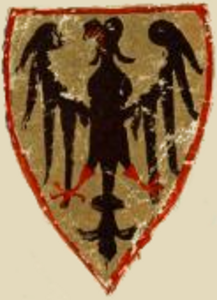
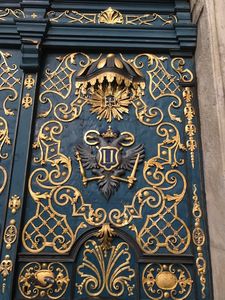
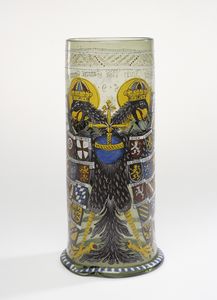
From the time of Emperor Sigismund (1433–1437) onwards, the black double-headed eagle, usually on a gold or yellow field, came increasingly into use. It became the principal symbol of the Empire, though the use of the single-headed eagle remained possible even in the early modern period.[2]
Middle Ages
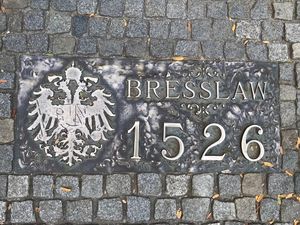
The year 962 is generally regarded as the year of the Holy Roman Empire’s foundation, when Otto I the Great (962–973) was crowned Emperor by the Pope in Rome and, as the future protector of the Church and of all Christendom, thereby united the East Frankish kingship with the ancient Roman imperial dignity, creating a new political entity.[3] Even before his imperial coronation, Otto I had been elevated to the throne of Italy with the Lombard crown in 951. The Emperor laid claim to universal patronage over the whole of Christendom. The relationship between the Pope and the Emperor was contentious in the Middle Ages (‘Investiture Controversy’); ultimately, however, the papal claim to superiority could not be upheld. The coronation of Charles V (1530–1556) was the last coronation of an emperor by the Pope. Thereafter, it was performed only by the Archbishop of Mainz, who, until the 16th century, had been permitted to crown only the Roman King.
In the Middle Ages, the Holy Roman Empire was a tradition-based and hierarchically structured, yet only loosely organised confederation of persons, laws and obligations (‘confederation-based state’). The basis of the system of rule and property ownership was the feudal system, which rested on a feudal lord granting land, rights of sovereignty and offices of all kinds to vassals, whilst obliging them to provide comprehensive personal support. This principle not only bound the (in some cases powerful) imperial princes to the Emperor through an individual relationship of loyalty, but also extended to all hierarchical levels of society. Unlike most other European monarchies, the Holy Roman Empire was an elective empire in which the seven electors—initially—were able to monopolise the right of election, as enshrined in the ‘Golden Bull’ of 1356 (concerning the election of the king, the coronation and the Imperial Diet). From the election of Albert II (1438–1439) onwards – with the exception of Emperor Charles VII (1742–1745) – all emperors until the end of the Holy Roman Empire were elected from the Habsburg dynasty.
Modern times
From the last third of the 15th century onwards, the development of constitutional structures and the institutional organisation of the Holy Roman Empire (‘legalisation’) began, culminating in the Diet of Worms in 1495 (‘Imperial Reform’). Here, the ‘Eternal Peace’ was enacted to put an end to feuding, and the Imperial Chamber Court (RKG) was established as the central court of appeal (founded in 1495, based in Speyer from 1527 and in Wetzlar from 1689), followed in 1498 by the Imperial Court Council in Vienna as a further supreme court. The ‘Gemeine Pfennig’ was introduced as an imperial tax (for the financing of the RKG as well as the wars against France and the Ottoman Empire). Consequently, the conduct and structure of the Imperial Diet were regulated. The Imperial Diet, which sat in three curiae, developed into the central legislative and decision-making body of the Holy Roman Empire, which—through the cooperation of the Emperor and the Imperial Estates (a select circle of princes and imperial cities with a seat and a vote in the Imperial Diet) adopted so-called ‘Imperial Decrees’, which were executed by the Archbishop of Mainz in his capacity as Imperial Archchancellor. The 85 imperial cities (according to the ‘Worms Register’ of 1521), which were directly subordinate to the Emperor, were represented on the ‘Cities’ Bench’ in the Imperial Diet. The ‘ ’ (‘Strict Codeof Criminal Procedure’) (Constitutio Criminalis Carolina), adopted in 1532, is regarded as the first German criminal code. In addition to the Golden Bull, the three Imperial Police Ordinances (1532, 1548, 1577), the Peace of Augsburg (1555) and the Peace of Westphalia (1648) are referred to as ‘Imperial Fundamental Laws’. In 1512, the Holy Roman Empire was divided into ten imperial circles, which were intended to serve the maintenance of domestic peace, military affairs, coinage and the enforcement of the law.
A defining feature of the entire history of the Empire was the tension (‘dualism’) between imperial authority and the pursuit of centralised power on the one hand, and the tendency towards autonomy on the part of the powerful imperial estates—which ultimately acted independently of the Empire and pursued their own interests—on the other. In particular, the emergence of Brandenburg-Prussia and Austria from the Holy Roman Empire from 1740 onwards (the Silesian Wars; the Seven Years’ War), the military defeats at the hands of Napoleon and the territorial losses to France (which led to the Imperial Deputation’s Main Resolution of 1803), and the establishment of the Confederation of the Rhine (1806) – all led ultimately to the abdication of Emperor Francis II (1792–1806) on 6 August 1806, after he had already established the Austrian Empire in 1804. This marked the formal end of the Holy Roman Empire.
4. ‘Concentration of the Reich’ in the south-west and ‘remoteness from the Reich’ in the north and east
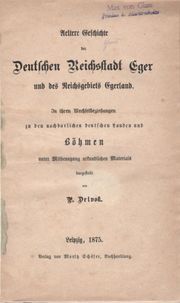
One consequence of late medieval imperial policy was that, in the south-west and particularly in the complexly structured Upper German region, the Holy Roman Empire had a stronger presence and was more visible to the public through its institutions and representatives (‘imperial consolidation’) than in the north and east. Since the Imperial Reform, the Holy Roman Empire had gained increased visibility through the Imperial Diets, which were not only political but also major socio-cultural and economic events. With a few exceptions in the late Middle Ages (Eger/Cheb 1213, 1389, 1437; Breslau/Wrocław 1420; Pressburg/Bratislava/Pozsony 1429), the Imperial Diets took place only in the west and south. From 1663 onwards, the ‘Perpetual Imperial Diet’ sat in Regensburg. The Imperial Diets brought together the Imperial Estates with their retinues, as well as envoys, messengers, merchants and so on. The administration and heraldry of the Holy Roman Empire were particularly evident at the seats of the imperial courts and the Imperial Chancellery (Mainz), which held a privilege to print the widely circulated ‘Imperial Decrees’ bearing imperial symbols. The south-west was also home to most of the free imperial cities, with their town halls adorned with imperial coats of arms and other imperial insignia. The easternmost imperial city was Regensburg. As the House of Habsburg provided the rulers of the Holy Roman Empire, it was also present and visible in Austria.
By contrast, the population in the northern, sparsely populated territorial regions, as well as in the east – in Bohemia and its neighbouring lands – where the local estates dominated, had little contact with the Emperor or the Empire. For them, the Holy Roman Empire was more of an abstract and theoretical concept, so that these areas can be described as ‘remote from the Empire’. One exception was the ‘Golden City’ of Prague (Praha) in the 14th century under Emperor Charles IV (1355–1378) and King Wenceslas IV (1378–1400). Under their rule, it was the de facto centre of power, capital and imperial residence not only of Bohemia but of the entire Holy Roman Empire. This development was accompanied by intensive founding and construction activity – including the University, St Vitus Cathedral and Charles Bridge. The relocation of the imperial residence back to Prague Castle in 1583 under Emperor Rudolf II (1576–1612) lasted only until his death.
5. The eastern territories of the empire; eastern borders
With regard to the categories of ‘imperial allegiance’ and ‘territory’, the Holy Roman Empire largely defies modern criteria of state and constitutional law. The medieval Holy Roman Empire, in particular, did not have clear-cut borders everywhere, as modern maps might suggest. In the era of pre-modern public and international law, feudal relationships and sovereignty took various forms and were graded in different ways. They were exercised at various levels and depended not least on shifting balances of power. Furthermore, relations with the Emperor and the Empire could be derived from the sovereign’s personal feudal ties and/or from the legal status of his territory (e.g. ‘imperial immediacy’). A territory could be linked to the Emperor and the Empire in one respect (e.g. on the basis of a feudal oath sworn by the sovereign), whilst at the same time being outside the Empire’s jurisdiction in another respect (e.g. as a result of exemption from imperial jurisdiction). Furthermore, depending on the criteria applied in each case, the medieval ‘law of intermediate powers’ effectively recognised several simultaneous affiliations (e.g. Silesia’s affiliation to both Bohemia and Poland in the 14th century). The openness of the imperial constitution led, on various occasions, to disputes over the territorial affiliation of certain areas. It was particularly on the eastern periphery that the Empire frayed – at least until the 14th century – with the forms of imperial affiliation and relations being diverse. Applying the criterion of the contemporary feudal system, which was constitutive of the Holy Roman Empire, the following specific statements can be made regarding the imperial affiliation of the eastern territories:
Hungary
The Kingdom of Hungary, which came under Habsburg rule through dynastic succession in 1526, was never part of the Holy Roman Empire. It was only during the High Middle Ages that Hungarian kings paid homage to the Emperor for a brief period, for example, Henry III (1046–1056) in 1044. However, from the late Middle Ages onwards, Hungary was of great strategic importance to the Holy Roman Empire in warding off the ‘Turkish threat’. This was particularly true following the defeat of King Louis II of Hungary (1516–1526) at the Battle of Mohács in 1526 until the Ottoman Empire relinquished its claims to Hungary in the Treaty of Karlowitz in 1699, when Central and Southern Hungary became an integral part of the Ottoman Empire. The levying of a general ‘Turkish tax’ to finance the imperial war in Hungary served primarily to maintain the fortress system there. It was one of the major challenges facing the Emperor’s domestic policy and a driving force behind the imperial reform movement.
Poland
From its very beginnings, the eastern border of the Holy Roman Empire also formed, over long stretches, the western border of the Kingdom of Poland. The feudal relationship between Poland and the Frankish Empire, and subsequently the Holy Roman Empire, in the Middle Ages has been, and to some extent continues to be, assessed differently within and between German and Polish historiography – in particular the question of whether, and to what extent, the oath of allegiance sworn in 986 by King Mieszko I of Poland (c. 960–992) to Emperor Otto I established a feudal relationship. Views range from the assertion that Poland was feudal vassal to the Holy Roman Empire during the High Middle Ages to the view that this feudal relationship was merely symbolic in nature. There is consensus that all such relations between Poland and the Holy Roman Empire came to an end by the 13th century at the latest.[4]
State of the German Order / Prussia
The State of the German Order had no explicit feudal relationship with the Holy Roman Empire. However, Emperor Frederick II (1220–1250) granted the Grand Master of the German Order and his successors, in the ‘Golden Bull of Rimini’ (1226) their sovereign rights as rulers, in view of the “fact that this land is included within the dominion of the Empire”.[5] This rather general and vague inclusion did not make the Grand Master a free imperial prince, even though the emperors had, since the 13th century, assumed that the State of the Teutonic Order belonged to the Empire – a view that is assessed differently in historiography. With the Second Peace of Toruń (1466), the territory of the Landmaster of Prussia (East and West Prussia) came under the suzerainty of Poland. In 1525, its eastern parts (East Prussia) were transformed into the secular Duchy of Prussia, which Duke Albrecht of Prussia (1525–1568, previously Grand Master of the German Order from 1511) received as a fief from the Polish king. Prussia’s formal legal status outside the Holy Roman Empire later explains the coronation of Elector Frederick III of Brandenburg (1688–1701) in Königsberg/Kaliningrad, the capital of Prussia, as ‘King in Prussia’ (1701–1713). The tax registers (matrikels) of the Holy Roman Empire list only the south-western German bailiwicks of the Order and the Grand Masters responsible for the Order’s possessions within the Holy Roman Empire.
Pomerania
From 1180, Pomerania was a direct imperial fief. From 1227 onwards, Pomerania’s affiliation with the Holy Roman Empire was consolidated. The Principality of Rügen passed to the Dukes of Pomerania in 1325, but remained a Danish fiefdom outside the borders of the Empire until the first half of the 15th century. This also applied to the territories of Lauenburg/Lębork and Bütow/Bytów, which were hereditary fiefs of the Polish Crown. The Bishopric of Cammin, as an ecclesiastical principality, had held imperial status since at least the early 15th century and thus belonged directly to the Holy Roman Empire. Pomerania’s imperial immediacy was contested until 1529 by the Margraves and later Electors of Brandenburg. Following the extinction of the House of Greifen in 1637, the Peace of Westphalia decreed the division of the territory between Brandenburg and Sweden, both of which henceforth held a seat and a vote in the Imperial Diet on behalf of the Duchy of Pomerania until 1806. The Bishopric of Cammin was secularised and, after 1650, integrated into the State of Brandenburg as a principality with a seat and a vote in the Imperial Diet.
Countries of the Bohemian Crown
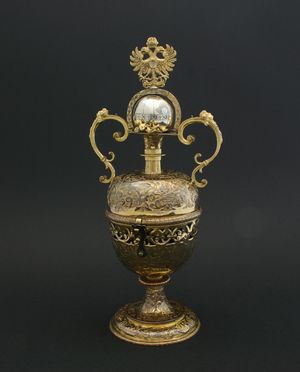
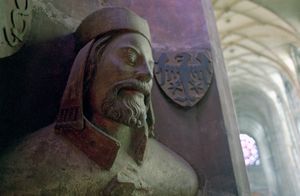
The Bohemian Crown and the Kingdom of Bohemia, together with the‘Lands of the Bohemian Crown’(Moravia, Silesia, Upper and Lower Lusatia) passed by inheritance to the House of Habsburg in 1526 and, from then on, formed part of the Habsburg hereditary lands together with Austria. The structural distinction made by Peter Moraw between a ‘hereditary Germany’—which would comprise the territories of the Holy Roman Empire under the rule of the Habsburg imperial house— and a ‘Reichstag Germany’, which encompasses the territories ruled by other sovereigns, has not gained international acceptance. Particularly in view of the multi-ethnic nature of the lands of the Bohemian Crown belonging to the Habsburg hereditary lands, grouping them together as ‘hereditary Germany’ does not appear to be appropriate.[6]
Bohemia and Moravia
Just as the East Frankish Empire had done before it, the Holy Roman Empire later also sought to keep Bohemia in a state of vassalage. The start of this feudal relationship is variously recorded. A formal feudal relationship between the duchy and the Holy Roman Empire had existed since 1004. The Kingdom of Bohemia, established in 1198 (including the Margraviate of Moravia, which had been part of it since 1031), was part of the Holy Roman Empire. The King of Bohemia was a vassal of the Emperor and one of the electors listed in the Golden Bull. At the same time, however, he was regarded as partially sovereign and did not exercise his electoral voting rights from the 15th century until his ‘readmission’ in 1708. In the 15th century, he secured exemption from all obligations towards the Holy Roman Empire, with the result that the question of whether Bohemia was in fact an ‘imperial fief’ (‘feudum imperii’) remained contentious and formally unresolved.[7] In order to prevent interference by the Holy Roman Empire and to preserve his autonomy as a sovereign, the King also ensured that his ‘hereditary domain’ of Bohemia, together with its dependencies (Moravia, Lusatia, Silesia) from the application of imperial laws, imperial jurisdiction and the imperial circle constitution, so that these territories occupied a special position under imperial law. In Czech historiography, Bohemia’s separation from the Holy Roman Empire played a prominent role and was characterised as the ‘main problem of Bohemian medieval history’.[8] The literature on this subject is as extensive as it is controversial.
Lusatia
The Margraviate of Lusatia (Lower Lusatia) and the region of what would later become Upper Lusatia – strategically situated in the ‘tri-border area’ between the Holy Roman Empire, Poland and Bohemia – were the subject of fierce contention in the 11th century, particularly between Poland and Saxony. In 1002 and 1013, Henry II (1002–1024) enfeoffed the Polish King Bolesław I Chrobry (1000–1025) with (Lower) Lusatia and the Milzen region (Upper Lusatia). From 1031 onwards, the regions of ‘Lusizi’ and ‘Milzeni’ (‘Terra Budissin’), together with Bautzen Castle, remained part of the Holy Roman Empire (Margraviate of Meissen), initially as imperial fiefs under Bohemian rule (1158–1253), subsequently under the House of Ascania (Upper Lusatia from 1253), then again under Bohemian rule from 1319 to 1635, and finally under the Electorate of Saxony (1635–1815).[9] As dependent territories of Bohemia, they were ‘indirectly subject to the Empire’ and were not directly represented at the Imperial Diet.
Silesia
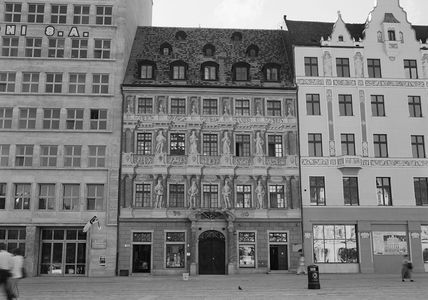


The Silesian principalities, ruled by the Piasts, belonged to the Kingdom of Poland until their annexation to the Kingdom of Bohemia, which began in the first third of the 14th century.[10] In 1327, almost all the dukes of Upper Silesia paid homage to the Bohemian King John of Luxembourg (1311–1346) and undertook to provide military service. By 1369, the duchies of Lower Silesia had also come under Bohemian suzerainty. From then on, the Silesian dukes held their duchies as hereditary fiefs of the Kingdom of Bohemia. In the Treaty of Trencin (1335), King Casimir III of Poland (1333–1370) renounced his claims to Silesia. From the perspective of feudal law, the Silesian territories were linked to the Holy Roman Empire only via Bohemia and thus merely ‘indirectly’; consequently, the rights and obligations of imperial status did not extend to the Silesian dukes, as they were subject to the King of Bohemia as the supreme sovereign. The voluntary nature, the legal status and the timing of Silesia’s transfer to Bohemia in the 14th century are still assessed differently in German, Polish and Czech historiography to this day.[11]Silesia remained an indirect imperial territory until the annexation of most of the province by Prussia (1740).
Austria
The Margraviate of Austria had been part of Bavaria since 976. In 1156, it was elevated to the status of an independent duchy by the ‘Privilegium minus’ issued by Emperor Frederick I (Barbarossa) (1155–1190) at the Imperial Diet near Regensburg, and was enfeoffed to Henry Jasomirgott (1143–1177), Duke of Bavaria of the Babenberg dynasty. He was to hold the Duchy of Austria in future ‘by hereditary right from the Empire’. This marks the beginning of the history of Austria, which had been in the possession of the Habsburg dynasty since 1282 as a direct territory of the Holy Roman Empire. From 1453, it was an ‘Archduchy’. The Habsburg princes styled themselves Archdukes and presided over the Imperial Princes’ Council at the Imperial Diet. Austria was incorporated into the Imperial Circle system and, together with the duchies of Styria, Carinthia and Carniola, as well as the counties of Tyrol and Gorizia (on the Adriatic), formed the Austrian Imperial Circle.[12]
The following regions in Eastern Europe with German-speaking populations were never under feudal allegiance to the Holy Roman Empire: Banat, Bessarabia, Bukovina, Galicia and Lodomeria, Gottschee, Croatia, Slavonia and Transylvania.
6. Interpretations
Opinions on the Holy Roman Empire vary widely. In nationally oriented historiography since the 19th century, only the medieval imperial empire – regarded as glorious – with its claim to great power status has met with approval. The period following the Staufer emperors (11th–13th centuries) was viewed as the ‘decline and fall’ of the supposed former imperial power in favour of individual states.[13] Descriptions of the Holy Roman Empire as a ‘pawn of the great powers’, a ‘patchwork quilt’ or a ‘confederation of small states’ reflected this view. A re-evaluation of this national-state-based disparagement gradually began in the 1960s. Historians now sought – particularly in contrast to the ‘Third Reich’ – to establish, on the basis of the Holy Roman Empire, an unburdened historical tradition not geared towards expansion and warfare. With the advent of European integration, and increasingly after the fall of the Iron Curtain in 1989, the decentralised constitutional structure of the Holy Roman Empire – now positively described as ‘federal’ – was occasionally even seen as a model for a future united Europe.
Controversies regarding the affiliation of the territories on the eastern periphery of the Empire and their relationship to the Holy Roman Empire as a whole arose from the fact that 19th- and 20th-century historical scholarship anachronistically sought to interpret medieval inter-sovereign relations from a nation-state perspective. Modern concepts of sovereignty were thus projected backwards onto complex, pre-modern constellations of power. These historiographical controversies were based not least on modern political thinking in terms of the nation-state. Consequently, medieval and early modern (pre-sovereign) relations of rule and law were ideologised in the service of the modern nation-state. Put simply, there was a tendency in German historiography to identify connections or affiliations with the Holy Roman Empire and subordination as early and as far-reaching as possible, whilst Polish and Czech historiography argued the opposite. However, these categories do not do justice to the conditions of pre-modern state and international law. To assess territorial affiliations, one must instead consider the network of inter-sovereign relations among the respective territories.[14]
Bibliography
- Alexander Begert: Bohemia, the Bohemian Electorate and the Empire from the High Middle Ages to the End of the Old Empire. Studies on the Electoral Status and Constitutional Position of Bohemia. Husum 2003 (Historical Studies 475).
- Wilhelm Brauneder, Lothar Höbelt (eds.): Sacrum Imperium. The Empire and Austria 966–1806. Vienna 1996.
- Andreas Rüther: Region and Identity. Silesia and the Empire in the Late Middle Ages. Cologne, Weimar, Vienna 2010 (New Research on Silesian History 20).
- Bernd Schneidmüller, Stefan Weinfurter (eds.): Holy, Roman, German. The Empire in Medieval Europe. Dresden 2006.
- Barbara Stollberg-Rilinger: The Holy Roman Empire of the German Nation. From the End of the Middle Ages to 1806. Munich 2006.
- Matthias Weber: Silesia’s Relationship with the Old Empire in the Early Modern Period. Cologne, Weimar, Vienna 1992 (New Research on Silesian History 1).
- Joachim Whaley: The Holy Roman Empire of the German Nation and its Territories. Vol. 1: From Maximilian I to the Peace of Westphalia 1493–1648; Vol. 2: From the Peace of Westphalia to the Dissolution of the Empire 1648–1806. Darmstadt 2014.
- Dietmar Willoweit, Hans Lemberg (eds.): Kingdoms and Territories in East-Central Europe. Historical Relations and the Legitimacy of Rule. Munich 2006 (Peoples, States and Cultures in East-Central Europe 2).
Web links
- beckassets.blob.core.windows.net/product/readingsample/25320740/25320740_leseprobe_das-heilige-r%C3%B6mische-reich-German-nation.pdf (Excerpt from Barbara Stollberg-Rilinger: The Holy Roman Empire of the German Nation from the End of the Middle Ages to 1806. 6th edition, 2018.
Notes
[1] See Klaus Zernack: ‘Germany’s Eastern Border’. In: Alexander Demandt (ed.): ‘Germany’s Borders throughout History’. Munich 1990, pp. 135–159, here p. 139.
[2] Martin Kintzinger: ‘Symbols and Imaginaries of the Empire’. In: Schneidmüller (ed.): *Heilig*, pp. 345–371, here p. 367.
[3] Johannes Fried: The Path into History. The Origins of Germany up to 1024. Berlin 1994 (Propyläen History of Germany 1), pp. 526–549.
[4] Thomas Wünsch: Germans and Slavs in the Middle Ages. Relations with the Czechs, Poles, South Slavs and Russians. Munich 2008, pp. 45–48.
[5] The Golden Bull of Rimini, 1226. In: Herder Institute (ed.): Documents and Materials on East Central European History. Thematic module ‘The Teutonic Order and Prussia in the Middle Ages’, edited by Marcus Wüst. URL: www.herder-institut.de/resolve/qid/1751.html (accessed 30 September 2019). See also Jürgen Sarnowsky: The Teutonic Order. 2nd, revised edition. Munich 2012, p. 36; Bernhart Jähnig: The Political and Legal Foreign Relations of the Duchy of Prussia (1525–1660). In: Willoweit (ed.): Reiche, pp. 51–72, here pp. 52ff.
[6] For example, in Peter Moraw: *The Empire and Austria in the Late Middle Ages*. In: Brauneder (ed.): *Sacrum Imperium*, pp. 93–130, here pp. 127ff., the territories that had seceded from the Holy Roman Empire are grouped together under the additional designation ‘Third Germany’.
[7] Begert: Bohemia, pp. 584ff.
[8] Karel Malý: *The Bohemian State – Part of the Empire?* In: Willoweit (ed.): *Empires*, pp. 163–170, here p. 163.
[9] Gertraud Eva Schrage: Upper Lusatia up to the Year 1346. In: Joachim Bahlcke (ed.): History of Upper Lusatia. Rule, Society and Culture from the Middle Ages to the End of the 20th Century. Leipzig 2001, pp. 55–97, here pp. 55–57, 66, 80; Norbert Kersken: Upper Lusatia from the Founding of the League of Six Towns to its Transfer to the Electorate of Saxony. In: Ibid., pp. 99–142, here pp. 99f.
[10] Matthias Weber: The Classification of Silesia as ‘Polonia’ in 13th- and 14th-Century Sources. In: Germany’s East – Poland’s West. Comparative Studies in Historical Regional Studies. Frankfurt am Main et al. 2001 (Central Europe – Eastern Europe. Oldenburg Contributions to the Culture and History of East Central Europe 2), pp. 175–194.
[11] Weber: The Relationship, pp. 24–28; Marian J. Ptak: Silesia and its Relations with Poland, Bohemia and the Empire. In: Willoweit (ed.): Empires, pp. 48–50.
[12] See Peter Moraw: ‘The Empire and Austria in the Late Middle Ages’. In: Brauneder (ed.): *Sacrum Imperium*, pp. 93–130.
[13] See Stollberg-Rilinger: The Holy Roman Empire, pp. 8–9.
[14] Dietmar Willoweit: Inter-sovereign Relations in the Medieval World. Outlines of a New Research Approach. In: Willoweit (ed.): Empires, pp. 275–284.
Citation
Matthias Weber: Holy Roman Empire (of the German Nation). In: Online Encyclopaedia on the Culture and History of Germans in Eastern Europe, 2020. URL: ome-lexikon.uni-oldenburg.de/p35427 (as at 14 July 2020).
Terms of use for this article
Copyright © University of Oldenburg and the Federal Institute for the Culture and History of Germans in Eastern Europe (BKGE), all rights reserved. This work was produced as part of the project ‘Online Encyclopaedia on the Culture and History of Germans in Eastern Europe’ and may be reproduced and published provided the rights holders’ consent has been obtained. Please contact:
If you have any specialist comments or additions to the text, please contact the editorial team, citing relevant literature and source references.