

Bukovina
Bukovina
Name in another language
Ukrainian: Bukovyna; Romanian: Bucovina; Polish: Bukowina; Russian: Bukovina; French: Bucovine; English: Bukovina; Hebrew: בוקובינה.
Etymology
Bukovina takes its name from the extensive beech forests in the region (Slavic ‘buk’ = beech). The name first appeared as a field name in 1412 in a document listing forested areas along the rivers Sereth (Ukrainian: Seret, Romanian: Siret) and Pruth (Ukrainian/Romanian: Prut) (at that time referred to as Greater and Lesser Bukovina). In the treaty of cession between the Principality of Moldavia (Romanian: Moldova) and the Habsburg Monarchy (1775), the entire region was officially designated as ‘Bukovina’.
Location and topography
Bukovina stretches 96 km from west to east and 168 km from north to south. To the west, it is bordered by the Carpathian Mountains; to the north and north-west, the rivers Dniester (Ukrainian: Dnister, Romanian: Nistru) and the Cheremosh (Ukrainian: Čeremoš, Romanian: Ceremuş) form the natural borders; in the south, the Golden Bistritz (Romanian: Bistrița Aurie). In 1940, the historical region (1918: 10,500 km²) was divided into a northern, Soviet part and a southern, Romanian part. Today, the Ukrainian administrative region centred on the regional capital Chernivtsi/Černivci (Černivec’kaoblast’) and the Romanian administrative region centred on the county town of Suczawa/Suceava (Județul Suceava) together cover an area of 16,600 km², as administrative boundaries have been shifted.
In terms of landscape, three distinct areas can be identified: the mountainous region of the Carpathians in the west and south-west, the foreland hills in the east and north-east, and the river valleys in the south-east, which lead into the Podolian Lowlands. Spruce and fir forests currently cover approximately half of the country; beech forests are found predominantly in the Carpathian foothills.
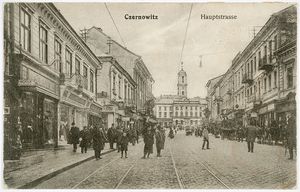
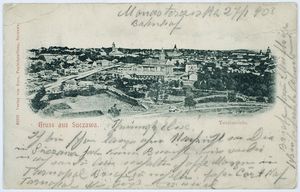
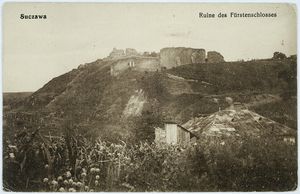
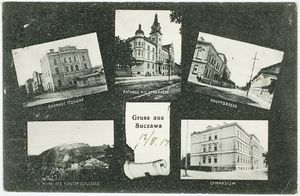
Historical Geography
In the 10th and 11th centuries, the geographical region of Bukovina was part of the Kyiv Rus’; from the 12th century onwards, it belonged to the Principality of Halych (Ukrainian: Halic’ke knjazyvtvo). In the 14th century, it became part of the Moldavian Voivodeship, which came under Ottoman suzerainty in the 16th century. In 1774, following a brief occupation by Russian troops during the Russo-Ottoman War, the Habsburg Monarchy began its occupation of the region, to which it was subsequently ceded (as regulated under constitutional law in the Convention of Constantinople, 7 May 1775). Until 1786, Bukovina was under military administration; thereafter, it was governed as an administrative district of the Kingdom of Galicia and Lodomeria from Lemberg/Ľviv/Lwów. In 1849, Bukovina became an independent Austrian crown land with the status of a duchy. Its final separation from Galicia took over a decade. Following a provisional government, a Bukovina provincial authority was established in 1854, before the first provincial parliament was constituted in 1861. With the collapse of the Habsburg Empire at the end of the First World War, Bukovina passed entirely to the Kingdom of Romania.
Since the Second World War, the region has been divided – a consequence of the Ribbentrop–Molotov Pact of 1939. Although Bukovina was not explicitly named in the secret additional protocol, which divided Eastern Central Europe into German and Soviet spheres of influence, However, the Soviet Union regarded the north of the region as part of its sphere of influence, which extended as far as Bessarabia. The Soviet Army occupied the area on 28 June 1940 and incorporated it into the Ukrainian SSR. Romania’s recapture of the region in July 1941, with the assistance of the German Army, was unable to reverse the balance of power in the long term. In March 1944, the Soviet Army advanced once more, and the northern part of Bukovina, with its capital Chernivtsi, remained from then on part of the Ukrainian Soviet Socialist Republic and, since 1991, of independent Ukraine. The southern part of Bukovina has belonged to Romania without interruption since 1918; following the partition, Suceava became its capital.
Common symbolism

The coat of arms of the Principality of Moldavia, to which Bukovina belonged until 1775, featured the moon, the morning star and, in the centre, an aurochs. The aurochs also featured in the coat of arms of the Austrian Crown Land – here on a shield divided into blue and red sections, with three golden stars. A ducal coronet was depicted above the shield. The Romanian national coat of arms of the interwar period also featured the aurochs. The coat of arms of Bukovina during the era of the Ukrainian Soviet Republic differed fundamentally in its design. Beech leaves and the two Bukovinian rivers, the Dniester and the Prut, were depicted beneath a city gate; the hammer and sickle replaced the crown. The coat of arms of today’s Chernivtsi Oblast combines the city gate of Czernowitz, the Moldavian eagle and beech leaves as a symbol of Bukovina.
Nicknames
Perhaps best known today is Paul Celan’s description of Bukovina as ‘a region where people and books lived’, by which he was referring to the rich body of work produced, above all, by the writers of Chernivtsi. After the First World War, when the multi-ethnic Austro-Hungarian Empire had collapsed, nicknames for Bukovina became popular that referred to the (long-standing peaceful) coexistence of several ethnic groups, such as ‘Europe in miniature’ or ‘Switzerland of the East’. In keeping with the nickname‘Little Vienna of the East’ for Chernivtsi, people from Bukovina were sometimes referred to as ‘Buko-Viennese’. Owing to its distance from the imperial centre, unflattering terms such as ‘Imperial and Royal penal colony’ and ‘Half-Asia’ were in circulation at the time.
Prehistory and Early History
The first settlement in Bukovina is dated to around 1600 BC. This is evidenced by the discovery of tools and weapons near Sereth/Siret, as well as the discovery of burial mounds. Of particular significance was the influence of the Scythians, who maintained cultural exchanges with the advanced Greek civilisation. The discovery of a temple hoard near Mielnica suggests contacts with the Persians. It is thought that the Persians under Darius I had advanced as far as the Bukovina region. Consequently, the Dacians came to exert considerable influence in the Carpathian region. When the Roman Empire finally subjugated them in 107, Bukovina became part of the Roman province of Dacia. Following massive incursions by the Goths, the Roman Emperor Aurelian (214–275) ordered the province to be evacuated in the 270s. The Goths were succeeded by the Huns, whose decline in turn opened up the possibility for the Visigoths to resettle the area. Evidence of the first Slavic settlement dates from this period, the 5th century AD, and this settlement continued over the following centuries.
Middle Ages
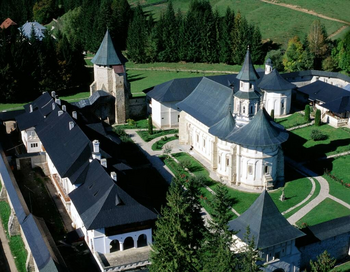
From the 12th century onwards, the Slavic settlers were joined by the Vlachs, from whom the later Romanians descended. Chernivtsi, which remains the largest city in Bukovina to this day, was founded by Slavs – at least this is suggested by the etymology of its name and its inclusion in a Rus’ register of towns. No exact date of its foundation is known, but the settlement is thought to have been established in the 12th century, situated along the trade routes running alongside the Dniester, Prut and Sereth rivers. During this period, Magyar and, it is likely, German settlements were founded along the tributaries of the Sereth.
The 13th and 14th centuries were marked by the Mongol invasions and were therefore not a period of prosperity. Around 1350, an alliance between the Hungarian King Louis I the Great of Anjou (1326–1382) and the Polish King Casimir III the Great (Kazimierz III Wielki, 1310–1370), southern Bukovina was recaptured. This is where the Principality of Moldavia was established. Northern Bukovina was under Polish rule at that time. By the end of the 14th century, northern Bukovina had also come under the control of the Principality of Moldavia. In the 15th century, under Stephen the Great (Ştefan cel Mare, 1433–1504), the region experienced its Moldavian golden age, during which significant monastic buildings were erected.
Modern times
As the region underwent economic and cultural development in the late Middle Ages, the interest of neighbouring powers – which had previously been primarily of a geographical and strategic nature – grew. From the turn of the 16th century, the Ottoman Empire succeeded in bringing the principality under its sphere of influence. Despite being obliged to pay tribute, the feudal state retained its autonomy. Following the Battle of Călugăreni (1595), the Wallachian prince Michael the Brave (Mihai Viteazul, 1558–1601) to wrest the region from the Sultan’s influence and united Transylvania, Moldavia and Wallachia under his rule. However, this arrangement was short-lived. By the end of the 17th century, Bukovina, as part of the Principality of Moldavia, was becoming increasingly dependent on the Ottoman Empire – the principality had become a vassal state. The tax burden increased, which, together with the recurring military conflicts between the Ottoman and Russian Empires, led to the region’s decline. With the end of the Russo-Ottoman War of 1768–1774, the Habsburgs, in agreement with the Russian Empire, occupied the territory. Austria had military-strategic interests in Bukovina, which provided a direct link between Northern Transylvania and Galicia. Accordingly, there was a strong political will to consolidate and stabilise the region. Emperor Joseph II (1741–1790) wanted to turn Bukovina into a model province in which reform ideas were to be implemented as a matter of priority. This was achieved through the targeted recruitment of settlers to the relatively sparsely populated area (around six people per square kilometre). From 1782 onwards, this state-directed policy consequently contributed to Bukovina’s multi-ethnic character. In addition to the groups of Magyars, Slovaks and Russian Old Believers – known as ‘Lipovans’ – who sought a home in Bukovina due to economic hardship or religious repression, the military government recruited German-speaking farmers and craftsmen. Furthermore, administrative officials arrived from all parts of the Habsburg Empire. The administrative integration into the Crown Land of Galicia and Lodomeria (1787) fostered population growth. From Galicia came Ukrainians (referred to as Ruthenians in the Habsburg Monarchy ), who wished to escape Polish dominance, and Jews, who were granted the right in Bukovina to practise a trade and work as farmers. Towards the end of the 19th century, overlapping social and ethnic tensions repeatedly arose between different population groups. Certain patterns of employment were dominant within the various ethnic groups: for example, Romanians and Ukrainians were heavily represented in agriculture and forestry. According to an occupational breakdown from 1910, 90 per cent of them were employed in these sectors, which was above the average for the predominantly agricultural region of Bukovina (71 per cent). Among the Romanians, as well as sporadically among the Ukrainians, there were aristocratic large-scale landowners; for the most part, however, they were ordinary farmers. The proportion of Romanians and Ukrainians in industry and manufacturing, trade and transport, the civil service, the military and the liberal professions ranged between 2 and 5 per cent. In these sectors, the proportions of Jews, Germans (Austrians) and Poles were significantly higher.
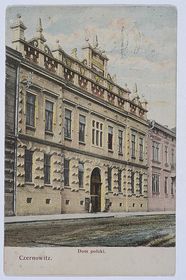
Furthermore, the ethnic groups began to organise themselves: among the Romanians, associations were already being formed as early as the 1840s. In 1865, the most important and longest-standing association of Bukovinian Romanians was founded: the ‘Society for Romanian Culture in Bukovina’ (Societatea pentru Cultura şi Literatura Română în Bucovina). From the 1890s onwards, Ukrainians followed suit, and Germans did so a little later. The ‘national houses’ in Chernivtsi and smaller towns remain symbols of this to this day. In 1910, a new electoral law came into force, which allocated seats in the provincial parliament to the various ethnic and social groups according to a complex formula. However, this so-called ‘Bukovina Compromise’ failed to prove its worth in practice: a contested theatre of war during the First World War, Bukovina fell to Romania after the war ended, and Romania did not continue this policy of compromise.
Contemporary History

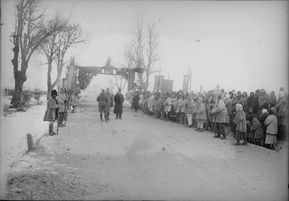
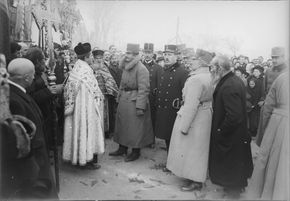
Following the collapse of the Habsburg Empire, the future of the Crown Land of Bukovina hung in the balance. The last governor, Josef Graf von Ezdorf (1846–1931), handed the province over to the Ukrainian and Romanian National Councils, together with a directive to shape the region’s future jointly and by mutual agreement – an obvious reminder given the tensions between the two ethnic groups. Although a Ukrainian and a Romanian member of parliament, Omeljan Popovyč and Aurel von Onciul, initially assumed joint control of the government, their period of joint rule was short-lived. Romania subsequently secured power in the region, firstly through military action (the capture of Czernowitz on 11 November 1918) and secondly through a pseudo-democratic act. On 28 November 1918, the ‘General Congress of Bukovina’ took place in Chernivtsi, at which the delegates resolved to permanently unite Bukovina with the Kingdom of Romania. The Ukrainian independence movement was powerless to oppose this. Only invited guests were granted admission and the right to vote at the Congress; the main criticism was that these guests did not reflect the ethnic and political spectrum of Bukovina’s population. Of the 74 people invited, 48 were Romanians, which did not correspond to the ethnic proportions in the region. In the run-up to the event, the Jews of Bukovina demanded a guarantee that the Romanian National Council would advocate for their full civil rights in Greater Romania, as, unlike in the Habsburg Empire, there had been no equal rights for Jews in Romania until 1923. The Jewish inhabitants of Bukovina feared a legal setback. In fact, no such guarantee was forthcoming, so the Jewish People’s Council declined to take part in the General Congress. The German demand for cultural autonomy was initially largely met. Ukrainian deputies, however, were not invited. Following the annexation of Bukovina to Romania, brought about in this manner and legitimised by the Treaty of Saint-Germain-en-Laye (Southern Bukovina in 1919, Northern Bukovina in 1920), a gradual ‘Romanianisation’ of the region took place. This included integration into the centrally governed Romanian state and its administrative structures, as well as a nationality policy that took on repressive features towards the non-Romanian population, even though this group (Ukrainians, Jews, Germans and Poles) together accounted for 60 per cent of the total population at the time. From then on, a near-native command of Romanian was required for government posts in the administration and judiciary, which in practice meant that many were excluded. The Ukrainian population came under the greatest pressure and responded with resistance, in some cases armed. Consequently, a state of emergency remained in force in their settlement areas until 1928. By the early 1920s, many of their political leaders were in prison, meaning there was no independent Ukrainian party. Furthermore, schools were a key focus of the Romanianisation campaign: the provision of lessons in German and Ukrainian was deliberately scaled back during the 1920s. In 1927, the last Ukrainian-language school was forced to close. In 1913, there were 97 German-language schools throughout Bukovina, most of which fell victim to the subsequent Romanianisation policy (in 1919/20, 64 primary schools remained, 31 in 1923–24 and just one in 1927–28, although there was a slight resurgence thereafter). The pressure to conform linguistically was intense; however, thanks to the large number of German-speaking Jews, German largely managed to hold its ground as the lingua franca of the towns. Things also became difficult for the region’s Jewish population; the gender equality enshrined for them in the Paris Suburban Treaties was delayed. Consequently, only a few Jews identified with the new state. Many studied abroad and joined the Zionist movement. The main governing party during this period was the liberal Democratic Party of Union (Partidul Democrat al Unirii), which, until the end of the 1920s, was the only party to have consistently established itself within the Bukovinian political landscape. In general, the 1920s are described as a relatively positive period for democratic development, despite all the signs of crisis that were already evident in the parliamentary system at that time. From the late 1920s onwards, parties and movements in Romania that openly agitated against minorities began to gain support, putting more moderate parties, such as the Peasants’ Party (Partidul Național Țărănesc), under pressure once again. From 1934 onwards, under pressure from unemployed Romanian youth, politicians demanded that Ukrainians and Jews be completely barred from accessing educational institutions and government posts. Their presence in commercial enterprises was restricted. When the National Christian Party (Partidul Național Creștin) came to power in 1937, state-sanctioned anti-Semitism intensified. Numerous Jews were stripped of their citizenship, which led to protests from abroad. Nevertheless, the Romanian authorities continued to pursue this policy. In Bukovina, by 1939, a third of the Jewish population had lost their citizenship, including many long-established residents of Chernivtsi. The so-called ‘Year of the Russians’ in 1940, with the Soviet Union’ s annexation of the northern part of the region, meant expropriation, nationalisation and deportation for around 12,000 Bukovinians, including 3,500 Jews. Many Romanians fled to the southern part of the region, which was still under Romanian control; the German population was resettled in both parts as a result of different treaties between the German Reich and, respectively, Romania (for Southern Bukovina) and the Soviet Union (for Northern Bukovina). For the Jewish population, the worst was yet to come: when Romanian troops retook the northern part in July 1941, the Jews were regarded as collaborators, which served as a justification for their persecution. Consequently, the Jewish population of Bukovina fell victim to repression and attacks by various groups. In the summer of 1941, pogroms took place, carried out partly by special units and partly by local residents. This was followed in the autumn of 1941 by ghettoisation and deportation to Transnistria, an event that became known as the Romanian Holocaust. The exact number of surviving Bukovinian Jews is unknown. In November 1943, 34,149 of the deported Bukovinian Jews were still alive in Transnistria. No further specific figures from Transnistria have been recorded. In Chernivtsi itself, 17,000 Jews survived the war because they were issued with special identity documents. The others fell victim to malnutrition, illness, epidemics and mass shootings. Most of the survivors subsequently decided to emigrate, often first to Romania, Germany or Austria, before many of them moved on to Palestine or the USA.
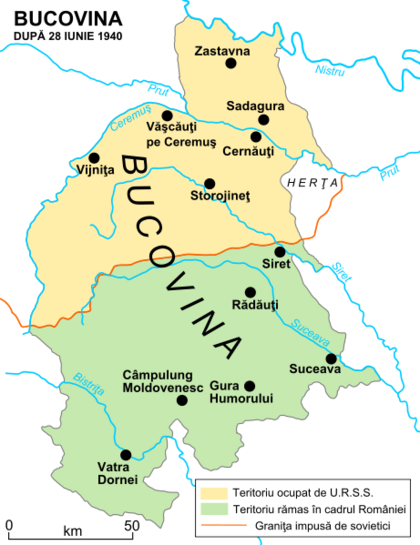
The outcome of the Second World War cemented the division of Bukovina. With its partition between the Ukrainian Soviet Socialist Republic and Romania – which had been significantly reduced in size following the end of the war – the changes across the entire region were permanently enshrined. This led to further ethnic segregation: Around 30,000 Romanians left Northern Bukovina, whilst around 10,000 Poles were resettled in Poland; at the same time, Ukrainians and other Soviet citizens were settled in the area to work in the growing local industry, public administration and the education system. From 1940/1941, or by 1944 at the latest, following the final division of Northern and Southern Bukovina, developments proceeded independently of one another at all levels. The two parts of Bukovina had virtually no contact with one another. The only thing they had in common was the deliberate suppression of their multi-ethnic past.
Outside Bukovina, however, an image of the region persisted, one cultivated by ‘Bukovinians in exile’ and made particularly well-known through the literature of Jewish writers. After 1989, and particularly following Romania’s accession to the EU in 2007, contacts between the north and south have increased once again, as have those with ‘historic partners’ in Germany and Austria.
Population
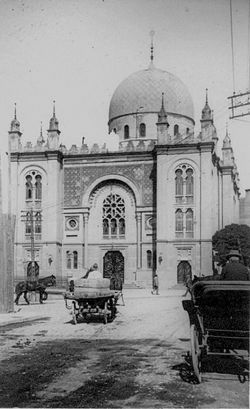
From 1812 onwards, an official certificate of tolerance allowed Jewish immigrants to settle permanently. There was a sharp rise between 1868 and 1881, when this section of the population grew by 40 per cent. In 1900, Jews accounted for around 13 per cent of the population, which was slightly higher than the proportion of Germans. Many Jews lived in Czernowitz, meaning that, after Vienna and Lemberg, the city had the third-largest Jewish community in Austria-Hungary at the turn of the century. As the Jews of Bukovina were predominantly German-speaking, and together with the non-Jewish Germans formed the majority of the urban population in the second half of the 19th century, German was the most commonly used language in the Bukovinian capital, both in public life and within families. In rural areas, the proportions of Romanian and Ukrainian speakers were significantly higher – a reflection of the settlement pattern. In the 19th century, large numbers of Ukrainian-speaking people moved into the region, causing the Romanian-speaking population to lose its numerical dominance. According to an Austrian census, in 1910 there were approximately 800,000 inhabitants in Bukovina, with 38.4 per cent being Ukrainian speakers, 34.5 per cent Romanian-speaking, 21.2 per cent German-speaking (Jews and Germans, with Jews constituting the majority at 60 per cent), 4.6 per cent Polish-speaking and 1.3 per cent Hungarian-speaking. In the Austrian censuses, the classification was based on everyday language, so that Jews and Germans formed a single group. Furthermore, it was a binary system: people were assigned to just one language, which did little justice to the mixed-cultural everyday life within families and the transcultural trade contacts. Today, 918,500 people live in the Chernivtsi Oblast and 688,435 in the Romanian part. The populations are largely ethnically homogeneous, as statistics from the year 2000 show: 96.7 per cent of all residents of Suceava County (not entirely identical with historical Southern Bukovina) identified as Romanians, 1.4 per cent as Ukrainians; the remaining groups each accounted for less than one per cent. 0.3 per cent identified as German. In the Chernivtsi region, the population proved to be somewhat more mixed, with Ukrainians clearly dominating here as well at 70.8 per cent (followed by: Romanians 10.7 per cent, Moldovans 9.0 per cent, Russians 6.7 per cent, Jews 1.8 per cent, Poles 0.5 per cent). 0.02 per cent identified as German.
Economy
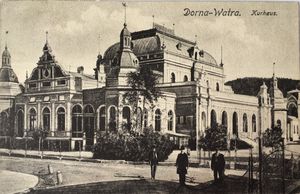
Whilst part of Galicia, Bukovina held a peripheral status. After being elevated in 1849 to the status of an independent crown land of the monarchy with its own administration, it experienced an ambivalent economic and cultural development in the years that followed. Of particular note is its connection to the European railway network (1866 in Czernowitz, 1867 in Suczawa), which fostered the emergence of industry. Prior to this, right up until the 18th century, livestock farming had been one of the main sources of income for the people of Bukovina. The arable farming carried out alongside this served mainly as a means of subsistence. Maize, millet and potatoes were the crops predominantly grown for personal consumption. In the north-west of Bukovina, horse breeding played a more significant role, practised in particular by the state/military and the Hutsuls. When Bukovina became part of the Habsburg Empire, forestry was added to the mix, driven by the growing demand for timber. The expansion of the railway network in the second half of the 19th century boosted this sector, which then became the most important branch of the economy alongside agriculture. In addition, a spa culture developed: Dorna-Watra/Vatra Dornei and Kimpolung/Câmpulung Moldovenesc had become popular health resorts and holiday destinations. Compared with other Crown Lands, economic and infrastructural development remained below average. Many Bukovinians therefore sought their fortune by emigrating overseas. Of great significance was the founding of the University of Czernowitz in 1875, the easternmost, largely German-speaking university in Europe. It contributed to the cultural revival of the region, whose politics and culture were shaped by its diverse ethnic groups.
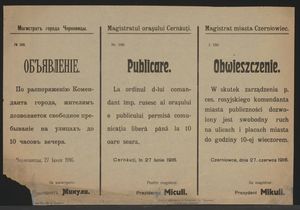
4. The Germans in Bukovina
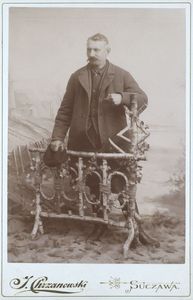
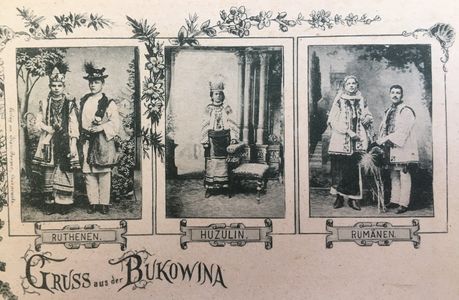
Before 1775, only a few German settlers – for example, those originating from Galicia and Transylvania who had moved there in the Middle Ages – lived in Bukovina. It was not until the Habsburgs came to power that a targeted, albeit temporary, settlement policy was introduced. Settlers from German-speaking regions were recruited to further develop the sparsely populated region. In return, they were promised certain privileges, such as significant tax relief and exemption from military service (until 1830/31). The state also provided land, houses, tools and livestock. Overall, the Germans can be divided – depending on the classification used – into three or four distinct groups. Hugo Weczerka, for example, distinguishes between:
- farmers and rural craftsmen from south-west Germany, who settled in the hilly countryside between the mountains and the Pruth Valley (main phase 1782–1787),
- miners from Spiš who settled in the valleys of the Vltava and Golden Bistrica rivers and worked predominantly in ore mining (1784–1809),
- German-Bohemian glassmakers, forest workers and forest farmers who were settled on the edge of the Carpathians (1793–1817 and 1835–1850),
- the urban middle classes, who came from the various Crown Lands (1775–1918).
Other researchers simply name the groups, namely ‘Swabians’ (which was a generalised collective term for German-speaking people from the west),‘Zipsers’and ‘Böhmerwäldlers’, between whom there were marked linguistic, religious and cultural differences. In the late 19th century, the first clubs and associations were founded which identified as Christian-German, thereby laying the foundations for a German-nationalist regional identity. Despite a gradual trend towards the integration of the settler groups, the Germans in Bukovina did not regard themselves as a separate and distinct group until the end of the First World War. It was not until the interwar period that, under pressure from Romanianisation and against a backdrop of general nationalist agitation, the common ground between the German settler groups was emphasised more strongly: In the commemorative publication marking the 25th anniversary of the most important of these organisations, the Association of Christian Germans in Bukovina, founded in 1897, the separation of the German groups was highlighted just as much as the slow process of integration was emphasised: It was only the ‘gathering of all Germans, so widely scattered and separated by various barriers, into a single association [that] could give the concept of Bukovinian Germanness its true meaning and expression.’ The concept of the Bukovinian Germans only became firmly established towards the end of the 1920s. In the 1910s and 1920s, the phrase ‘German identity in Bukovina’ or ‘Bukovinian German identity’ appears repeatedly. Even in the *Handwörterbuch des Grenz- und Auslandsdeutschtums* (*Concise Dictionary of German Identity in Border Regions and Abroad*), it is noted that ‘the origins of the Bukovina Germans are so diverse and their shared destiny in their new homeland has not had a long or deep enough effect’, so that ‘ethnic consciousness and the will to form a national community are not strong enough everywhere’, despite the discernible ‘clear adherence to German identity’. To put it more bluntly, it could be said that it was only under the continued influence of Nazi rhetoric on ethnic groups, and above all through the experiences of resettlement and the loss of their homeland, that many Bukovinian Germans arrived at a lasting sense of identity as Bukovinian Germans. The German colonists were primarily instructed to integrate into the existing settlements. Consequently, predominantly German settlements sprang up alongside those that already existed; it was chiefly among the German Bohemians that new villages were founded. There were therefore no compact German settlement areas in Bukovina – in stark contrast to the settlement patterns of the Romanians and Ukrainians in Bukovina, or indeed to those of the Germans in neighbouring Bessarabia. Only in a few areas was there (until the resettlement following the Ribbentrop–Molotov Pact in 1940) a larger proportion of the population. Notable examples include Rosch/Roša, now a district of Czernowitz, which was predominantly populated by Germans, as well as Radautz/Rădăuți and the surrounding area. Overall, the proportion of Germans in the total population never exceeded 9 per cent by 1910 (1850: 6.5 per cent).
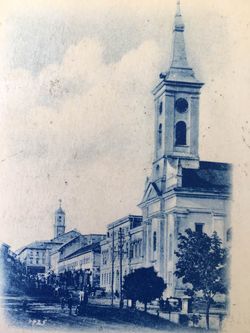
According to a census carried out in 1900, two-thirds of Germans were Roman Catholic and one-third were Evangelical Lutheran. The Romanians were almost exclusively (99 per cent) of the Orthodox faith (Greek-Oriental), as were the Ruthenians (90 per cent), of whom 8 per cent belonged to the Uniate Church. Poles, Armenians and Hungarians, on the other hand, were almost exclusively Roman Catholic; they accounted for 12 per cent of the population. According to the census, 13 per cent were‘Israelites’. In the Habsburg Monarchy, German was the official language; in 1860, Romanian and Ruthenian were additionally recognised as official languages, meaning that official correspondence and speeches in the provincial parliament could be conducted in these languages. However, it was precisely these population groups that were affected by an illiteracy rate that was above average compared with the rest of Cisleithania: in 1890, 80 per cent of all Bukovinians over the age of six were illiterate (Cisleithania as a whole: 30 per cent).
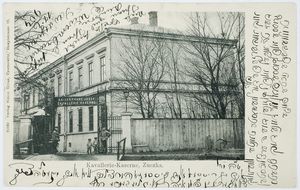
The University of Chernivtsi, as a predominantly German-speaking educational institution, attracted German-speaking intellectuals. Among the university lecturers was Raimund Friedrich Kaindl (1866–1930), a historian and ethnologist who published numerous works on the history of Bukovina. Kaindl was committed to German nationalism, including in his writings.<link typo3/#_ftn1>[15]</link>
The privileged position of the German language in cultural and public life benefited German culture in the region as a whole. In particular, the Jews of Bukovina, who identified as Jewish, in turn made a decisive contribution to the significance of German culture and language in the region. Notable figures include, amongst others, the writer and journalist Karl Emil Franzos (1848–1904), the tenor Joseph Schmidt (1904–1942), and the politicians Benno Straucher (1854–1940) and Mayer Ebner (1872–1955). Numerous social, economic and cultural activities were spearheaded by the Jewish urban middle class, with the result that cultural life in Bukovina was heavily centred on the capital, Chernivtsi. This also explains the comparatively lively co-operation between Germans and Jews and the late nationalisation of the Germans in Bukovina. However, talk of a ‘German-Jewish symbiosis’ in Bukovina obscures underlying tensions. By the outbreak of the First World War, a predominantly Christian conception of Germanness had already taken shape within the student fraternities. There was no ‘Aryan clause’ in the Chernivtsi student fraternities, though this did not preclude anti-Semitism. In the 1920s, the two groups were still united by their shared struggle against Romanianisation, and there were instances of co-operation, yet by the 1930s this pragmatic alliance had largely come to an end – precisely at the time when the Romanian right was gaining strength in Czernowitz and increasingly began to harass Jews.
Following a change in the region’s national affiliation, the German population had hopes for a secure future in Romanian Bukovina, and their representatives voted accordingly in favour of annexation to Romania at the 1918 General Congress of Bukovina. However, political pressure on minorities in Bukovina soon intensified, which became evident in the education system. In 1920, the University of Chernivtsi became Romanian-speaking, and opportunities for school education in German were also restricted – although the German population as a whole was in a significantly better position than, for example, the Ukrainian population. During this difficult period, German institutions – like comparable organisations of other ethnic groups – relied on financing from abroad. In some cases, this came from denominational aid societies; in others, the support provided by Germans abroad was already driven by ethnic-nationalist motives. This made it easier for the National Socialists, following their rise to power in 1933, to gain access to the German population throughout Romania and also in Bukovina. Over the course of the 1930s, ethnic-nationalist and anti-Semitic views became increasingly acceptable even amongst the Bukovina Germans, as can be seen, for example, in the newspaper *Czernowitzer Deutsche Tagespost *.
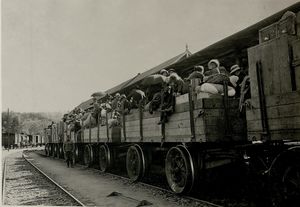
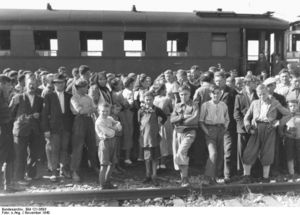
Economic difficulties during the interwar period and the pro-German nationalist leanings of many people offer possible explanations as to why the majority of the German population agreed to the‘Heim ins Reich’resettlement in 1940. The fear of Soviet power should also be mentioned. In the wake of the Ribbentrop–Molotov Pact, a Soviet ultimatum was issued in June 1940 demanding the evacuation of Northern Bukovina. The resettlement from the northern part was laid down in a German–Soviet agreement dated 5 September 1940. The agreement explicitly declared the resettlement to be voluntary. The resettlement of Germans from the southern part of Bukovina was, in practice, voluntary. To facilitate this, a separate treaty was concluded between Germany and Romania. In the autumn of 1940, a total of 95,770 people from both areas were transferred to German territory (Northern Bukovina: 43,641; Southern Bukovina: 52,129). This figure exceeded the number of Germans in Bukovina before the war (approx. 75,000), even though a few hundred families remained behind, particularly in the south. Among those resettled were the non-German partners of the resettlers, as well as Ukrainian- and Romanian-speaking individuals with no German family ties, who took advantage of this opportunity to escape from Soviet-controlled territory. For most Germans from Bukovina, the‘Heim ins Reich’resettlement programme was a great disappointment. They were often held in camps for months or even years before finally being allowed to settle – frequently on farms and in houses in the incorporated territories of Poland, from which Jewish and non-Jewish Poles had previously been expelled. A comparatively large number of so-called ‘Buchenland Germans’ were deemed ‘unsuitable for resettlement’ and were sent directly to the ‘Altreich’, with their communities (and often their families) torn apart. Furthermore, as with other‘Heim ins Reich’ resettlements, there was a close link between resettlement and selection policies, whereby people deemed ‘racially inferior’ were singled out, transported to ‘sanatoriums’ and subsequently murdered.[17] At the end of the war, several thousand Bukovina Germans were sent back to Southern Bukovina by the Soviets, whilst others continued to live in Austria, in the Soviet Occupation Zone/GDR, or emigrated overseas. The majority of the Bukovina Germans, however – around 60,000 people – made their way to West Germany after the war. In Munich, the “Landsmannschaft der deutschen Umsiedler aus der Bukowina in Deutschland e.V.” (Association of German Resettlers from Bukovina in Germany) was founded in 1949; it was later renamed the “Landsmannschaft der Buchenlanddeutschen”. In 1955, the administrative district of Swabia took on the patronage of this group. In 1989, the Bukovina Institute opened its doors in Augsburg. As a result, ties between the Bukovina Germans in Germany, the district of Swabia and the present-day population of Northern and Southern Bukovina continue to be maintained. Following German reunification, the Germans who remained in Bukovina have gained a greater sense of self-assurance. In Ukraine, an Austrian cultural society based in Chernivtsi serves as an umbrella organisation, whilst in Romania they belong to the ‘Democratic Forum of Germans in Romania’. As outlined, these are small groups in terms of numbers.
The authors would like to thank Daniel Norden for his assistance, and Luzian Geier, Mariana Hausleitner and Raimund Lang for their comments.
Bibliography
- Mihai-Ştefan Ceauşu: Parliamentarism, Political Parties and the Political Elite in Habsburg Bukovina (1848–1918). Contributions to the history of parliamentarism in Central and Eastern Europe, Iași, 2004.
- Andrei Corbea-Hoişie: The Cultural Landscape of Bukovina. Studies on German-language Literature in Bukovina after 1918, Iași, 1990.
- Jeroen van Drunen: ‘A Sanguine Bunch.’ Regional Identification in Habsburg Bukovina, 1774–1919. Amsterdam 2015 (Pegasus Oost-Europese Studies 24).
- Gaëlle Fisher: Resettlers and Survivors: Bukovina and the Politics of Belonging in West Germany and Israel, 1945–1989. New York 2020.
- Mariana Hausleitner: The Romanianisation of Bukovina. The Enforcement of Greater Romania’s Nation-State Claim, 1918–1944. Munich 2001.
- Mariana Hausleitner: An Eventful History. Bukovina and the City of Czernowitz from the 18th to the 20th Century. In: Helmut Braun (ed.): Czernowitz. The History of a Lost Cultural Metropolis. Berlin 2005, pp. 31–81.
- Dirk Jachomowski: The Resettlement of the Germans of Bessarabia, Bukovina and Dobruja. From an Ethnic Group in Romania to a ‘Settlement Bridge’ on the Reich’s Border. Munich 1984 (Series of the South-East German Historical Commission 32).
- Ortfried Kotzian: The Resettlers. The Germans from Western Volhynia, Galicia, Bukovina, Bessarabia, Dobruja and the Carpathian Ukraine. Munich 2005 (Areas of Expulsion and Expelled Germans 11).
- Serhij Osatschuk: Germans in Bukovina: History of a Social Movement. Second Half of the 19th – Early 20th Centuries [The Germans in Bukovina: History of a Social Movement. Second half of the 19th century to the beginning of the 20th century]. Chernivtsi 2002.
- Victoria Popovici, Wolfgang Dahmen, Johannes Kramer: Multiculturalism in Practice: Chernivtsi and Bukovina. Frankfurt am Main 2010.
- David Rechter: Becoming Habsburg: The Jews of Habsburg Bukovina 1774–1918. Oxford 2013.
- Kurt Scharr: ‘The Bukovina Region’. The Emergence of a Region on the Periphery 1774–1918. Vienna 2010.
- Hugo Weczerka: Ethnic Groups and Public Life in Bukovina 1848–1914. In: Südostdeutsches Archiv 42–43 (1999–2000), pp . 23–40.
Periodicals
- Analele Bucovinei, Bucovina Institute, Rădăuți, Romanian Academy Press (1994 to the present).
- Beck Bibliography on the Culture and Regional Studies of Bukovina. 5 volumes to date. Munich 1966–2010.
- *Codrul Cosminului*, Stefan cel Mare University, Suceava (1995 to the present).
- Die Stimme, World Federation of Bukovinian Jews, Tel Aviv (1944 to the present).
- *Der Südostdeutsche* (formerly: *Newsletter of the Association “Association of German Resettlers from Bukovina in Germany e.V.”, Buchenland, *Südostecho*) Association of the Buchenland Germans, Munich, Augsburg (1949 to the present).
- Kaindl Archive, Raimund-Friedrich-Kaindl Society e. V., then Bukovina Institute, Stuttgart, then Augsburg (1978–2004).
Web link
www.difmoe.eu/d/search/?sort=newest&accessibility=all&collections=vc:6de9af0f-6c93-4f4c-ac6d-a57f3f352715 (DIFMOE Collection: Jewish-German Bukovina 1918+, digitised historical newspapers and periodicals from Bukovina)
Notes
[1] Information taken from Hugo Weczerka: Ethnic Groups and Public Life in Bukovina 1848–1914. In: Südostdeutsches Archive 42–43 (1999–2000), pp. 23–40, p. 31.
[2] On contemporary history, see Hausleitner: A Turbulent History.
[3] See, for example, Jean Ancel, ‘Statistics of the Holocaust in Romania’. In: Halbjahreschrift für südosteuropäische Geschichte, Literatur und Politik, 17, issue 2 (Nov. 2005), pp. 29–44.
[4] Hausleitner, *A Turbulent History*, p. 50.
[5] According to Hugo Weczerka, ‘An Introduction to Regional Studies’. In: Franz Lang (ed.): Buchenland. One Hundred and Fifty Years of German Life in Bukovina (Publications of the South-East German Cultural Association, Series B, Volume 16), Munich 1961, pp. 5–22, p. 12.
[6] Census figures in Weczerka, ‘Ethnic Groups’, and Hugo Weczerka: ‘A History of German Settlement in Bukovina’. In: Franz Lang (ed.): *Buchenland. One Hundred and Fifty Years of German Life in Bukovina (Publications of the South-East German Cultural Association, Series B, Volume 16), Munich 1961, pp. 23–41. Hausleitner; A Turbulent History, p. 57.
[7] Figures according to Kotzian, Umsiedler, p. 142.
[8] Hugo Weczerka: A History of the Settlement of the German Community in Bukovina, pp. 23–41.
[9] Osatschuk: Germans in Bukovina.
[10] Commemorative publication dedicated to the Association of Christian Germans in Bukovina on the occasion of the celebration of its 25th anniversary, by the Chairman Prof. Dr Adolf Butz, Chernivtsi 1922, p. 3.
[11] Rafael Kaindl: The German Community in Bukovina, special reprint from *Osteuropäische Zukunft*. Journal on Germany’s Tasks in the East and South-East, Munich 1916.
[12] Bukovina, in: Carl Petersen; Otto Scheel (eds.), Concise Dictionary of German Communities in Border Regions and Abroad (Breslau, Ferdinand Hirt, 1933), Vol. I, pp. 611–644, here p. 624.
[13] Cf. Weczerka: Ethnien, p. 30.
[14] See Weczerka, *Ethnic Groups*, p. 32.
[15] See, on Kaindl: Hauke Focko Fooken, ‘Raimund Friedrich Kaindl as a Researcher of the Germans in the Carpathian Regions and a Representative of Greater German Historiography’, Lüneburg 1996 (Hamburg Contributions to the History of the Germans in Eastern Europe 3).
[16] Figures taken from Hausleitner, *Romanianisation*, pp. 370–371. Kotzian, *Resettlers*, p. 174, gives slightly different figures: Northern Bukovina: 42,441; Southern Bukovina: 52,107.
[17] For a detailed discussion of this, see Maria Fiebrandt, *Selection for the Settler Community: The Inclusion of Ethnic Germans in Nazi Hereditary Health Policy in the Context of the Resettlements 1939–1945*. Göttingen 2014.
Citation
Maren Röger, Gaëlle Fisher: Bukovina. In: Online Encyclopaedia on the Culture and History of Germans in Eastern Europe, 2017. URL: ome-lexikon.uni-oldenburg.de/p32554 (accessed 30 November 2020).
Terms of use for this article
Copyright © University of Oldenburg and the Federal Institute for the Culture and History of Germans in Eastern Europe (BKGE), all rights reserved. This work was produced as part of the project ‘Online Encyclopaedia on the Culture and History of Germans in Eastern Europe’ and may be reproduced and published provided the rights holders’ consent has been obtained. Please contact:
If you have any specialist comments or additions to the text, please contact the editorial team, citing relevant literature and source references.