

Jews
Jews
1. Genesis
Jewish settlement in Eastern Europe can be traced back to efforts by the ruling powers in the High Middle Ages to encourage specifically qualified groups of people (merchants, craftsmen, farmers) to settle in their provinces. The settlement of Jews – who came primarily from German-speaking regions and settled in small communities in towns situated further and further east – was linked to the hope of revitalising trade and introducing a monetary economy.
The Jewish population grew steadily until the end of the 19th century, both in absolute terms and as a proportion of the non-Jewish population. Following the Partitions of Poland, the largest number of formerly Polish Jews were found in the Russian partition, followed by the Austrian and Prussian partitions. Until well into the 19th century, Yiddish was the predominant language of everyday life. Among the middle and upper income groups, moreover, young boys were systematically taught Hebrew, a language which, beyond religious life, was of great importance for the administration of justice, communal governance and business life.
Relative legal stability and the safeguarding of specific economic niches in trade, tenancy and craftsmanship led, in the early modern period, to the establishment of a large number of Jewish communities in Polish and Lithuanian provinces, which were characterised by legal and institutional continuity, cultural cohesion and religious observance. They were under the protection of both the Crown and the aristocracy and, despite severe setbacks (such as the Khmelnytsky Uprising of 1648), were able to supplement the autonomy of the individual communities through regional and supra-regional consultative bodies (councils). The abolition in 1764 of the best-known body of this kind, the so-called Council of the Four Lands, marked the beginning of the dismantling of Jewish autonomy by the state, a process which was vigorously pursued by the partitioning powers – Russia, Austria and Prussia – following the Partitions of Poland.
In Eastern Europe, Jews represented a wide spectrum of religious and cultural-political attitudes. With the messianic movement founded by Sabbatai Zevi (1626–1676, see below) and, even more so, with the emergence of Hasidism in the mid-18th century, religious attitudes within Jewish communities became increasingly diverse, leading to disputes over the nature of the community and liturgical practices. This growing complexity was counterbalanced by a reluctance to marry outside the community and a continued deep-rooted adherence to religious and communal traditions.
Economic hardship, overcrowding in certain sectors of the labour market due to legal and informal exclusion, and the promise of a fresh start elsewhere led, over the two generations between the 1880s and the Second World War, to a phase of mass emigration, during which some three million Jews left Eastern Europe.
During the period of German occupation and the genocide of European Jews during the Second World War, the traditional Eastern European Jewish way of life was irrevocably destroyed. Only a minority of the few survivors were able to develop prospects for a life and a future under the Soviet hegemony, which rapidly consolidated after 1944/45.
Furthermore, the emigration from the Soviet Union to Israel, which had been permitted since the 1970s, reduced the number of citizens identifying as Jewish within the Soviet sphere of influence. Following the end of one-party rule under Soviet control, large Jewish communities in Eastern Europe existed only in Hungary, the Russian Federation and Ukraine.
Term
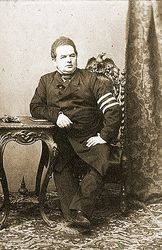
In the following, individuals and groups of people are referred to as Jews or Jewish who regarded themselves, in the broadest sense, as belonging to Judaism as a religious and ethnic community, and whose affiliation was further evidenced by factors such as membership of a Jewish community or congregation, family ties and language.
Ambiguities arise in the case of those groups of people who were ‘Jewish’ according to only some of these criteria, such as the Karaites (also known as Karaites), who were based in Lithuania, amongst other places, traced their origins back to pre-Talmudic Judaism and used Hebrew in religious contexts. The so-called Frankists – that is, followers of the Neo-Sabbatean (see below: Sabbatai Zevi) Jakob Frank (c. 1726–1791), maintained a Neo-Sabbatean and crypto-Jewish identity over several generations through family networks, particularly in Warsaw (Warszawa) and Prague (Praha).
In general, converts to Christianity were often still regarded as Jews both by their community of origin and within their new religious context, such as the author Stanisław Hoge (1791–1860) or the entrepreneur Leopold Kronenberg (1812–1878). Social Democrats or Communists of Jewish origin, who generally distanced themselves from any religious self-identification, continued to be regarded as ‘Jewish’ by non-Jewish, often anti-Semitic quarters and denounced as the epitome of a Judaism that was alleged to harbour a hostile attitude towards a supposedly Christian-European civilisation.
Support, Use
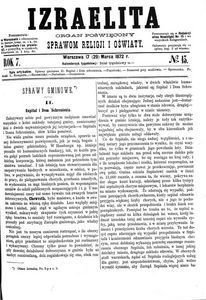
Jews in Eastern Europe used Hebrew, Yiddish and local-language terms to describe themselves, the meanings of which sometimes differed considerably from one another depending on the context. In Hebrew, these included biblical and rabbinical terms, which were supplemented by place names as required: ‘bnei jiisroel’ or ‘qlal jisroel’ , for example, referred to the entire people of Israel or the sons of Israel, whilst ‘jehudei polin’ or ‘jehudei lite’ referred to the Jews in Poland or Lithuania. Local self-designations such as bnei/toshavei edat (the sons/citizens of the [Jewish] community), followed by a place name, e.g. Posna (Posen/Pozna). In a religious context, Polish-Jewish communities followed the Ashkenazi rite with variations referred to as nusech poyln (Polish custom). In Yiddish, the term jidn was common. During the 19th century, regional distinctions such as galicjaner and litvak gained prominence, with the adjective litvisch , derived from the latter, also defining the Lithuanian-Jewish variant of rabbinical observance (litvische schul: a synagogue that followed traditional rabbinical observance rather than, for example, the Hasidic rite). Self-designation in the national languages, which only gained significance during the 19th century, usually reflected variations in religious and cultural self-identity. Polish-Jewish authors mostly used the terms Żyd, Żydzi, żydowski etc., whilst Russian-Jewish authors used Evrej, evrejskij etc . In several East Central European languages, there was the concept of belonging to the ‘Mosaic faith’ (Polish: wyznanie mojżeszowe; Czech: mojžišské vyznání; Hungarian: izraelita vallású). The term starozakonny (Old Testament adherent), adopted from Polish usage, became common in sophisticated and official discourse for several generations in the 19th century, but lost its significance in the 20th century. As a self-designation, the term ‘Izraelita’ (Polish) or ‘Israelité’ (Czech), which referred to a way of life or congregation oriented towards reform and integration, gained only limited significance and was more widespread only in Hungarian (‘izraelita’).
Foreign-language equivalents, translations, loanwords
The terms used to refer to the Jewish minority and its members in the surrounding non-Jewish languages reflected the perceptions of those communities. In the Middle Ages and early modern period, religiously influenced terminology with negative connotations prevailed, labelling Jews as ‘unbelievers’ (Latin: infideles; Polish: niewierni). More neutral terms included judaeus ( Latin), Żyd, żydowski ( Polish), Evrej ( Russian), Žid (Czech) or Židia ( Slovak). In all areas of Eastern and Central Eastern Europe where Jewish communities were established, derogatory terms in the local languages were widely used, such as Żydy (Polish, similar in Russian), Židák (Czech) or Zsid ( Hungarian).
Similarly, the German term ‘Ostjuden’ became widely used in the 20th century. Coined in the context of political mobilisation prior to the First World War, it identified Jews living in Eastern Europe with ways of life and circumstances considered typical of that region. Poverty, religious observance, cultural isolation and communal cohesion amongst Eastern European Jewry came to be seen as a (positively or negatively assessed) counter-model to the Central and Western European ‘norm’ of Jewish acculturation and integration.
Settlement and demographic trends
The Middle Ages and the early modern period
Although Jewish merchants had been residing, at least temporarily, in fortified trading centres such as Prague, Krakow/Kraków and Gran/Esztergom/Ostrihom, there is no evidence of permanent Jewish communities in Eastern Central Europe prior to the 13th century. These communities only began to settle in the course of the late medieval granting of privileges by the local rulers under the Magdeburg Law, as a result of which permanent Jewish communities emerged in Bohemian, Moravian and Silesian towns (see below, ‘Community Constitution’).
By the end of the Middle Ages, over a thousand Jews were living in the fortified Jewish Quarter of Prague, and a few hundred each in Breslau/Wrocław, Poznań, Kraków and Lemberg/L’viv/Lwów. Jewish communities also emerged in smaller towns such as Plock/Płock, Gniezno and Kalisz. Their total number in Poland ranged from a few thousand to a few tens of thousands of people, living in around one hundred localities. A letter of protection issued by Grand Duke Vytautas (c. 1354–1430) in 1388 regulated the establishment of the first Jewish community in Lithuania. Following the Union of Lublin (1569), their area of settlement also extended to the southern provinces of the Grand Duchy, where Jews managed estates for the Polish aristocracy expanding into this region and played a significant role in the leasehold system.
The resulting East Central European Jewish settlement area remained in existence until the Partitions of Poland. Despite the persecution of the Jewish population during the Khmelnytsky Uprising (1648/49), as well as further expulsions and armed conflicts that led to loss of life and waves of flight, the number of Jewish settlements remained stable. By the end of the 18th century, the Jewish population in Poland-Lithuania had risen to around three-quarters of a million people,[1] in Hungary to around 126,000 (1805)[2] and in Bohemia and Moravia to around 50,000 (29,000 and 20,000 respectively, 1754)[3] .
1772–1939: The Modern Era up to the Second World War
In the 19th century, the Jewish population in Eastern Central and Eastern Europe grew at a faster rate than the non-Jewish population. It increased – primarily through natural growth and despite the emigration that began in the course of the century – from just under one million people across the entire settlement area to around five million people in Eastern Central Europe (Poland: 3.25 million, Romania: 750,000, Hungary: 450,000, Czechoslovakia: 350,000, Lithuania, Latvia and Estonia: 250,000) and to nearly three million people in the Soviet Union by 1939.[4] At the beginning of the 20th century, demographic growth slowed and fell behind that of the non-Jewish population (for developments in the various regions such as Silesia, Bohemia, Moravia, Transylvania or Bukovina, see the relevant entries in this encyclopaedia).
Political developments, economic change, state interventions and individual migration patterns contributed to significant shifts in Jewish settlement patterns in East Central and Eastern Europe. Following the partitions of Poland, the partitioned territories were integrated into the political and administrative frameworks of the partitioning powers. Their capitals and centres of economic activity became destinations for immigration from neighbouring regions, whilst the partitioned territories themselves – with the exception of the Kingdom of Poland, with its industrial centres of Łódź and Warsaw – declined into economic and administrative peripheries.
As a result of economic stagnation and the resulting, in some cases dramatic, oversupply of labour in traditional sectors such as crafts and small-scale trade, there were significant waves of emigration among the Jewish population, initially from the Province of Posen and Galicia, and later also from the Lithuanian provinces to the western governorates of the Russian Empire. Since the first half of the 19th century, the regions of destination had been Western Europe and North America, Hungary, Moldavia and Wallachia, the Kingdom of Poland and – supported by resettlement measures implemented by the Tsarist administration – the southern provinces of the Russian Empire.
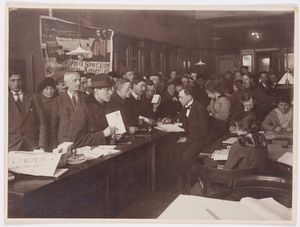
Transatlantic emigration from Eastern Europe, in particular, brought about a lasting change in the global distribution of the Jewish population. Between the 1870s and the First World War, some two and a half million Jews left Eastern Europe to settle across the Atlantic in the United States of America and Canada. Around 130,000 people emigrated to Argentina and Brazil, supported by systematic colonisation measures organised by the Jewish Colonisation Association. During the same period, around half a million Jews emigrated to Western Europe. Palestine, which had been part of the Ottoman Empire until the First World War, remained the destination of only a very small number of religiously motivated Jewish pilgrims until the emergence of a Jewish national movement. From the start of Jewish national settlement projects in the early 1880s until the First World War, around 65,000 Jews, mainly from Eastern Europe, settled there.
The processes of urbanisation and the growth of metropolitan areas were extremely dynamic. In some cities in Central and Eastern Europe, the first large Jewish communities emerged, shaping the urban landscape. Around 1900, approximately 220,000 Jews lived in Warsaw (around 32 per cent of the total population), 170,000 in Budapest (around 24 per cent), 140,000 in Odessa/Odesa, where the Jewish settlement was due to the arrival of Galician Jews (around 34 per cent),100,000 in Łódź (31 per cent) and 23,000 in Chernivtsi/Cernăuți (33 per cent). The number of Jewish residents in other European capitals, who had mainly immigrated from Eastern Europe, was similarly high in absolute terms; however, their proportion of the total population was considerably lower (Vienna: 150,000/approx. 9 per cent; Berlin: 90,000/approx. 5 per cent; London: 100,000/approx. 1.5 per cent).[5]
1939–1945: The Second World War and the Genocide
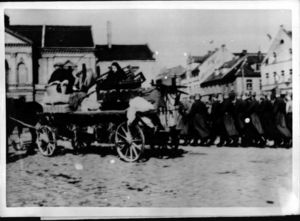
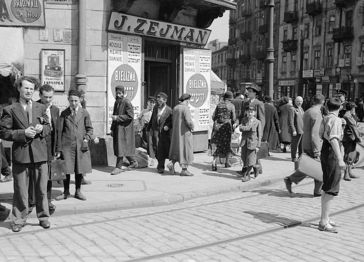
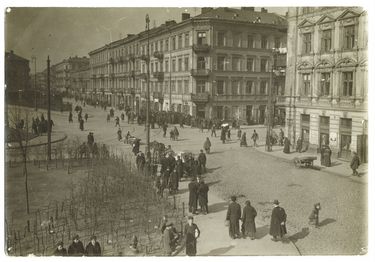
The genocide of European Jews destroyed Jewish life throughout the territory under Nazi Germany’s control and beyond. The eradication of Jewish life and Jewish culture was not merely a consequence of the campaigns in Eastern Europe, which were aimed at total subjugation and extermination, but a declared objective of German warfare.
Whilst the majority of Jews in the German Reich were able to escape persecution through emigration and flight in the years following the Nazi seizure of power, the vast majority of Jews in Eastern and Central Eastern Europe fell victim to the genocide. Of the approximately 350,000 people who, following the German invasion of Poland on 1 September 1939, were able to escape the immediate graspof Nazi Germany by fleeing to the Soviet Union, around 230,000 survived. The proportion of those killed was highest in Poland, at approximately 85–90 per cent of the pre-war Jewish population (approximately 3 out of 3.25 million), Lithuania (135,000 out of 155,000), Latvia (85,000 out of 95,000) and Czechoslovakia (270,000 out of 315,000). In Hungary, three-quarters of the Jewish population fell victim to persecution (300,000 out of 400,000), whilst in the occupied territories of the Soviet Union and in Romania, almost half perished (1.2 million out of 2.8 million and 400,000 out of 850,000 respectively).[6]
Persecution and mass murder followed different patterns in various regions and time periods. Atrocities and massacres took place as early as 1939, followingNazi Germany’s invasion of Poland. Following the invasion of the Soviet Union in 1941, the Jewish population in the conquered territories was systematically murdered by the so-called Einsatzgruppen. As part of ‘Operation Reinhard’, between March and December 1942, nearly two million Jews were murdered in the extermination camps established for this purpose at Belzec (Bełżec), Sobibor (Sobibór) and Treblinka, as well as in the concentration and extermination camps at Auschwitz/Auschwitz-Birkenau, Kulmhof (Chełmno) and Majdanek. The Jewish population in the satellite states allied withNazi Germany – Slovakia, Romania and Hungary – also later fell victim to systematic persecution; in the case of Hungary, this occurred within the space of just a few weeks following the occupation by the Wehrmacht (18 March 1944).
A minority of the Jewish population in Eastern Europe managed to survive the war and the genocide by fleeing, going into hiding or assuming a non-Jewish identity. In almost all cases, this was only possible thanks to the active and deliberate assistance of non-Jewish fellow citizens, who, following rigorous vetting procedures by the Israeli memorial centre Yad Vashem, are recognised and honoured as the ‘Righteous Among the Nations’.
The involvement of members of the local non-Jewish population in the persecution and murder of Jews in Eastern Europe byNazi Germany varied considerably depending on location, context and scale. The process of coming to terms with this has taken place amid public controversies that were at times protracted and fiercely contested; it continues to this day and, in some cases, remains unresolved (see historical controversies).
From the Second World War to the present day
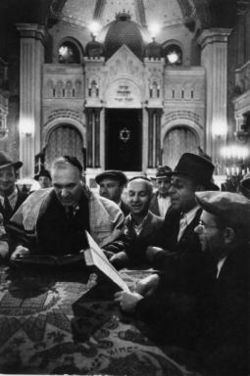
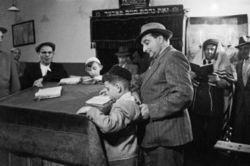
After the end of hostilities, only a fraction of the pre-war Jewish population remained in Eastern Europe (Poland: approx. 45,000; Lithuania: approx. 10,000; Czechoslovakia: approx. 17,000; Hungary: approx. 155,000; Romania: approx. 280,000; Soviet Union: approx. 2 million). Within the territory of the Soviet Union, several hundred thousand Jews survived; they had managed to evade captureby Nazi Germany and its allies and were now attempting to reach their home towns, Western Europe, Palestine or the United States. A small number of Eastern European Jews had also survived within the territory of the German Reich or other European countries under false identities, in forced labour or in captivity. Several hundred thousand Jewish survivors spent the immediate post-war period as ‘displaced persons’ in camps set up by the Allies on German and Austrian territory and were cared for in particular by the North American Joint Distribution Committee (JDC, or ‘Joint’ for short).
The number of Jewish people in Eastern Europe, which had been dramatically reduced by genocide and emigration after the end of the war, fell further over the course of the post-war decades due to emigration and intermarriage. In Poland, Lithuania, Czechoslovakia and Romania, only a few thousand people in each country still identified as Jewish. Only in Hungary (primarily in Budapest) were there still, even at the end of communist rule, around 100,000 people who often regarded themselves as Jewish by descent but largely identified with Hungarian culture and language. After 1989/90, the visibility of Jewish institutions increased considerably. This was regarded (including in the international perception) as a barometer of democratic change. However, this was not accompanied by a reversal of the negative demographic trend. Israel’s systematic immigration policy and the appeal of emigration to Western Europe or North America led to an exodus involving many hundreds of thousands of people, particularly from the territories of the former Soviet Union.
Local constitution, legal status, political groups
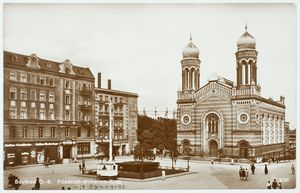
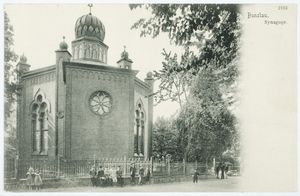
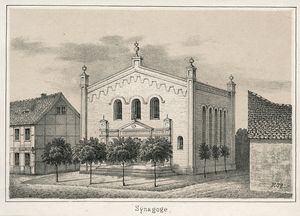
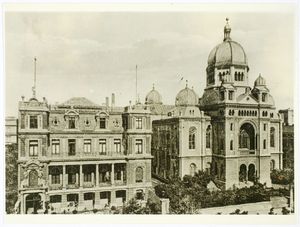
From the mid-13th century onwards, various letters of protection (privileges) issued by local rulers and kings invited members of Jewish communities living in German territories to settle in regions of Eastern Central Europe (1244: Frederick II’s privilege for Austrian territories; 1254/56: the privilege granted by Přemysl Ottokar II for Bohemian and Moravian territories; 1264: the privilege granted by Bolesław VI for Polish territories; 1388: the privilege granted by Vytautas for Lithuanian territories). These privileges were characterised by comprehensive promises of protection (against violence as well as against slander such as accusations of ritual murder), freedom of movement in the sphere of gainful employment, and the granting of far-reaching internal self-determination based on Jewish, religiously bound legal traditions (Hebrew: halakha), as well as independence from local, non-Jewish jurisdiction. In addition to the settlement privileges, the Crown granted general privileges. The latter established the right of Jewish communities to appoint their own leadership, to appoint rabbis and to establish educational institutions (such as yeshivot, i.e. Talmud schools).
The structure of the community statutes (Hebrew: takanot) was based on German-Jewish models from the period following the devastation of the Crusades, when the so-called takanot shum were formulated at a series of synods (the abbreviation derived from the initial letters of the most prestigious Jewish communities in the Rhineland – Speyer, Worms and Mainz). They provided for cooperation between the religious and political leadership and established a stable governing elite. In this context, the religious and political leadership were in a relationship characterised by both interdependence and competition. In contemporary Jewish documents, the political leadership was referred to as rashe’i medina, that is, ‘leaders of the land’, whilst the leading religious authorities were known as rashe’i yeshivot, that is, heads of the Talmud schools.
From a Jewish perspective, the individual Jewish community constituted a distinct religious, political and legal entity, a sanctified community (Hebrew: kehila k’doscha), which was founded on a religiously formulated act of establishment. By virtue of this status, it possessed legal capacity and the ability to enter into contracts, as well as autonomy, although the extent to which this legal autonomy could be exercised depended on the political and material resources of the respective community.
The individual communities were led by a board (Hebrew: kahal) acting on a voluntary and fiduciary basis, which was re-elected in a process taking place annually (usually during the Passover festival). This was usually a process of negotiation amongst the leading families of the respective community, who divided the honorary posts to be filled amongst themselves. The office of community leader (Hebrew: parnas) was usually divided amongst four people, each of whom held the post for three months at a time, in order to minimise any potential loss of income. Other prominent roles were likewise carried out on a voluntary basis: bookkeeper and custodian (Hebrew: ne’eman), treasurer (Hebrew: gabbai), judges (Hebrew: dajan) and tax assessors (Hebrew: schamai), as well as overseers of individual institutions such as schools, charitable organisations or places of worship (Hebrew: gabbai ormemuniah), and the heads of craft guilds. These and other associations (Hebrew: chewra, chewrot) constituted an important element of the communal structure, the organisation of which varied from community to community. The chewrot were essentially religiously motivated, but performed important charitable, social, professional or educational functions at a level below that of the community leadership.
Each community also had a number of paid officials who were bound by the instructions of the executive committee. Prominent among these were the rabbis, whose main task was to uphold and implement Jewish law and who held the chair in the local Jewish courts (Hebrew: bet din). Large communities had several courts. The Chair of the highest court of appeal in a larger community (Hebrew: aw bet din) was regarded as the Chief Rabbi. Rabbis were usually appointed by the community council for a term of three years and were paid by it. Their modest basic salary was supplemented by tax concessions, court fees and fees for performing ritual duties (betrothal and marriage contracts, weddings). The rabbi’s direct financial dependence on the local elites meant that, particularly in cases of dispute amongst Jews, recourse to non-Jewish jurisdiction was often the obvious course of action. Other paid officials included scribes, prayer leaders and cantors, doctors, midwives, synagogue attendants and guards. Larger communities also paid an advocate (Hebrew: shadlan; Latin: syndikus; Polish: syndyk) for his services, which consisted of representing the community’s interests before the local rulers or other authorities.
In those regions of Eastern Central Europe where the large number of Jewish communities made the imposition and collection of fiscal taxes difficult, regional representative bodies or councils (Hebrew: wa’ad, wa’adim) were established. This was the case in Moravia (Hebrew: wa’ad medinat mehrin), in the Polish Crown Lands (the so-called Council of the Four Lands or wa’ad arba arazot) and in Lithuania (wa’ad medinat lite). Furthermore, these councils served as important forums for communication and strengthened inter-regional cohesion. They also represented Jewish interests on an ad hoc basis in dealings with the authorities, thereby fulfilling tasks that went beyond the responsibility for tax collection as defined by the state. The delegates of the Four-Country Council usually met twice a year on the fringes of the major annual fairs in Lublin and Jarosław. In Moravia, the Wa’ad Mehrin, under the leadership of the regional rabbi Menachem Mendel Krochmal (1600–1661), codified its decrees in the form of a statute which, in 1754, was translated as the General Police, Process and Commercial Ordinance, translated as ‘For the Jewish Community in the Margraviate of Moravia’ and became an integral part of Moravian Jewish legislation under the Habsburgs.
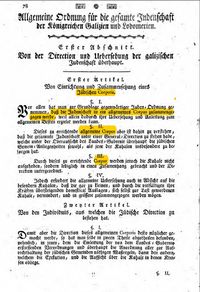
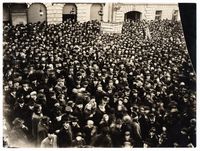
From the mid-18th century onwards, Jewish representative bodies at provincial and state level – and, following the Partitions of Poland, the autonomy of individual communities as well – fell victim to efforts to modernise the state administration. The introduction of taxation on individual Jewish households in 1764 rendered the deliberations of the Council of the Four Lands superfluous, and the body was abolished. With aJewish ordinance in 1776, following the First Partition of Poland, Empress Maria Theresa (1717–1780)made the first attempt to place autonomous community governance directly under state control. Further attempts were made in 1789 by Emperor Joseph II (1741–1790) in 1789, by extending the Austrian Edict of Tolerance of 1782 to Galicia, and in 1797 by the Prussian government, with the General Jewish Regulations for South and New East Prussia, for the Polish provinces under its control. Following Napoleon’s final defeat in 1815, the kahal as a form of autonomous communal governance was abolished, first in 1817 in the Free City of Kraków, then in 1822 in the Kingdom of Poland under Russian control, and in 1844 in the Russian Empire.
The incorporation and subordination of the formerly autonomous Jewish communities corresponded to the integration of Jewish subjects into the respective legal frameworks of the partitioning powers. In the Prussian province of Posen, this took place in 1833, initially through the extension of the 1812 legislation to the formerly Polish provinces (Provisional Ordinance on Jewish Affairs), which, subject to the fulfilment of a series of conditions – property ownership, family name, children’s schooling, and the use of German – held out the prospect of naturalisation. Following the founding of the German Empire in 1871, full equality was granted to all citizens of the Empire who belonged to a Jewish community. The Habsburg Empire, too, endeavoured to integrate its Jewish subjects culturally through taxation and other state measures (state schools for Jewish children, assessment of cultural conformity prior to marriage). Legal equality was achieved with the Constitution of 1867. In the Russian Empire, the aim of cultural and administrative integration of the Jewish population was pursued by classifying them as townspeople (Russian: meščane), by establishing schools and by incorporating the Jewish population into military service (from 1827, the so-called ‘rekručina’). These measures were supplemented by restrictions on settlement and freedom of movement (a so-called ‘settlement zone’ encompassing the former Polish provinces was established in 1804) and, in some cases, inhumane coercive measures, such as forced resettlement from rural areas. Full emancipation in Russia did not occur until after the February Revolution of 1917 and the end of tsarist rule. In the Kingdom of Poland, founded in 1815 and governed through a personal union with the Russian Empire, there was a significant improvement in legal status in 1862. Behind this far-reaching legal gender equality lay the intention to dissuade the Jewish population from the so-called ‘fraternity’ with their irredentist Catholic neighbours, which had been celebrated in 1861.
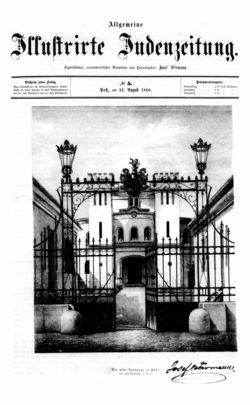
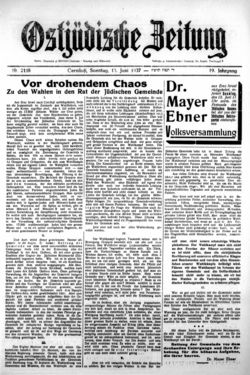
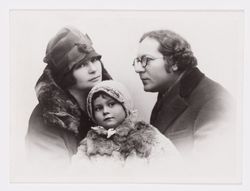
A key factor in the debates surrounding the legal and political status of Jewish communities in Eastern Europe was the emergence of critical public spheres (both non-Jewish and Jewish). Such discussions had been taking place since the mid-19th century, particularly in the emerging Jewish press, which was published in the local languages as well as in Hebrew and Yiddish. These press outlets also made a significant contribution to the emergence of a specifically Jewish, internationally networked and politically differentiated public sphere.
Following the wave of pogroms in Russia (1881/82), the Jewish national movement experienced its first – albeit relatively short-lived – surge as the so-called ‘Lovers of Zion’ (Hebrew: Chowewe Zion). Its supporters later joined the Zionist movement inspired by Theodor Herzl (1860–1904) (1st World Zionist Congress, 1897, in Basel). The objectives and degree of mobilisation within the Western and Eastern European Zionist movements differed considerably at various stages. At the same time, a specifically Jewish social democracy emerged, which successfully organised among proletarianised Jewish artisans and day labourers (1897: foundation of the General Jewish Workers’ Union, or ‘Bund’ for short, in Vilna/Vilnius/Wilno). Throughout Eastern and Central Eastern Europe, a multitude of Jewish political parties emerged from the 1880s onwards. These reflected a Jewish public sphere that was distinct in political, linguistic and everyday terms, as well as a significantly lower degree of integration of the Jewish minority compared with the situation in Western European or German countries. An exception to this were the social democratic and social revolutionary parties, in which Jewish men and women were prominently represented throughout Eastern Europe – not least because of their specific experience of marginalisation and exclusion.
The reorganisation of Eastern Central Europe following the First World War took place under conditions that gave rise to considerable tensions. The principle of the right to self-determination for those peoples who had resisted imperial foreign rule was countered by the aim of protecting the interests of the numerous national minorities now living within the territory of newly founded nation states (minority protection treaties). The situation of the Jewish minority was further exacerbated by military confrontations (the Polish–Soviet War of 1918–1921, the Ukrainian–Polish conflict of 1918–19), revolution and civil war (in 1917 in the former Russian Empire, and in 1919 in Hungary). The Czechoslovak Republic (ČSR) continued the comprehensive gender equality of the Jewish population introduced during the Habsburg era and granted Jewish citizens the right—which was frequently exercised—to declare their Jewish nationality.
The protective clauses for national minorities defined in the Paris Peace Treaties were a prerequisite for the recognition of the nation states founded after 1918 and were of considerable importance for Jewish minorities, particularly in Lithuania, Poland, Hungary and Romania. The clauses were widely regarded, particularly by nationalist-conservative movements, as an unacceptable diktat. Whilst they ensured the political and cultural development of national minorities, they also represented a considerable burden on domestic politics in the states concerned. In Hungary, the so-called Numerus Clausus Act of 1920 made it more difficult for Jews to gain access to higher education. In Lithuania, the protective clauses were suspended again in 1926. In Poland, following the death of Marshal Józef Piłsudski (1867–1935), conservative and reactionary parties sought to put pressure on the Jewish minority, for example by restricting ritual slaughter and enforcing observance of Sunday rest.
Immediately after the end of hostilities in 1944–45 and the catastrophe of the Holocaust, the question that initially faced Jewish survivors was whether remaining in their former homeland was conceivable or desirable. The establishment of one-party regimes under Soviet control was accompanied by massive restrictions on communal and political self-organisation in all areas of social life, including Jewish communities, parties and other institutions. Show trials, including those against Jewish leaders in the communist and workers’ parties dependent on the Soviet Union (such as those in Hungary from 1949 to 1954, the Slánský trial in Czechoslovakia in 1952, and in Romania in 1954) demonstrated the institutionalised anti-Semitism of the final years of Joseph Stalin’s rule. Typically, Jewish communal and religious institutions were either abolished or placed under the supervision of secular representative bodies (Jewish cultural associations) that were closely controlled by the state authorities. These associations also served as negotiating partners for international aid organisations (such as the Joint Distribution Committee), which endeavoured to provide a minimal level of support to a Jewish community that was shrinking due to emigration, disengagement and an ageing population. In Poland, the last comprehensive, anti-Jewish political mobilisation took place in 1968. Under the pretext of seeking to bring political agitation amongst students – amongst whom the children of leading Jewish party officials played a prominent role – under control, thousands of Jewish Poles lost their public offices, jobs and – as a result of their forced emigration – their citizenship. Around 15,000 Jews left Poland in 1968 and settled in Western Europe, the USA or Israel.
The Middle Ages and the Early Modern Period
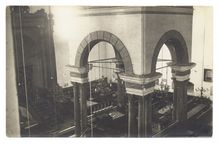
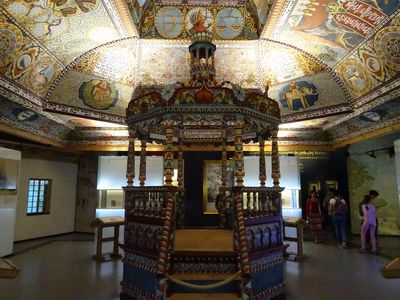
Until the 19th century, the vast majority of the Jewish population in Eastern Europe remained attached to the religious traditions of Ashkenazi Judaism. Above all, this meant a distinction from Sephardic Jewish culture, which had flourished on the Iberian Peninsula until the expulsions of 1492–1496 and subsequently spread throughout the Mediterranean region. Jewish commentators in Eastern Central Europe recognised the authority of both medieval French (in particular Rashi, 1040–1105) and German commentators. The development of distinct liturgical orders and prayer sequences in Eastern Europe came to be known as nuseh poyln (the Polish way). One striking difference was the location of the bimah, the Torah reading platform, which in synagogues in German-speaking regions was situated against the eastern wall, whereas in Eastern Europe it was often placed in the centre of the room. These differences, however, were of only secondary importance in terms of religious law.
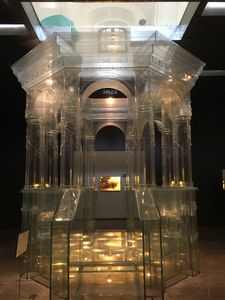
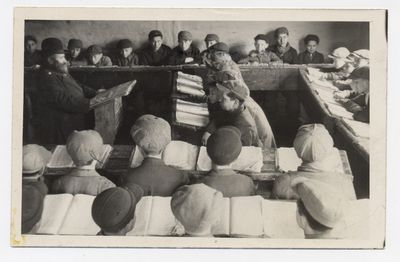
Owing to the sustained decline of Jewish communities in the German states, the centre of Jewish scholarship shifted to Eastern Central Europe in the 16th and 17th centuries. The foundations of this scholarship were laid in the schools known as yeshivot , which built upon the basic knowledge of Hebrew, liturgical texts and the Talmud imparted by parents, private tutors and primary schools (Hebrew: cheder). Young girls were taught in the cheder only in exceptional cases, and yeshivot were reserved exclusively for male students. They could be led by both community rabbis and independent scholars, a role which contributed to their international reputation. Alongside them , community- or privately-run houses of study (Hebrew: bet midrash) played a prominent role in the deepening and reflection upon religious knowledge. In the lament *Yaven Mezulah* (*Abyss of Despair*) by Natan Hanover (d. 1683) on the devastation wrought by the Khmelnytsky Uprising, there is an idealised depiction of Jewish scholarship which expresses pride in the educational ethos unfolding in Eastern Europe.
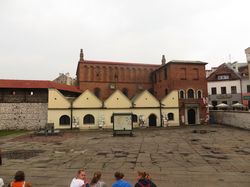
From the 16th century onwards, Prague and Kraków in particular were among the centres of Jewish scholarship whose influence extended far and wide. In Kraków, the rabbi Jakub Pollak (1460–1541) developed a method of interpreting the Talmud and the Mishnah (the later rabbinic interpretations of the Talmud) based on thesis, antithesis and synthesis. His claim to take the halakhic literature into account in its entirety later led to negative assessments and defamation in Enlightenment-oriented circles, where his approach was labelled ‘pilpul’ ( Hebrew: ‘pepper’). Also in Kraków, the rabbi and scholar Moses Isserles (c. 1520–1572) additions to the summary of Talmudic law presented by the Sephardic scholar Joseph Karo in the so-called Shulchan Aruch (Hebrew, literally: ‘the set table’), which explained the differing provisions binding on Ashkenazi Judaism. The Shulchan Aruch met a short deadline and quickly became the legal code of observant Judaism – a code that remains authoritative to this day.
Jehuda Leib ben Bezalel (d. 1609), who served as a rabbi in Prague, Nikolsburg/Mikulov and Poznań ( also known by the acronym Maharal or as Rabbi Löw) shaped rabbinical-Talmudic scholarship for many generations with his interpretation, which was based on systematic study of the scriptures and incorporated both pilpul and esoteric interpretations of Jewish tradition. It explicitly rejected the integration of non-Jewish knowledge. The widespread legend of the Maharal’s creation of a golem—an anthropomorphic figure moulded from clay and brought to life—lacks, however, any historical basis.
As in the rest of Europe, an esoteric interpretation of the Talmudic-rabbinic textual tradition (Hebrew: Kabbalah) played a central role in Eastern Europe in the formation of a Jewish educational elite as well as in the dynamics of religious and cultural diversification. It is based on the assumption and interpretation of a level of meaning that extends beyond the literal meaning of words and texts. Since each letter of the Hebrew language corresponds to a numerical value, conclusions about additional levels of meaning could be drawn from the numerical value of terms or sequences of words – and, conversely, from the possible literal meaning of numerical data – a technique of interpretation known as gematria. The virtually unlimited body of textual material (ranging from the Hebrew Bible and the Talmud to liturgical texts such as prayers) consequently allowed for an esoteric interpretation that went beyond the interpretation directly related to law and tradition.
Esoteric references played a decisive role in the emergence of the messianic movements led by Sabbatai Zevi and his self-proclaimed successor, Jakob Frank. Sabbateanism was a messianic movement that originated in Jerusalem in 1665 and swept the entire European Jewish diaspora into a state of euphoria. Key features included rituals that contravened religious law and the integration of women into religious practice. Following Sabbatai Zevi’s forced conversion to Islam in 1667, the messianic movement largely collapsed. Jewish communities persecuted his followers, who continued to recognise him as the Messiah and paid homage to him within conspiratorial networks. Such networks existed throughout Europe. In the mid-18th century, the so-called ‘Contra-Talmudists’ – later known as ‘Frankists’ after their spiritual leader – challenged Jewish religious law, following the example of the Sabbateans. In East Central Europe, they formed a community of crypto-Jews who had formally converted to Christianity, with centres in Prague and Warsaw.
From the mid-18th century to the 20th century
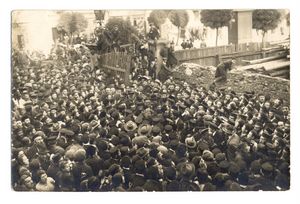
Hasidism too, which came to exert great influence from the turn of the 19th century onwards (Hebrew: chasid – pious, orthodox) – which had gained considerable influence since the turn of the 19th century – is scarcely conceivable without the hope of salvation offered by Sabbateanism , given the extreme devotion of the various Hasidic communities to their respective leaders – the tzaddik ( Hebrew for ‘the righteous one’) or rebbe. Founded by Israel ben Eliezer (c. 1699–1760), known as a healer (Hebrew: ba’al shem) and scholar – Israel ben Eliezer (c. 1699–1760), Hasidic communities reshaped everyday religious life and distanced themselves from the traditional, rabbinical-Talmudic local congregation. They placed communal prayer at the forefront, whilst the study of Scripture took a back seat. Physical proximity to the residence of the leader of individual Hasidic communities was accorded great spiritual significance; their members would make pilgrimages, particularly during the major festivals, from their homes to the court of the tzaddik. In many cases, the tzaddik was revered as a miracle-worker. From the late 18th century onwards, the adherents of the rabbinical-Talmudic tradition and those of Hasidism found themselves in direct competition with one another. In 1772, the new movement was excommunicated by Elijah ben Solomon Salman (1720–1797), the Gaon (Sage) of Vilna, which significantly slowed the spread of Hasidic communities in the Lithuanian provinces. However, Chaim ben Isaac of Voloshin (1749–1821), his pupil and successor as the region’s leading religious authority, lifted this ban in 1802 and endeavoured to strengthen Rabbinic-Talmudic Judaism – whose adherents were now defined as ‘opponents’ (Hebrew: misnagdim) in their opposition to Hasidism – by revising teaching methods in the yeshivot.
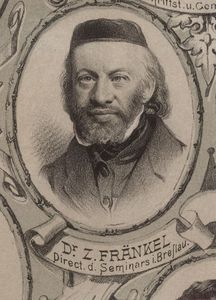
The Prussian-Jewish Enlightenment (or Haskalah) was closely followed by Eastern European Jewish scholars, but it was largely dismissed as deviant heresy and ‘Epicureanism’, despite the fact that its adherents included a number of Jews from Eastern Europe. For these scholars, who came from Eastern European Jewish backgrounds, periods spent in Western countries and in the centres of the European and German-Jewish Enlightenment were of great significance – for example, in Königsberg/Kaliningrad, Berlin, Breslau, Amsterdam and Paris. Notable examples include Salomon Dubno (1738–1813), who came from what is now Belarus and, together with Moses Mendelssohn (1729–1786), undertook a translation of the Hebrew Bible into German and a new biblical commentary (Hebrew: bi’ur), Zalkind Hourwitz (1751–1812), who hailed from Lublin, who served as royal librarian in Paris, called for legal gender equality for Jews in a widely read treatise and was heavily involved in the revolutionary events of 1789; and Salomon Majmon (c. 1753–1800), a philosopher from the circle of Immanuel Kant (1724–1804) and author of an influential autobiography of a Jewish Enlightenment thinker. The Jewish Theological Seminary founded in 1854 by Zacharias Frankel (1817–1875) in Breslau in 1854 served as a centre of Jewish scholarship for Eastern Europe and boasted a considerable number of East Central European Jewish students and lecturers. Since its foundation in 1877, the Rabbinical Seminary in Budapest – which was able to continue its teaching activities, albeit on a significantly reduced scale, even under Communist rule – played an important role in rabbinical training across Eastern and Central Europe.
Drawing on the principles of the Haskalah, scholars in Eastern Europe, too, recognised the need for reform of ritual, the community, education and the rabbinate; however, support for such demands remained limited within a community strongly characterised by observance and cultural isolation. Owing to the marginal status of such views, Jews who favoured reform and integration mostly formed private congregations. Reform-minded religious scholars entered the service of governments pursuing an agenda aimed at integration and acculturation. In 1787, the Austrian government commissioned Herz Homberg (1749–1841), an advocate of an accelerated Enlightenment amongst the Jews, to establish a network of German-speaking Jewish schools in Galicia, with the aim of promoting Germanisation and integration amongst the Jews in the province. However, these schools were closed again in 1806 due to their lack of success. Also on behalf of the authorities, Homberg wrote the catechism *Bne Zion*, based on Enlightenment principles, on which Jewish couples were required to take an examination before their wedding. The author Josef Perl (1773–1839), a native of Tarnopol/Ternopil, combined his advisory work for the Austrian and Russian governments with running a school and publishing a large number of anti-Hasidic polemics. The Munich rabbi Max Lilienthal (1815–1882) also advised the Russian government from 1841 onwards on its plans to establish a Russian-language school system for Jewish children. Numerous ‘learned Jews’ (Russian: učënye evrei) served in similar capacities in the establishment of rabbinical seminaries and as censors of Jewish literature for the Russian administration.
In response to the greater visibility and growing influence of reform- and integration-oriented movements within the Jewish communities of Eastern Europe, there was a cultural and political mobilisation amongst leading representatives of both the rabbinical and Hasidic traditions. The scholar Moses Schreiber (1762–1839), who was active in Pressburg/Bratislava/Pozsony, also known as Hatam Sofer, who coined the principle that any innovation in Jewish custom constituted a forbidden alteration (‘Any innovation is forbidden by the Law/the Bible’, Hebrew: he-hadash asur min ha-torah). This stance was reflected in an increasingly militant form of observant politics, which drew upon non-Jewish political authorities to achieve its own objectives, just as reform-oriented forces did. Examples of such politicised Orthodoxy include Elchanan Spektor (1817–1896) and Samuel Mohilever (1824–1898) in the Russian Empire, Akiva Schlesinger (1837–1922) in Hungary, and the weekly journal *Machsike ha-dat* ( Hebrew: ‘Those Who Strengthen the Law’), founded in Lemberg in 1878. Following the Hungarian schism of 1869, this politically mobilised Orthodoxy also formed international networks, bringing together both Hasidic leaders, representatives of German-speaking Neo-Orthodoxy (such as Ezriel Hildesheimer, 1820–1899) and representatives of Hungarian ultra-Orthodoxy into a political alliance, from which Agudas Israel – which still exists today – emerged in 1912. Among its founders was Me’ir Shapira (1887–1933), a Hasidic scholar born in Galicia, who in 1924 laid the foundation stone for the Yeshiva Chochmei Lublin, which opened in Lublin in 1930.
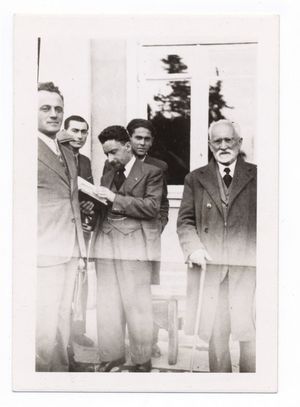
In Russia, the Bolsheviks’ seizure of power was followed by a systematic and comprehensive crackdown on religious observance, including a ban on Jewish religious institutions, offices and movements. This repression led, in around 1927, to the arrest of Joseph Isaac Schneersohn (1880–1950), the leader of the Lubavitcher Hasidim (Chabad), who, following his release secured through international protests, initially emigrated to Riga/Rīga and, in 1931, to Warsaw.
The YIVO (Yiddish: Idisches Wisnschaftleches Institute, Jewish Scientific Institute), founded in Berlin and Vilnius in 1925, also gained great significance; it was equally committed to an ethos of public education and territorialism. Its staff across Eastern Europe and North America devoted themselves to historical-philological, social scientific, ethnographic and economic-statistical research, focusing specifically on the history and culture of Eastern European Jewry and the Yiddish language. Following the outbreak of the Second World War, the YIVO branch in New York became the headquarters of this international research network in 1940 and is now part of the Centre for Jewish History. Part of the historical collections of the Vilnius Institute—which was destroyed under German occupation—survived the war and the Soviet period whilst in hiding and is now being made accessible again through digitisation.
Relations between Jews and non-Jews
The physical coexistence of Jews and non-Jews, which was taken for granted in many small and larger towns across Eastern Europe, functioned essentially on the basis of recognition of linguistic, religious and legal distinctiveness, which was both desired and upheld by the authorities and the Church, as well as by Jewish community leaders. Nevertheless, a multitude of encounters took place in everyday life. Traditional venues for such encounters were the market, shops, taverns and the shared neighbourhoods within the town. In small-town settings, Jews and non-Jews lived in an ‘ambiguous symbiosis’ (Rosa Lehmann). Within clearly defined, everyday and limited contexts, they were dependent on and connected to one another. Beyond these contexts, however, social contact was extremely rare and was legally sanctioned on both sides right up until the 18th century. The linguistic divide, which only began to dissolve with the introduction of compulsory schooling in the interwar period, contributed significantly to this, notwithstanding the fact that, on both the Jewish and non-Jewish sides, the language of the other side was known to a certain extent. Mutual stereotypical perceptions found expression in literary works and the press, as well as in legends, proverbs and customs, and repeatedly fuelled sentiments of separation.
The breakdown of economic relations between Jews and non-Jews, which began with the partitions of Poland, threatened this network of relationships. A key factor in this was the nobility’s withdrawal from co-operation with Jews, particularly in the area of tenant farming. It is true that new forms of urban coexistence replaced the rural and small-town coexistence, with its relatively clearly defined spaces for interaction. However, the relationships unfolding in urban spaces were only to a limited extent shaped by defined forms of social and economic interaction; they were less bound by tradition and less socially established. The ‘Other’ became the ‘Stranger’.
This phenomenon, which could be described neither as acculturation nor as alienation, but rather as a qualitatively changing state of separation, unfolded in parallel with and independently of the efforts of the partitioning powers to integrate the Jewish minority into both state and societal structures. Although the means employed differed, these state actions were always underpinned by the expectation that the Jewish community would integrate linguistically, in terms of customs and worldview, into the surrounding society.
These processes unfolded differently in the various partitioned regions. In the case of the Province of Posen , one can speak of success insofar as the offer of naturalisation as a Prussian subject provided sufficient prospects for social advancement. Furthermore, the migration-induced depletion of the Jewish communities permanently undermined the resilience of traditional Jewish culture. In the Russian partition, it was the combination of military service and state-supervised Jewish schools with Russian as the language of instruction that produced a considerable number of Jews socialised within Russian society. In the Austrian partition, the situation was more complicated in that the appeal of integration into the German-speaking imperial culture had, since the so-called Compromise of 1867 (granting autonomy to the imperial provinces), been in competition with a Polish-speaking administrative and educational system. The considerable proportion of Jewish volunteers in the Polish Legions during the First World War shows that many young Jews identified with the project of a Polish community. In the Kingdom of Poland, within the territory under Russian rule, only a minority of the political and social elite pursued an active strategy of integration. An exception to this rule was the short-lived phase of Polish-Jewish fraternisation in the context of patriotic mobilisation in the run-up to the January Uprising of 1863. This followed a wave of anti-Semitic mobilisation in 1859, which became known as the ‘wojna żydowska’ (Jewish War) and whose aim was precisely to demonstrate to Warsaw’s Jewish youth the limits of their integrability.
These social reservations drew on various sources, amongst which a religiously motivated rejection of Jews as adherents of a different faith played a prominent role; however, this alone does not suffice to explain the virulence of exclusionary tendencies. The social and cultural distance made the Jewish population appear more plausibly as a group incompatible with Polish society, culture and statehood than, for example, in German-speaking regions or in Western Europe. Here, since the late 18th century, there had been a partial integration of Jews into the ‘semi-neutral’ (Jacob Katz) middle classes and educated strata. Towards the end of the 19th century, the notion of incompatibility was championed with increasing aggression by national-conservative parties, most prominently by Roman Dmowski (1864–1939), the leader of the Polish National Democrats.
Anti-Jewish sentiments, however, were widespread far beyond the confines of this political movement and can certainly be described as culturally hegemonic within the societies of partitioned Poland. This also explains the anti-Jewish violence – a phenomenon whose intensity had been rising since the wave of anti-Jewish riots in Tsarist Russia in 1881/82 and the pogrom that took place in Warsaw at Christmas 1882 – cannot be attributed solely to anti-Semitic agitation. It was only in conjunction with an underlying resentment and the notion that a violent attack on Jewish neighbours could restore the balance between Jews and non-Jews, which had been thrown off kilter, that the violence could be legitimised within the moral universe of the perpetrators. Recent studies on the pogroms in Russia in 1881–82, the Lithuanian provinces and in Galicia around 1900 have shown that these riots were intended to serve a quasi ‘corrective’ function, which was reflected not least in the expectation that ‘normal’ conditions would return after the excesses.[7] There is no doubt that the early years of the 20th century brought with them a significant increase in brutality, for which the pogrom in Kishinev/Chişinău/Kišinëv (1903) stands as a milestone on the path to murderous violence. It was fuelled by inflammatory press coverage, for which Pavel Krushevan was responsible; in the same year, he emerged as the first publisher of the subsequently highly influential *Protocols of the Elders of Zion* , a propaganda pamphlet which alleged a Jewish quest for world domination.
The polarisation of East Central European societies, which became apparent after the First World War, had a significant impact on Jewish–non-Jewish relations and manifested itself in legislative measures (cf. the aforementioned Numerus Clausus Act in Hungary in 1920) as well as in politically motivated violence. For instance, Gabriel Narutowicz (1865–1922) was denigrated as the ‘Jewish President’ following his election as President of Poland and was assassinated on 16 December 1922 by a radicalised supporter of the National Democratic Party. Nationalist and paramilitary militias in Lithuania, Poland and Hungary contributed significantly to the destabilisation of democratic structures and to anti-Semitic agitation. Not least because of the widespread enrolment of Jewish children in educational institutions teaching in the local language, linguistic acculturation intensified at the same time, insofar as this was not already the case, as in Hungary, for example. In the Baltic states, Czechoslovakia and Poland, a Jewish generation predominantly integrated into the majority language was growing up for the first time – a process that might well have had far-reaching consequences, but which was cut short by war and genocide.
Attitudes that were sceptical or hostile towards a Jewish presence persisted even after the Second World War and frequently led to acts of violence against individual Jews and to pogroms (Kraków 1945, Kielce 1946). Less visible during the years of Soviet domination, nationalist forces after 1989 continued in the ideological tradition of their predecessors, but were no longer able to attain a comparable position of hegemony. Since the end of communist rule in 1989–1991, the number of Jews living in East Central Europe has continued to decline, primarily due to emigration. Prejudices regarding their history and presence persist, and in certain contexts these are also politically mobilised and exploited – for example, in the dispute between the Fidesz government in Hungary and the European Union over refugee aid from 2015 onwards, when the financier George Soros, who was vilified as an advocate of uncontrolled immigration, was attacked by the state using anti-Semitic stereotypes. At the same time, social-democratic, centre-right and conservative governments throughout Eastern Central Europe are striving to maintain good relations with Israel, apparently not least in order to shield themselves from accusations of anti-Jewish prejudices.
Employment: From a niche to a loss of status
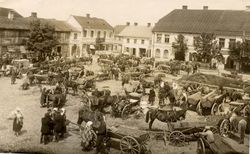
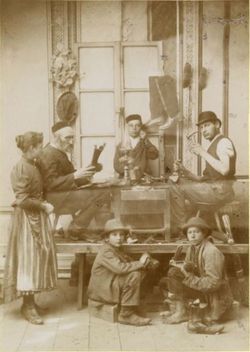
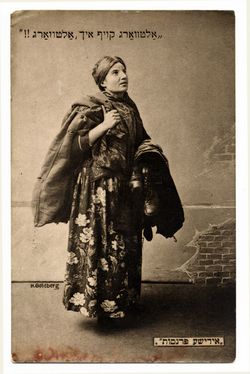
Jews had been encouraged by East Central European rulers to settle in the region in order to fulfil specific economic functions (see above). Across the board, Jewish privileges included generous provisions for Jewish economic activity, which was subject to only a few restrictions. It was expected that Jewish merchants would stimulate trade in goods, increase tax revenue for the treasury and, as lenders, expand the economic and political scope of the rulers’ authority. A close economic co-operation soon developed between Jewish merchants on the one hand and the nobility and aristocracy on the other, in which, alongside trade and lending, the leasing of monopolies became a prominent field of activity for Jewish entrepreneurs. In return for lump-sum payments, usually due annually, they leased sovereign monopolies such as the production of alcoholic beverages, the trade in salt or tobacco, and the collection of customs duties, levies and taxes.
The production and sale of alcohol (propination) was also linked to the leasing of taverns and inns, which were mostly in Jewish hands – in the 18th century, around half of Jewish families in rural areas made their living from this trade. Jewish merchants and traders shaped the markets and small-scale and itinerant trade throughout Eastern Central Europe. Jewish women also played a very visible role here as businesswomen; in the leasing sector and as entrepreneurs, however, they were represented only as widows of deceased Jewish entrepreneurs. In wholesale and international trade, Jews were represented to varying degrees of prominence depending on the sector. Compared with Central or Western Europe, their proportion among craftspeople – as well as the proportion of craft trades within Jewish employment – was considerably higher, with only a small part consisting of specifically Jewish activities (such as ritual slaughter).
Following the Partitions of Poland and the associated loss of status suffered by the nobility, landowners sought to displace Jewish tenants from their traditional role as intermediaries in estate management. In Galicia, the Kingdom of Poland and the Russian Empire, aristocratic landowners sought to appropriate the profits from the liquor licence. This was also linked to an attempt to hold Jewish tenants responsible for the negative consequences of excessive alcohol sales and consumption. Outside the towns, trade and crafts offered only very limited alternative sources of income. The resulting migration to the towns and economically more dynamic regions quickly led to a surplus of labour in the destinations.
Similar consequences resulted from the restructuring processes triggered by industrialisation and mechanisation, and from the comparatively slower pace of economic development in Eastern Europe. The loss of traditional sources of livelihood led to oversupply in a few craft trades requiring few qualifications and little investment – such as tailors or cobblers – as well as in retail and the service sector. In the textile and heavy industries, which developed sporadically in the partitioned territories, Jews played a role in isolated cases as entrepreneurs and investors, but not – with only a few exceptions – as workers. Although a proletarianised Jewish craft sector did emerge, which primarily supplied the textile industry, above all, however, a large number of unskilled day labourers and small traders emerged, who were only able to earn a living with the greatest of difficulty and were stereotypically referred to as ‘airheads’. In 1903, the economist Sarah Rabinowitsch coined the term ‘entrepreneurial proletariat’ to describe them.[8] More and more Jews found themselves in an extremely precarious economic situation and became ‘classless’ (Eli Lederhendler), which was to become a decisive factor in their decision to emigrate to Western Europe and, above all, overseas (see above).
3. Controversies and historical debates
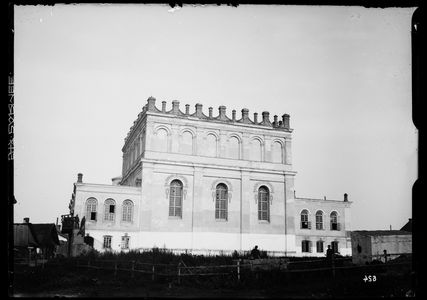
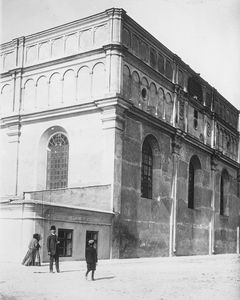
Up until the Second World War, historical debates concerning the Jewish presence in Eastern Europe centred on questions of seniority (the reasons for and timing of Jewish settlement), legitimacy (the legal and political status of the Jewish minority as derived from its local history), cultural and political identity (acculturation and integration, identification with titular nations, Jewish nationalism and Zionism, Jewish prominence in social democratic and communist parties) and the nature of Jewish–non-Jewish relations (Jewish autonomy, anti-Semitism, cohabitation).
Since the Second World War, controversies in the context of the genocide of European Jews have been at the centre of almost all historical debates. An early example is the debate surrounding the 1985 documentary film *Shoah* by Claude Lanzmann (1925–2018), which raised the question of the attitude of non-Jewish neighbours towards the suffering of Jews persecuted byNazi Germany. At the same time, the first international conferences on Polish-Jewish history were held (New York 1984, Oxford 1985), attended by both Jewish and non-Jewish historians. The Oxford conference led to the founding of the journal *Polin. Studies in Polish Jewry*, which, as an academic forum open to contrasting historiographical positions, was to become a model for others.

Jan Tomasz Gross’s study *Sąsiedzi* ( *Neighbours*) , published in Polish in 2000 and in English in 2001, which dealt with a massacre of the Jewish population in the village of Jedwabne, was of paradigmatic significance for the historical controversies surrounding the Holocaust. Whilst the author concluded that responsibility for this crime lay primarily with the local non-Jewish population, Polish historians in particular were reluctant to rule out the – as yet unproven – leading role played by the advancing Wehrmacht and SS units at the time of the massacre. Similar disputes arose concerning the handing over and murder of Jews who had evaded capture by the German occupiers by hiding. The debate surrounding this so-called third wave (Polish: trzecia fala) of persecution continues to this day. As an alternative narrative, the Instytut Pamięci Narodowej (IPN) in particular has championed the concept of ‘good neighbourliness’ (Polish: dobre sąsiedztwo), within which non-Jewish fellow citizens endeavoured, as far as possible, to protect the persecuted Jewish population, and in which – indisputable – cases of violence or co-operation with the German occupiers were the exception. A directly comparable debate centres on the prominent role played by Lithuanian nationalist militias and individuals in the persecution and murder of the Lithuanian Jewish population following Nazi Germany’s invasion of the Soviet Union in 1941. Further controversies concern the extent to which the recruitment of the local non-Jewish population into the Waffen-SS was voluntary, and their role in the persecution of the Jews, for example in Ukraine. The debate over the assessment of regimes that cooperated with or were allied to Hitler (Stalin 1939–1941,Horthy/Hungary,Antonescu/Romania,Tiso/Slovakia) follows a similar pattern. Particularly intense in this regard is the controversy surrounding the extent of the Horthy regime’s co-operation withNazi Germany and the carrying out of the genocide against Hungarian Jews following the occupation of Hungary (18 March 1944).
Reference works and atlases
- Atlas of the History of Polish Jews. Warsaw 2010.
- Eli Barnavi: A Universal History of the Jews. From the Origins to the Present Day. A Historical Atlas. Munich 2004.
- Evyatar Friesel: Atlas of Modern Jewish History. Revised from the Hebrew edition. New York 1990.
- Gershon David Hundert (ed.): YIVO Encyclopaedia of Jews in Eastern Europe. 2 vols. New Haven, Conn. 2008 (online version: https://yivoencyclopedia.org/).
- Jonathan Karp, Adam Sutcliffe (eds.): Cambridge History of Judaism. Vol. 7: The Early Modern World, 1500–1807. Cambridge 2017.
- Paul Magocsi: Historical Atlas of Central Europe. Revised and expanded edition. Seattle 2002 (A History of East Central Europe 1).
- Marcin Wodziński: Historical Atlas of Hasidism. Princeton, NJ 2018.
Periodicals
- East European Jewish Affairs. London 1992 onwards (formerly: Soviet Jewish Affairs. 1971–1991).
- Edited by Gal. On the History and Culture of Polish Jewry. Tel Aviv 1973 onwards.
- In geveb. A Journal of Yiddish Studies. Online journal (https://ingeveb.org/) 2015 onwards.
- Jewish Studies at the Central European University. Budapest 1996/99 (2000) onwards.
- *Judaica Bohemiae*. Prague 1965 onwards.
- Quarterly Journal of Jewish History. Warsaw 2001 onwards. (Formerly: Bulletin of the Jewish Historical Institute, 1950–2000).
- Polin. Studies in Polish Jewry. Oxford 1986 onwards.
- Studia Judaica Austriaca. Vienna, Munich, Eisenstadt 1974 onwards.
- The Holocaust. Studies and Materials. Warsaw 2005 onwards.
Bibliography
- Steven Aschheim: *Brothers and Strangers: The East European Jew in German and German-Jewish Consciousness, 1800–1923*. Madison, Wisconsin, 1982.
- Gershon Bacon: The Politics of Tradition: Agudat Yisrael in Poland. 1916–1939. Jerusalem 1996.
- Israel Bartal: The Jews of Eastern Europe, 1772–1881. Philadelphia 2005 (German edition: Geschichte der Juden im östlichen Europa, 1772–1881. Göttingen 2010).
- Robert Blobaum (ed.): Antisemitism and Its Opponents in Modern Poland. Ithaca, New York, London 2005.
- Marcus Brann: History of the Jews in Silesia. 6 vols. Breslau 1896–1917.
- Alberg A. Bruer: History of the Jews in Prussia (1750–1820). Frankfurt am Main, New York 1991.
- Tim Buchen: Anti-Semitism in Galicia. Agitation, Violence and Politics against Jews in the Habsburg Monarchy around 1900. Berlin 2012.
- Alina Cała: The Assimilation of Jews in the Kingdom of Poland, 1864–1897. Attitudes, Conflicts, Stereotypes [Assimilation of Jews in the Kingdom of Poland, 1864–1897. Attitudes, Conflicts, Stereotypes]. Warsaw 1989.
- Kateřina Čapková, Hillel J. Kieval (eds.): Between Prague and Nikolsburg. Jewish Life in the Bohemian Lands. Göttingen 2020.
- Glenn Dynner, François Guesnet (eds.): Warsaw. The Jewish Metropolis. Essays in Honour of the 75th Birthday of Professor Antony Polonsky. Leiden, Boston, Mass. 2015.
- Artur Eisenbach: Kwestja równouprawnienia w Królestwie Polskim [The Question of Equality in the Kingdom of Poland]. Warsaw 1972 (English: The Emancipation of the Jews in Poland, 1780–1870. Oxford 1991).
- David Fishman: Russia’s First Modern Jews: The Jews of Shklov. New York 1995.
- Jonathan Frankel: Prophecy and Politics. Socialism, Nationalism, and the Russian Jews. 1862–1870. Cambridge 1981.
- Frank Golczewski: Polish-Jewish Relations. A Study of the History of Anti-Semitism in Eastern Europe. Wiesbaden 1981.
- Tobias Grill: The West in the East. German Jewry and Jewish Educational Reform in Eastern Europe (1783–1939). Göttingen 2013.
- François Guesnet: Polish Jews in the 19th Century. Changing Living Conditions, Legal Norms and Organisation. Cologne, Weimar, Vienna 1998.
- Ibid. (ed.): The Stranger as Neighbour. Polish Perspectives on the Jewish Presence. Texts since 1800. Frankfurt am Main 2009.
- Michael Hagemeister: The ‘Protocols of the Elders of Zion’ on Trial. The Bern Trial 1933–1937 and the ‘Anti-Semitic International’. Zurich 2019.
- Heiko Haumann: A History of Eastern European Jews. Munich 2005 (English: A History of East European Jews. Budapest 2002).
- Arno Herzig: 900 Years of Jewish Life in Silesia. Görlitz 2018.
- Gershon David Hundert: Jews in Poland-Lithuania in the Eighteenth Century: A Genealogy of Modernity. Berkeley, Calif. 2004.
- Carol Iancu: The Jews in Romania, 1866–1919: From Exclusion to Emancipation. New York 1996.
- Jacob Katz: *Out of the Ghetto: The Social Background of Jewish Emancipation, 1770–1870*. Cambridge, Mass., 1973.
- Sophia Kemlein: The Jews of Poznań (1815–1848). Developmental processes of a Polish Jewish community under Prussian rule. Hamburg 1997.
- Hillel J. Kieval: The Making of Czech Jewry: National Conflict and Jewish Society in Bohemia, 1870–1918. New York 1988.
- John D. Klier: Russia Gathers Her Jews. The Origins of the “Jewish Question” in Russia, 1772–1825. Dekalb, Illinois, 1986.
- Ibid.: Russians, Jews, and the Pogroms of 1881–1882. Cambridge 2011.
- Rebecca Kobrin: Jewish Bialystok and Its Diaspora. Bloomington, Indiana, 2010.
- Eli Lederhendler: The Road to Modern Jewish Politics. Political Tradition and Political Reconstruction in the Jewish Community of Tsarist Russia. Oxford, New York 1989.
- Rosa Lehmann: *Symbiosis and Ambivalence. Poles and Jews in a Small Galician Town*. New York, Oxford 2001.
- Pawel Maciejko: The Mixed Multitude. Jacob Frank and the Frankist Movement. Philadelphia 2011.
- Raphael Mahler: Hasidism and the Jewish Enlightenment: Their Confrontation in Galicia and Poland in the First Half of the Nineteenth Century. Philadelphia 1985.
- Ezra Mendelsohn: On Modern Jewish Politics. New York, Oxford 1993.
- Anna Michałowska-Mycielska: The Jewish Community Authority and Social Contract in Poznań and Swarzędz 1650–1793. Wrocław 2008.
- Michael L. Miller: Rabbis and Revolution. The Jews of Moravia in the Age of Emancipation. Stanford, California, 2011.
- Jody Elizabeth Myers: Seeking Zion. Modernity and Messianic Activism in the Writings of Tsevi Hirsch Kalischer. Oxford, Portland 2003.
- Benjamin Nathans, *Beyond the Pale*. The Jewish Encounter with Late Imperial Russia. Berkeley, Los Angeles 2002.
- Magdalena Opalski, Israel Bartal: Poles and Jews: A Failed Brotherhood. Hanover 1992.
- Heidemarie Petersen: The Jewish Community and the Municipal Community in Poland. Lviv 1356–1581. Wiesbaden 2003.
- Yohanan Petrovsky-Shtern: The Golden Age Shtetl. A New History of Jewish Life in Eastern Europe. Princeton 2014.
- Gertrud Pickhan: ‘Against the Tide’: The General Jewish Workers’ Union ‘Bund’ in Poland, 1918–1939. Stuttgart, Munich 2001.
- Antony Polonsky: The Jews in Poland and Russia, 3 vols. Oxford, Portland 2010/2012.
- Aviezer Ravitzky: Messianism, Zionism, and Jewish Religious Radicalism. Chicago, Ill., London 1996.
- Michael K. Silber: The Emergence of Ultra-Orthodoxy. The Invention of a Tradition. In: Jack Wertheimer (ed.): The Uses of Tradition. Cambridge 1992, pp. 23–84.
- Darius Staliunas: *Enemies for a Day*. Anti-Semitism and Anti-Jewish Violence in Lithuania under the Tsars. Budapest, New York 2015.
- Michael Stanislawski: Tsar Nicholas I and the Jews. The Transformation of Jewish Society in Russia, 1825–1855. Philadelphia 1983.
- Katrin Steffen: Jewish Polishness: Ethnicity and Nation as Reflected in the Polish-Language Jewish Press, 1918–1939. Göttingen 2004.
- Adam Teller: Money, Power, and Influence in Eighteenth-Century Lithuania. The Jews on the Radziwiłł Estate. Stanford, California, 2016.
- Scott Ury: Barricades and Banners. The Revolution of 1905 and the Transformation of Warsaw Jewry. Stanford, Calif. 2012.
- Theodore Weeks: Nation and State in Late Imperial Russia. Nationalism and Russification on the Western Frontier. DeKalb, Illinois, 1996.
- Marcin Wodziński : Hasidism and Politics. The Kingdom of Poland, 1815–1864. Oxford, Portland 2013.
- Larry Wolff: *The Idea of Galicia: History and Fantasy in Habsburg Political Culture*. Stanford, California, 2010.
- Steven Zipperstein: *Pogrom: Kishinev and the Tilt of History*. New York, London 2018.
Web links
- jewishmuseum.org.pl/ (POLIN Museum of the History of Polish Jews in Warsaw)
- www.jmuseum.lt/ (State Jewish Museum ‘Gaon of Vilna’ in Lithuania)
- www.jewishmuseum.cz (Jewish Museum in Prague)
- www.zsidomuzeum.hu (Jewish Museum in Budapest)
- www.jmw.at (Jewish Museum of the City of Vienna)
- http://www.snm.sk (Museum of Jewish Culture, Bratislava)
- www.museum.jewishfed.ro/ (Historical Museum of Romanian Jews in Bucharest)
- www.jewish-museum.ru/ (Jewish Museum and Centre for Tolerance, Moscow)
- www.jewishgen.org/Communities/LocTown.asp (Website for geographical and genealogical searches)
- www.yadvashem.org/righteous.html (List of the ‘Righteous Among the Nations’ at the Yad Vashem Memorial)
- jewish-heritage-europe.eu/ (Jewish architectural monuments)
- sztetl.org.pl/ (Guide to former Polish-Jewish communities)
Notes
[1] Moshe Rosman: Poland before 1795. In: YIVO Encyclopedia of Jews in Eastern Europe, Vol. 2. New Haven, Conn., 2008, p. 1883.
[2] Michael Silber: Hungary. In: YIVO Encyclopedia of Jews in Eastern Europe, Vol. 1, p. 771.
[3] Hillel Kieval: Bohemia and Moravia. In: YIVO Encyclopedia of Jews in Eastern Europe, Vol. 1, p. 205.
[4] Evyatar Friesel: Atlas of Modern Jewish History. Revised from the Hebrew edition. Oxford, New York: Oxford University Press, 1990, pp. 16–17.
[5] Mark Kupovetsky: Population and Migration before the First World War. In: YIVO Encyclopedia of Jews in Eastern Europe, URL: yivoencyclopedia.org/article.aspx/Population_and_Migration/Population_and_Migration_before_World_War_I [accessed 15 December 2019].
[6] Evyatar Friesel: Atlas of Modern Jewish History. Oxford, 2nd ed., 1990, p. 111.
[7] Mark Kupovetsky: Population and Migration before World War I. In: YIVO Encyclopedia on Jews in Eastern Europe, URL: yivoencyclopedia.org/article.aspx/Population_and_Migration/Population_and_Migration_before_World_War_I [accessed 15 December 2019].
[8] Sara Rabinowitsch: The Organisations of the Jewish Proletariat in Russia, Karlsruhe 1903 (also a doctoral thesis, Freiburg 1903) (Economic Treatises of the Universities of Baden, Vol. 7, Supplementary Vol. 2), pp. 34, 40.
Citation
François Guesnet: Jews. In: Online Encyclopaedia on the Culture and History of Germans in Eastern Europe, 2020. URL: ome-lexikon.uni-oldenburg.de/p32724 (accessed 7 September 2020).
Terms of use for this article
Copyright © University of Oldenburg and the Federal Institute for the Culture and History of Germans in Eastern Europe (BKGE), all rights reserved. This work was produced as part of the project ‘Online Encyclopaedia on the Culture and History of Germans in Eastern Europe’ and may be reproduced and published provided the rights holders’ consent has been obtained. Please contact:
If you have any specialist comments or additions to the text, please contact the editorial team, citing relevant literature and source references.