

Russian Federation
Russian Federation
Etymology
The term ‘Rus’’ was first mentioned in writing in Byzantine sources in the mid-10th century. The word first appeared in Cyrillic script in 1387. In the 15th and 16th centuries, the term ‘Rossija’ came into use to refer to the territories inhabited by a Russian-speaking population which did not belong to Poland or Lithuania and were united under the Principality of Moscow. The name was granted official status in 1547 following the accession of Ivan IV (1530–1584).
Following the collapse of the Soviet Union, the Russian Socialist Federative Soviet Republic (RSFSR) was renamed the Russian Federation on 25 December 1991.
Location
The westernmost territory of the Russian Federation is the Kaliningrad Oblast (Kaliningradskaya oblast’) exclave. The country’s contiguous territory is bordered to the west by Ukraine, Belarus and the Baltic states, and to the north-west by Finland and Norway; to the east, it extends as far as the Pacific Ocean. To the north lies the Arctic Ocean; to the south, the Russian Federation borders (from west to east) Georgia, Azerbaijan, Kazakhstan, Mongolia, the People’s Republic of China and North Korea. With an area of 17.075 million square kilometres, Russia is the largest country in the world by area.
Topography
Europe accounts for 25 per cent and Asia for 75 per cent of the territory of the Russian Federation. The European part consists mainly of the East European Plateau. It comprises vast lowlands, interrupted by gently undulating ridges.
The Ural Mountains form the boundary between Europe and Asia.
The vast expanses of Siberia exhibit greater variation in topography. Of particular note are the West Siberian and North Siberian lowlands, which adjoin the Urals to the east, followed by the Central Siberian Highlands, the South Siberian Mountains and the East Siberian Highlands.
Historical Geography
Until the incorporation of Crimea (as the federal subjects of the Republic of Crimea and the city of federal status , Sevastopol) on 21 March 2014, the territory of the Russian Federation had remained unchanged since the collapse of the Soviet Union. The annexation of Crimea was condemned as invalid on 24 March 2014 in a vote by 100 (out of 193) members of the UN General Assembly.
3. History and Culture
Periodisation: The recent history of the Russian Federation as a presidential republic is essentially divided according to the terms of office of its leading politicians, the presidents.
The power struggle between Boris Yeltsin and the Congress of People’s Deputies (1992–93)
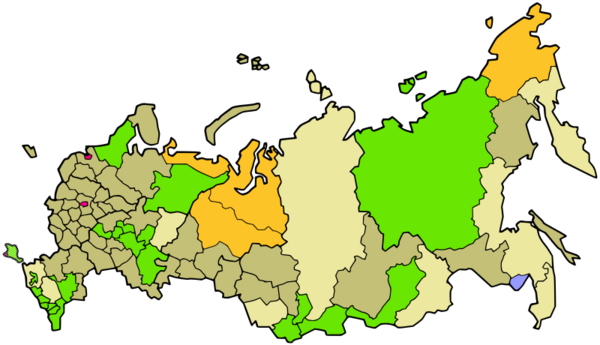
In the first Russian presidential elections on 12 June 1991, that is, before the collapse of the Soviet Union, Boris Yeltsin (El’cin, 1931–2007) was elected President of Russia. He made a name for himself as a democratic reformer and rival to the Soviet President Gorbachev (Gorbačëv). From 19 to 21 August 1991, conservative communists from the military and the secret services staged a coup against Gorbachev’s reform policies. Following the failure of the coup, Yeltsin succeeded in strengthening his position and ousting Gorbachev. He and representatives of the other Soviet republics decided to dissolve the USSR with effect from 31 December 1991. Since early 1992, the Russian Federation has thus acted as the legal successor to the USSR. However, democratic and market-oriented reforms were blocked by the Communist-dominated Congress of People’s Deputies. President Yeltsin resorted to unconstitutional measures and forcibly dissolved the Congress of People’s Deputies. In the autumn of 1993, he ordered tanks to fire on the parliament building, the Moscow White House, where around 100 parliamentarians had barricaded themselves in. The current Constitution of the Russian Federation was adopted by a referendum on 12 December 1993 and came into force on 25 December 1993. Under this constitution, the Russian Federation became a presidential republic with comparatively limited powers for the parliament (the Duma), the Federation Council and the Supreme Court. According to Article 65 of its Constitution, Russia is a federal state comprising 85 federal subjects: 22 republics, nine regions (kraj), 46oblasts, three cities of federal status (Moscow/Moskva, Saint Petersburg/Sankt-Peterburg and Sevastopol), one autonomous region and four autonomous districts. The status of the federal subjects of Crimea and Sevastopol as part of the Russian Federation is not recognised internationally.
Yeltsin’s presidency under the new constitution (1994–1999)
Drawing on his new powers, President Yeltsin set about, above all, implementing market-economy reforms with Western support. However, certain developments quickly spiralled out of control. The liberalisation of prices, given the huge surplus of purchasing power created during the Soviet era by the shortage of goods, led to hyperinflation, which wiped out the savings of many people on lower incomes. The result was mass poverty on a scale unprecedented in the USSR. At the same time, a small number of young businesspeople managed to rise to become influential oligarchs, who also began to dominate President Yeltsin’s inner circle. Many Russian citizens today recall the Yeltsin years, with their ‘cave capitalism’ (peščernyj kapitalizm) as a time of the collapse of public order and chaos, which manifested itself in a rapidly falling birth rate, a sharp decline in life expectancy – particularly among men – as well as alcoholism and crime. In the face of the influx of Western patterns of consumption and thought, Russian high culture also fell into a severe crisis, as evidenced, for example, by a marked decline in book print runs.
Following the collapse of the USSR, the Russian government sought to consolidate its influence in the world, particularly amongst its neighbouring states, the former Soviet republics. To this end, President Yeltsin established the Commonwealth of Independent States (CIS). The former Soviet republics (with the exception of the Baltic states, which quickly and emphatically distanced themselves from Russian claims to hegemony) were to be granted special status as the ‘near abroad’. However, most cooperation projects at CIS level failed. In the regions of the Russian Federation itself where national minorities were in the majority, centrifugal forces began to stir, particularly in the Republic of Tatarstan, which the Kremlin sought to appease through bilateral treaties. In Chechnya, the separatists had become so radicalised that Moscow resorted to military means, leading to an armed conflict. It was waged with great cruelty and severity on both sides. The First Chechen War (1994–1996) ended with the withdrawal of government troops and a fragile compromise. Overall, the war resulted in the President being further discredited in the eyes of large sections of the population.
Overall, gross domestic product fell by more than 40 per cent during Yeltsin’s term in office. Just as an economic recovery was beginning to take shape in 1997–98, the prices of oil and natural gas – which were crucial for exports – collapsed. In 1998, Russia was forced to suspend servicing its national debt and abandon the rouble’s peg to the dollar. This led to a significant devaluation of the rouble, the negative consequences of which were borne primarily by those on low incomes.
Vladimir Putin’s first two terms in office (2000 to 2008)
In 2000, Vladimir Putin won the presidential election by a narrow majority. Whilst still Prime Minister and President-elect, he was responsible for the resumption of fighting in Chechnya in early autumn 1999, which resulted in the subjugation of the majority of the country to the authority of the central government. Putin initially sought to foster good relations with the West. Soon, however, he presented himself as Russia’s new strongman in both domestic and foreign policy. In many respects, the liberal-democratic achievements of Yeltsin’s presidency were rolled back. For instance, Putin curtailed the media’s freedom of expression – even without resorting to marking – by exerting economic pressure. The trial of Mikhail Khodorkovsky served as a warning to insubordinate oligarchs, signalling that only apolitical billionaires were protected from criminal prosecution and imprisonment in labour camps. Following the terrorist attack in Beslan, Dagestan, carried out by Chechen terrorists in September 2004, Putin abolished the election of governors. From then on, they were appointed by the President, thereby bringing local power holders back under tighter control from Moscow. This gave rise to a system described by Putin’s advisers as a ‘vertical of power’ or ‘managed democracy’. To consolidate his power, Putin founded the ‘United Russia’ (Yedinaya Rossiya) party in December 2001, which succeeded in establishing itself as a stabilising force. ‘United Russia’ succeeded in securing an overwhelming majority in the Duma through restrictive practices regarding party registration, the introduction of a seven per cent electoral threshold and – as many Western observers claim[2] – electoral fraud. The few other parties remaining in parliament do not constitute a genuine opposition. For instance, the Communist Party of the Russian Federation (KPRF) adopts nationalist-chauvinist positions, whilst Vladimir Zhirinovsky’s quasi-fascist Liberal Democratic Party of Russia (LDPR), despite its Chair’s clownish antics, has mostly voted in line with ‘United Russia’. This was made possible by a sustained economic boom (which lasted until 2014). Driven primarily by high oil and natural gas prices, the economy grew to such an extent that Russia was regarded as one of the most promising emerging economies (BRIC). Thanks to petrodollars and ‘gaseuros’, the state was also able to maintain the patronage system for its supporters. In foreign policy, the claim was once again made that Russia was a great power capable of negotiating on an equal footing with all other powers, including the US. Many people in Russia experienced Putin’s first term in office as a time of stability and growing prosperity.
Dmitry Medvedev’s interregnum (2008 to 2012)
In 2008, Putin’s second term in office came to an end, and Dmitry Medvedev took his place. People generally referred to the Medvedev–Putin ‘tandem’. Although Medvedev proclaimed his intention to modernise Russia, he failed to establish a distinct profile of his own. The structures created during the Putin years remained largely untouched.
Putin’s third term in office (since 2012)
Putin began his third term in office as the guardian of the status quo and a guarantor of stability. However, there were certain signs of a crisis in 2013–14. The economy was no longer growing as rapidly as before, and in the Duma elections, ‘United Russia’ managed only to retain a narrow absolute majority. In March 2014, Crimea was annexed by the Russian Federation. During the ensuing fighting between pro-Russian separatists in eastern Ukraine and the central government in Kyiv, Moscow officially maintained a benevolently neutral stance towards the insurgents. However, according to many Western observers, it supported the secession of the Donbass from Ukraine by supplying weapons and deploying Russian military personnel not identified as combatants. The Second Minsk Agreement of 12 February 2015 ultimately led to a (provisional) end to the armed conflict.
In autumn 2015, the Kremlin once again began to demonstrate its international strength when Putin ordered the bombing of rebel positions in Syria. This new aggressive foreign policy led to high approval ratings for Putin amongst the population, even though the economic sanctions imposed by the West following the annexation of Crimea are certainly having an effect. Negative economic growth is therefore forecast for 2015 and also for the coming year.
Statistics
According to the 1959 and 1989 censuses, there were exactly 862,504 and 842,295 Germans respectively living within the territory of the RSFSR; in 2010 there were 394,138 in the Russian Federation, of whom 223,984 (56.8 per cent) lived in towns and 170,154 (43.2 per cent) in rural areas.(Total population: 73.7 per cent urban and 26.3 per cent rural). They thus accounted for 0.3 per cent of the 142,856,536 Russian citizens. The statistics specifically mention the remaining four Mennonites, three of whom lived in towns and one in a village. In the Altai Region, with a population of 50,701, and in the Novosibirsk Region, with a population of 30,924, Germans continue to form the largest minority.[3]
A new beginning under Gorbachev and dashed hopes under Yeltsin
Under the auspices of Gorbachev’s glasnost, an organisation representing the interests of the Russian Germans also began to take shape. On 28 March 1989, the ‘Rebirth’ (Vozroždenie) Society was founded at a conference held at the Moscow Technical Museum. It emphasised its absolute loyalty to the Soviet regime, but called for the restoration of the Autonomous Republic of the Volga Germans within the 1941 borders. The programme for the restoration of Volga autonomy was a key aspect of Soviet-German identity. The legal breakthrough came on 14 November 1989, when the Supreme Soviet approved a declaration providing for the unconditional restoration of the rights of all Soviet peoples who had suffered repression. This was also intended to apply to the Germans. However, this led to massive protests amongst the local Russian population in the Volga region. In August 1990, Boris Yeltsin sent a telegram of greeting to the Second ‘Rebirth’ Conference, in which he acknowledged the contribution of the Soviet Germans to the victory over fascism through their labour, but made only vague promises.
On 8 January 1992, in a speech to workers in the Saratov region (Russian: Saratovskaya oblast’), which was broadcast on television, President Yeltsin made clear statements: There would be no autonomy for a region in which the Volga Germans did not form a majority and where there was no compact settlement. He held out the prospect to the Germans of the uninhabited Kapustin Yar missile test site in the Volgograd region. If the Germans made up 90 per cent of the total population there, then an autonomous district or perhaps a national rayon for the Volga Germans could be considered. Not a single house would be demolished for the Volga Germans in the territory where Russians now constituted the majority of the population. Although this was followed by the ukas of 21 February 1992 ‘On the Immediate Rehabilitation of the Russian Germans’, this did nothing to alter Yeltsin’s stance on Russian-German autonomy.
Mass exodus to the Federal Republic of Germany
Until the first half of 1989, the emigration of Germans from the Soviet Union remained within limits, despite the liberal exit policies. In 1988, approximately 50,000 Germans left the USSR; in the first half of 1989, the figure was 48,000. It was only after this that emigration to Germany took on mass proportions, to which the Russian authorities reacted at a loss.
In total, between 1950 and 2012, exactly 2,361,485 Germans emigrated from the Soviet Union and its successor states to the Federal Republic of Germany, with 1.7 million of them leaving between 1990 and 2000 alone.
The following figures for German (late) repatriates[4] from the Soviet Union or the Russian Federation for the period following the collapse of the Soviet Union[5] are as follows:
| 1990 | 147,950 | 2002 | 44,493 |
| 1991 | 146,333 | 2003 | 39,404 |
| 1992 | 55,882 (RF) | 2004 | 33,358 |
| 1993 | 67,365 | 2005 | 21,113 |
| 1994 | 68,397 | 2006 | 5,189 |
| 1995 | 71,685 | 2007 | 3,735 |
| 1996 | 63,311 | 2008 | 2,682 |
| 1997 | 47,055 | 2009 | 1,935 |
| 1998 | 41,054 | 2010 | 1,462 |
| 1999 | 45,951 | 2011 | 1,257 |
| 2000 | 41,478 | 2012 | 1,119 |
| 2001 | 43,885 |
From 2003 onwards, the number of arrivals fell – particularly from 2006 onwards – primarily as a result of the German Federal Immigration Act and the resulting changes to the eligibility criteria for spouses and other family members.
In the 2011 German Microcensus, approximately 3,213,000 people stated that they were (late) repatriates, of whom approximately 612,000 came from the territory of the Russian Federation.[6] 26.3 per cent of German repatriates from the Russian Federation still hold dual nationality.[7]
More recently, there has also been a trend of remigration to the Russian Federation and Kazakhstan. Although this trend is on a significantly smaller scale, it nevertheless demonstrates that migration is not a one-way process and is not ‘complete’.
Germans in the Russian Federation since 1992
Further conferences of representatives of the Russian-Germans took place from 20 to 22 March 1992 and from 26 to 28 January 1993. They were disappointed by government policy and the economic situation, and feared inter-ethnic conflicts. The Council of Germans in the USSR, which had been elected at the first conference from 18 to 20 October 1991, was renamed the ‘Interstate Council of Germans of the former USSR’ and saw itself as a kind of people’s parliament. It was not officially recognised by either the Russian or the German side. The Council expressed particular concern about the fate of the Germans in the former Soviet republics of Central Asia.
In the Altai region and the Omsk Oblast, small German national districts were formed, but these did not develop into the nucleus of larger German settlement areas.
On 4 July 1992, President Yeltsin signed a law decreeing the immutability of the territorial borders within the Russian Federation. In December 1992, the President issued a decree ‘On the Establishment of the “Russian Germans” Fund’. The funds were intended to support projects for the Russian Germans, such as the construction of container settlements in the Volga region for Germans from Central Asia.
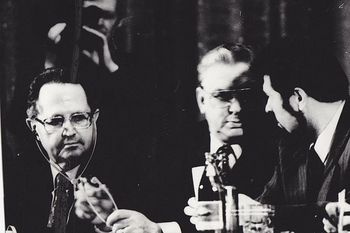
With the mass exodus of Russian Germans, their organisations, such as ‘Wiedergeburt’ and the Interstate Council, lost political influence. Nevertheless, a vibrant German cultural life flourished, partly thanks to support from West German institutions, which opened German cultural centres and other branches across the Russian Federation. In the early 1990s, for example, the St. Petersburgische Zeitung was founded in German. A significant centre for German studies emerged in the city of Kemerovo.
In 1996, the State Duma adopted the draft law ‘On Federal National-Cultural Autonomy’, which applied to nationalities within the Russian Federation that did not have a territorial basis. On this basis, and following local initiatives, the first federal conference on the national-cultural autonomy of the Russian Germans was held in December 1997. It was attended by 152 delegates representing 21 regional organisations. Vladimir A. Bauer (1946–2007), a former Duma deputy and, at the time, the President of the Russian Federation’s representative for nationalities and federal relations, was elected chairman of the Federal Association. Dissatisfied with Bauer’s approach, some of the delegates soon withdrew from the association.
On the state side, the Department for Russian-German Affairs within the Ministry of Nationalities was responsible for the issues facing the Russian-Germans. Representatives of the Russian-Germans were often dissatisfied with the allocation of funds by the department. This also became apparent during the implementation of the Federal Target Programme for the Development of the Socio-Economic and Cultural Basis for the ‘Rebirth’ of the Russian Germans, signed by President Yeltsin, which provided for special support for cultural projects up to the year 2006.
Gerhard Schröder’s accession to office in the Federal Republic of Germany in 1998 led to a significant reduction in German funding for cultural institutions within the Russian Federation. On the Russian side, the Department for Issues Relating to Russian Germans was established in 2000 within the Ministry for Nationalities and Regional Policy. The German associations had been severely depleted in terms of membership due to the exodus of Russian Germans. The Inter-State Council of Russian Germans did not renew its registration in 1999, whilst the leadership of ‘Wiedergeburt’ effectively merged with the Federal National Cultural Autonomy in 2000. Two other organisations, the International Association for German Culture and the State-Public Foundation ‘The Russian Germans’, attempted to consolidate the forces of the Russian Germans once again that same year by holding the founding conference of the all-Russian political movement ‘Rebirth – Unity – Consent’ in March. In view of reduced support from the Federal Republic of Germany, the aim was to rely on their own resources. In 2008, the Government of the Russian Federation approved the programme for the ‘Socio-economic and Ethnocultural Development of the Russian Germans’. It made substantial funds available.
Bibliography
- György Dalos: A History of the Russian Germans. From Catherine the Great to the Present Day. Munich 2014.
- Andreas Kappeler: Russian History. 6th, updated edition. Munich 2014 (Beck’sche Reihe 2076: C. H. Beck Wissen) (in particular Chapter II: Periods of Political History, section on the Russian Federation (from 1991), and Chapter III: Problem Areas).
- Ignaz Lozo: The Coup against Gorbachev and the End of the Soviet Union. Cologne, Weimar, Vienna 2014.
- Leonid Luks: A History of Russia and the Soviet Union. From Lenin to Yeltsin. Regensburg 2000 (in particular Chapter X: Post-Communist Russia under Boris Yeltsin – In Search of Identity).
- Birgit Menzel, Christine Engel (eds.): Return to a Foreign Land? Ethnic Remigration of Russian-German Late Repatriates. Berlin 2014 (Ost-West-Express 21).
- Margareta Mommsen, Angelika Nußbaumer: The Putin System. Controlled Democracy and Political Justice in Russia. Munich 2007 (Beck’sche Reihe 1763).
- Heiko Pleines, Hans-Henning Schröder: Country Report: Russia. Bonn 2010 (Publication Series / Federal Agency for Civic Education 1066).
- Richard Sakwa: Putin Redux: Power and Contradiction in Contemporary Russia. London, New York 2014.
- Susanne Worbs, Eva Bund, Martin Kohls, Christian Babka von Gostomski: (Late) Resettlers in Germany. An Analysis of Current Data and Research Findings. Nuremberg 2013 (Federal Office for Migration and Refugees, research report 20).
Web link
- www.rusdeutsch.ru/?hist=1&hmenu0=10 (Chapter 10. Germans in New Russia / Glava 10. Nemcy v novoj Rossij [Chapter 10. The Germans in New Russia]; a Russian-language account of the history of the Germans in Russia)
Notes
[1] ‘Russian Federation’ is the more accurate translation of the official Russian term. It reflects the Russian distinction between russkij (referring to the Russian people) and rossijskij (referring to the state as a whole, which unites a multitude of ethnic groups).
[2] See, for example, Peter Klimek, Yuri Yegorov, Rudolf Hanel, Stefan Thurner: ‘Statistical detection of systematic election irregularities’. In: Proceedings of the National Academy of Sciences of the United States of America (PNAS) 109 (2012), No. 41, pp. 16469–16473; Nikolai Petrov: ‘Legitimacy, Repression, Collapse: Stages in the Development of the Putin Regime’. In: Osteuropa 64 (2014), no. 8, pp. 85–98, here p. 86; Mischa Gabowitsch: Putin kaputt? Russia’s New Culture of Protest. Berlin 2013 (Edition Suhrkamp 2661), Chapter II; Sakwa: Putin redux, p. 118.
[3] For the results of the 2010 census, see the section on nationalities at the URL www.gks.ru/free_doc/new_site/perepis2010/croc/perepis_itogi1612.htm (accessed 9 December 2015).
[4] Under the Federal Displaced Persons Act (BVFG), persons who immigrated by the end of 1992 on the basis of the BVFG are designated as ‘Aussiedler’. Under the Act on the Settlement of Consequences of the War of 21 December 1992, this legal category was replaced by that of ‘late repatriate’ for the period after 1 January 1993.
[5] According to Worbs et al.: (Late) Aussiedler in Germany, p. 32ff.
[6] Section 1(2)(3) of the Federal Displaced Persons Act lists the following as resettlement areas: ‘the former German eastern territories under foreign administration, Danzig, Estonia, Latvia, Lithuania, the former Soviet Union, Poland and Czechoslovakia, Hungary, Romania, Bulgaria, Yugoslavia, Albania and China’, quoted from Worbs et al.: (Late) Resettlers in Germany, p. 21, footnote 5.
[7] Worbs et al.: (Late) Resettlers in Germany, pp. 38, 41.
Citation
Georg Wurzer: Russian Federation. In: Online Encyclopaedia on the Culture and History of Germans in Eastern Europe, 2015. URL: ome-lexikon.uni-oldenburg.de/p41372 (accessed 16 December 2015).
Terms of use for this article
Copyright © University of Oldenburg and the Federal Institute for the Culture and History of Germans in Eastern Europe (BKGE), all rights reserved. This work was produced as part of the project ‘Online Encyclopaedia on the Culture and History of Germans in Eastern Europe’ and may be reproduced and published provided the rights holders’ consent has been obtained. Please contact:
If you have any specialist comments or additions to the text, please contact the editorial team, citing relevant literature and source references.