

Budweis/České Budějovice
Budweis/České Budějovice
Etymology
The original name of the settlement of Budivojovice, situated at a ford across the Vltava, is derived from its founder, the nobleman Budivoj of Železnice, who is recorded as having served as a court judge from 1205 to 1215. Subsequently, Czech variations derived from this name appear in the sources, such as Budyeyowycze or Budiuoiowice (around 1310). The German name Budweis, attested around 1265, is derived from the Old Czech version. Following the Hussite Revolution, the suffix ‘české Budějovice’ was added to distinguish it from the Moravian town of Budějovice/Mährisch–Budwitz or Mährisch–Budweis. In German sources, ‘Böhmisch Budweis’ appears in 1528. In the wake of the Habsburgs’ Germanisation efforts in the 16th and 17th centuries, the name was shortened to ‘Budweis’; in 1789, the linguistic distinction between ‘Böhmisch Budweis’ and ‘český Budiegowicze’ reappeared . After 1918, the town was known as‘ ’ (Czech Budějovice) in Czechoslovakia, simply as ‘Budějovice’ in the so-called Protectorate of Bohemia and Moravia, and has been officially known as ‘české Budějovice’ since 1945 .
Location
České Budějovice is situated at48° 58′ north latitude and14° 28′ east longitude, approximately 124 kilometres as the crow flies south of Prague/Praha.
Topography
This town in South Bohemia lies at the confluence of the Vltava and Malš rivers, at an altitude of 381 metres above sea level.
Political and administrative affiliation
Czech Republic. Administrative centre of the South Bohemian Region (Jihočeský kraj).
Common symbolism
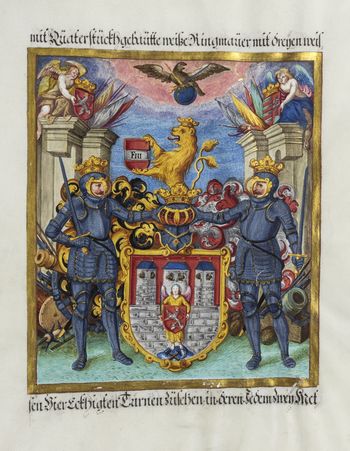
The earliest depiction of the coat of arms can be found on the town seal dating from the 1420s. It depicts a red triangular shield, the lower half of which features a silver, rectangular wall without battlements, surmounted by three silver, rectangular round towers with golden, conical roofs adorned with poppies. The central tower was wider than the two outer ones; furthermore, suspended above the central tower – connecting the tower and the wall – was a Gothic triangular red shield bearing a silver Bohemian lion. Coat of arms revisions in 1479, 1648 and 1937 altered several details (the royal crown, the shield bearer). In 1965, the town reverted to its original coat of arms.
Middle Ages
The town was founded by King Přemysl Ottokar II (reigned 1253–1278) took place in 1265 as part of the consolidation of the sovereign’s power in South Bohemia and the simultaneous curbing of the expansionist ambitions of the influential noble family of the Witigons. The king commissioned Burgrave Hirzo ofKlingenberg/Zvíkov(† c. 1275), appointed by the king, took up residence on the confiscated estate of the nobleman Čéč of Budivojovice (Checho de Budiwogewich, †1270), whose father had founded a settlement with a church here; he was succeeded by the later Kuttenberg mint master Claricius (c. 1296), who was granted the hereditary office of judge in the town as a reward. In 1335, the mayor and a twelve-member council were mentioned for the first time; their influence on events in the town grew steadily.
The market settlement of Stradonice (1273) and, initially, three (later a further 12) villages in the immediate surrounding area were assigned to the newly founded town in order to secure the citizens’ food supply and, in turn, to purchase craft products from the town. From the outset, Budweis belonged to the South German (Nuremberg) municipal law system, whilst Prague’s Old Town served as the court of appeal in legal matters.
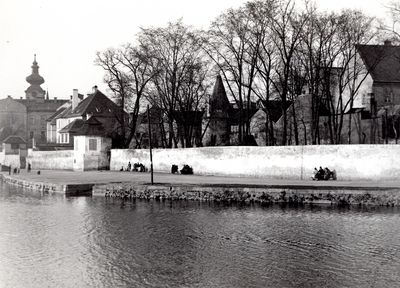
Construction of the city walls probably began in the 1280s; access to the city was protected from the south and west by the Malsch and Vltava rivers, and from the east and north by the artificially created mill ditches. After 1350, the inner ring of walls was reinforced with square towers and bastions.
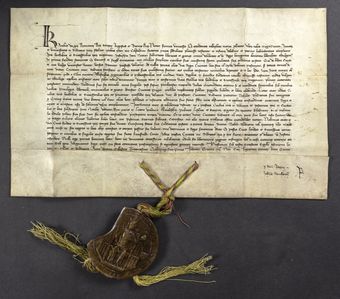
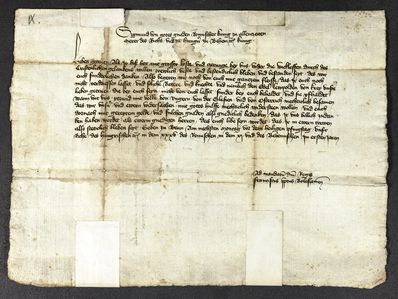
In 1277 and 1279, the Witigoni raided the civitas of Budweis and burnt it to the ground; it was not until the reign of King Wenceslas II (reigned 1278–1305) that the situation stabilised in the 1290s. In the so-called *Maiestas Caroli*, the code of laws of King Charles IV (reigned 1346/1347–1378) from 1351–1354, Budweis was counted amongst those royal towns which, as pillars of royal authority in the lands of the Bohemian Crown, were not to be deprived of their status. From the outset, German names dominated the council, even though the proportion of Czech citizens rose to one third in the 14th century. Gradually, several suburbs sprang up outside the city walls: the Linz, Vienna, Brno and Krumau suburbs. A large rectangular square formed the centre of the street network.
During the Hussite Revolution , the town was the leading stronghold of the Catholic party in South Bohemia, not least thanks to the German patriciate, particularly in the years 1420 and 1421, when numerous other towns in the surrounding area defected to the Hussites and a trade embargo against them came into force. In 1421, Budweis passed into the possession of Duke Albrecht V of Habsburg (who reigned from 1404 to 1439 as Duke of Austria), who sent 500 mercenaries to the town.
The town’s first Czech mayor, the cloth and wine merchant Andreas Puklitz of Vztuhy (c. 1410–1467), although himself a Catholic, in 1467 the publication of the papal bull of excommunication against George of Poděbrady (reigned 1458–1471), which triggered a violent uprising, particularly among the German inhabitants, leading to the imprisonment of Puklitz, who subsequently died. The town administration fell back into German hands; Budweis joined the Union of Hradec and recognised Matthias Corvinus (reigned 1469–1490) as King of Bohemia, who occupied the town by military force. It was not until 1479 that Budweis swore allegiance to Matthias’s rival and ultimate victor in the power struggle, Ladislaus II Jagiello (reigned 1471/79–1516 in Bohemia).
Modern times
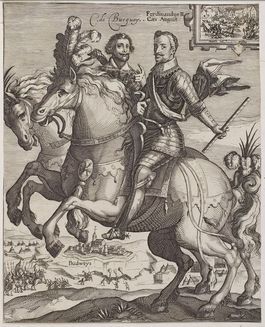
During the first uprising of the estates in Bohemia in 1547, which was directed against the Habsburgs, the town remained loyal to its sovereign. In 1541, Budweis was granted the privilege of mining freedom; in 1569, a royal mint was established, which remained in operation until 1611. In the same year, an army led by the Bishop of Passau, Archduke Leopold V (who held office from 1598 to 1625), occupied the town in order to consolidate the unstable rule of Rudolf II (who reigned in Bohemia from 1575 to 1611). In 1619, Emperor Ferdinand II (who reigned as King of Bohemia from 1617 to 1637) presented the town with the miners’ settlement of Rudolfstadt, situated on a hill to the east.
During the Second Bohemian Revolt of 1618, Budweis once again remained loyal to the Habsburgs. In November 1618, following the defeat at the Battle of Lomnitz on the Lužnice/Lomnice nad Lužnicí (9 November 1618), to defend the town, with the result that an army of the Estates unsuccessfully besieged Budweis until the summer of 1619. During the Thirty Years’ War, the town was considered so well fortified that, from 1630 onwards, the highest-ranking provincial officials found refuge here following the Saxon incursion.
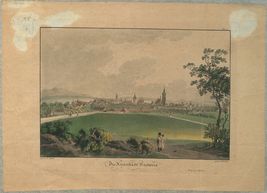
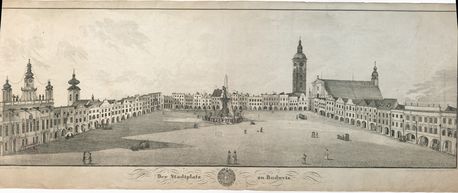
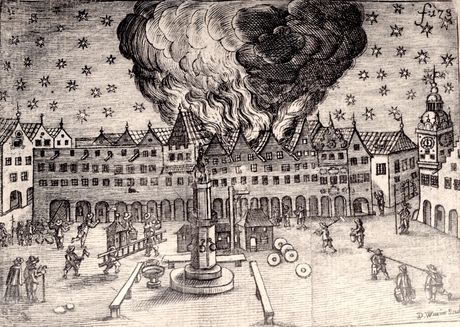
A devastating fire destroyed many houses in 1641; it was not until around 1700 that Budweis was able to recover gradually from this catastrophe. Shortly before 1618, the town chancellery was divided into a Czech and a German section; the council minutes were kept in both languages until 1788.
In 174 1, an army led by the Bavarian Elector Karl Albrecht (reigned 1726–1745) temporarily occupied the town; three years later, the Prussians laid siege to Budweis and, after a brief bombardment, forced the town to surrender. The last plague epidemic occurred in 1713; seven years later, there was a typhus epidemic, compounded by several famines (1719–20, 1741–42 and 1771–72).
Around 1800, Budweis was still a small town. Despite a radicalisation amongst the student body at the seminary, led by the patriotic priest Antonín Krejčí (1812–1872), the events of the 1848 Revolution had little impact on the town. A National Guard was temporarily formed at the end of March 1848. On the initiative of Antonín Krejčí and the entrepreneur Hynek Zatka (1808–1886), a branch of the ‘Slovanská Lípa’ (Slavic Linden) was founded in the spring of 1848, shortly after the Constituent Assembly was convened in Prague, as an expression of growing Czech national consciousness, with 150 members.
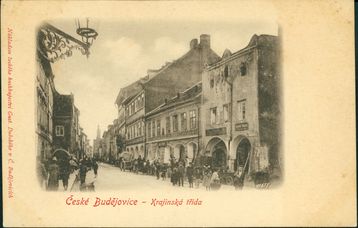
From 1849, Budweis was the centre of the reorganised and considerably enlarged district of the same name, and the seat of numerous administrative institutions. From 1849, the municipal committee (renamed the municipal council from 1862), elected for a three-year term and headed by the mayor, managed the town’s administration. In the mid-19th century, industrialisation and urbanisation necessitated the demolition of the medieval city walls and the city gates (the Rosenauer Gate in 1844, the Schweinitzer Gate in 1845, the Prager Gate in 1867 and the Fischertor in 1872). In 1876, municipal gardens were laid out on the vacated land and the former fortifications, which also served to separate the medieval town centre from the expanding suburbs.
In 1917 and 1918, so-called ‘hunger demonstrations’ took place due to the poor supply situation during the First World War.
Contemporary History
On 28 October 1918, a 14-member Czech National Committee was formed as the city’s new governing body. During the difficult early months of the First Czechoslovak Republic, the Czech August Zátka (1847–1935), a lawyer, entrepreneur, long-serving member of the regional parliament and spokesperson for the Czechs of Budweis, headed an administrative commission from 4 November 1918 until spring 1919, which temporarily replaced the municipal administration.
Along with the soldiers of the German Wehrmacht who occupied the town from 15 March 1939 as part of the establishment of the so-called Protectorate of Bohemia and Moravia, German security agencies such as the SD (Security Service) and the Gestapo, who set up offices here and, using pre-prepared lists and with the support of local collaborators, brutally persecuted opponents of the regime. From 1939 to 1945, the Sudeten German Friedrich David (1900–1945) served as mayor in the capacity of Government Commissioner; he initiated extensive street renaming, ordered the demolition of the monument to August Zátka, and had the synagogue razed to the ground in June 1942.
Soon after the German Wehrmacht marched in, Czech resistance groups emerged in the town and its surrounding area (including Obrana národa/People’s Defence under Brigadier General Bedřich Neumann (1891–1964) and, in 1941, Jindra). Railway workers carried out several acts of sabotage in 1942; the operations manager, Vratislav Novotný (1902–1942), was arrested and murdered in the process.
On 8 May 1945, the last German military commander, Wilhelm Richard Junge (1888–1954), gave the order for the German occupying forces to withdraw from Budweis; at around 5.30 pm, Soviet units marched into the city, followed by American troops at 8.00 pm. On 20 May 1945, 27 Germans were shot without trial by Czech gendarmes at St Ottilien Cemetery as activists of the Nazi regime. At the same time, the expulsion of the German population from Budweis began; alongside Pisek/Písek and Tabor/Tábor, it was one of the main centres for their deportation in South Bohemia . The phase of uncontrolled expulsions in May and June 1945 in particular was characterised by excessive violence. From September 1945 to January 1946, approximately 2,000 Germans were resettled; the majority (around 5,400 people) followed in 1946 on 12 transport convoys (including 4,070 Germans to Bavaria). In the early 1950s, the remaining Germans were forced to resettle in the Czech hinterland.
Following liberation from German occupation, a 33-member Czech District National Committee, led by the doctor Rudolf Bureš (1906–1980), initially took over the administration; from 22 May 1945, he was succeeded by the 42-member Budweis Local National Committee, composed of equal numbers of representatives from each party, which was based in the historic town hall (15 National Socialists, 12 Communists, 10 members of the People’s Party, 5 Social Democrats). The elections on 30 May 1948 cemented the Communist Party’s dominant position in Budweis as well. At the end of 1948, the anti-communist resistance organisation ‘Za pravdu’ (For the Truth) was formed; in August 1949, 20 of its members were sentenced in Prague to long prison terms. Students (the Kruh Group) and young Catholics also offered resistance.
From the mid-1960s onwards, prefabricated housing estates were built to improve the quality of life, which had suffered considerably due to outdated industrial plants and growing environmental pollution. In 1952, the historic city centre was listed as a protected monument.
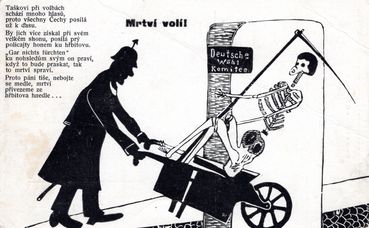
On 21 March 1968, 600 students gathered outside the headquarters of the Communist Party’s district committee to demonstrate for reforms in the run-up to the ‘Prague Spring’. On the night of 22 August 1968, Soviet tanks entered Budweis. On 7 November 1968, students demonstrated against the occupation; on 20 January 1969, more than 5,000 residents gathered for a memorial rally to mark the death of Jan Palach (1948–1969), who had set himself on fire in Prague in protest against the occupation. Despite further isolated protests, the policy of ‘normalisation’ (Czech: normalizace) – decreed by the country’s Communist Party – took hold in Budweis as well, returning the country to the state it had been in before the ‘Prague Spring’ reforms and characterised by repression against dissidents.
The violent suppression of the student protests in Prague in November 1989 also sparked resistance in Budweis against the Communist Party’s autocratic rule. Fifty thousand people took part in the general strike called for 27 November 1989 in České Budějovice, marking a preliminary high point of the Velvet Revolution in the city.
In 1991, Budweis became the seat of the newly founded Jihočeská univerzita (University of South Bohemia).
Population
Population figures[1]
1832: 8,135
1869: 17,413
1880: 23,845
1890: 28,491 (16,585 Czechs, 11,642 Germans)
1900: 39,328 (23,427 Czechs, 15,436 Germans)
1910: 44,538 (26,090 Czechs, 15,967 Germans)
1921: 44,022 (of whom 7,006 were Germans)
1930: 43,788 (of whom 6,681 were Germans)
1950: 41,182
1961: 64,785
1970: 77,337
1980: 90,415
2015: 93,513
2024: 97,377[2]
Economy
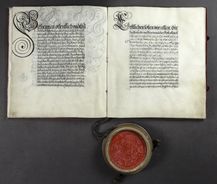
From the very beginning, crafts and trade flourished; from 1337 onwards, the guilds – which dominated the town’s economic life well into the early modern period – enacted regulations, starting with the butchers, followed in 1344 by the clothmakers, and in 1351 by the tailors and coat-makers. Merchants from Budweis were involved in the trade in iron goods, which came from the Upper Austrian market centre of Freistadt. Budweis itself exported, amongst other things, fat, fish, beer, honey, cheese and pitch; at the same time, the town developed into a transhipment centre for the increasing imports of salt from the Salzkammergut. Consequently, a late-Gothic salt storehouse was built in the north-west of the town in 1531. Once the Vltava had been made navigable, ships transported salt barrels downstream for the first time in 1552.
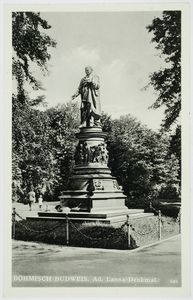
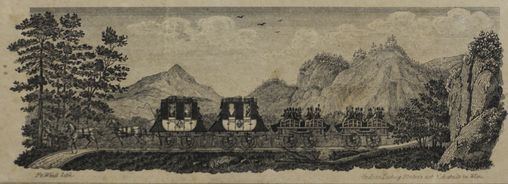
Following years of delay caused by the Coalition Wars, construction of Europe’s first horse-drawn railway began in 1832; it linked Budweis with Linz and paved the way for the onset of industrialisation. The Czech entrepreneur Adalbert Freiherr von Lanna (1836–1909) had ships built in the inland port of Budweis to transport salt from Gmunden, timber and agricultural produce down the Vltava to Prague and onwards along the Elbe via Tetschen-Bodenbach/Děčín to Germany. In 1847, the first factory was established in Budweis when the Viennese firm founded in 1804 by Carl Edler von Hardtmuth (1804–1881) relocated its production of pencils and earthenware tableware to Budweis.
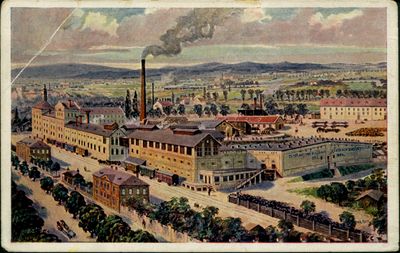
In 1895, the Český akciový pivovar (Bohemian Joint-Stock Brewery) was founded. The brewery quickly became the most important Czech enterprise in the city and throughout South Bohemia, supporting the emancipation efforts of the local Czech population, amongst other things, through financial support for the Czech education system and associations. In the 1930s, Budweiser beer was exported all over the world under the ‘Budvar’ trademark, which had been registered in 1930. Nationalised immediately after the Second World War, exports accounted for 73 per cent of total production in 1982.
Society
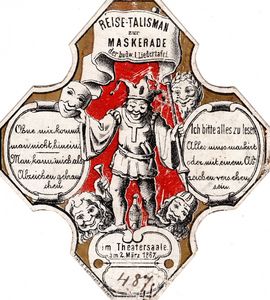
Notwithstanding the town’s Czech name, the population consisted of Germans and Czechs from the very beginning; the composition of the town council and the citizenry can be traced from 1302 onwards in the town register, which covers the period up to 1391. Whilst there was initially a clear German majority on the council, this gradually declined after 1350 due to Czech immigration. A German-speaking enclave developed around Budweis, which persisted, albeit with a declining trend, until 1945.
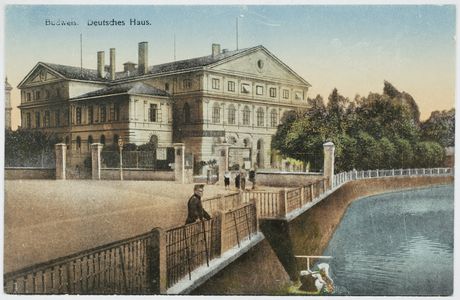
The division of the ‘Budweisers’ into Czechs and Germans, which took place in the Habsburg Monarchy during the second half of the 19th century, was also reflected in the association landscape against the backdrop of an ever-increasing emphasis on ethnicity and nationality. Between 1840 and 1948, there were more than 1,000 clubs in Budweis. In 1862, a German Gymnastics Club was founded, which ten years later took up residence in the newly completed Deutsches Haus. In 1897, the radical nationalist German Gymnastics Club ‘Jahn Budweis’ was established, followed in 1930 by the Christian-oriented German Gymnastics Club ‘Böhmisch Budweis’. All three clubs were incorporated into the Nazi ‘Budweis Gymnastics and Sports Association’ in 1938–39, which ceased to exist in 1945.
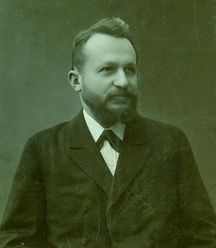
Between 1865 and 1918, the town’s German population consistently provided the mayor; the last person to hold this office being the liberal politician Josef Taschek, who came from a family of merchants in Budweis (in office 1903–1918); during his term of office, the Palace of Justice, the Municipal Museum and the Budweis Hospital were built. In 1902, Taschek – who had served as a member of the regional parliament from 1893 to 1901 – was awarded honorary citizenship of Budweis; as early as 1884, he had initiated the founding of the German Šumava Association, and he was also one of the initiators of the so-called Bohemian-Budweis Pact, which in 1914 sought to achieve an ethnic-national balance between Germans and Czechs in the city.
History of Religion and the Church
In 1784/85, as part of the Josephine reforms, the Dominican and Capuchin monasteries were dissolved. The Piarists moved into the Dominican monastery building (where they remained until 1873, after which the Redemptorists took over until 1949), after their original had been built between 1763 and 1767, had served as the residence of the city’s first bishop, Johann Prokop Schaffgotsch (in office 1786–1813), since 1786. Under Mayor Franz Eusebius Daublebsky von Sterneck, who reigned for 27 years and came from a long-established patrician family (1750–1815), who reigned for 27 years and came from a long-established patrician family, an episcopal seminary with a theological Institute was established in 1803 for the training of Catholic clergy .
Jews
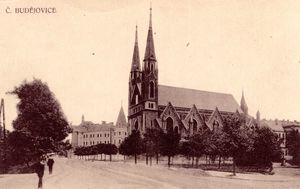
In 1341, King John of Luxembourg (reigned 1310–1346) granted Budweis the privilege of admitting two Jewish families, In 1377, a Jew named Muslinus Judeus is mentioned; three years later, there is already talk of a ‘communitas Judaeorum Budwicensium’ in Judengasse. An alleged ritual murder in the Lower Austrian village of Pleising served as a pretext for the Budweis town council in 1505 to expel the estimated 100 Jews on the orders of King Ladislaus II; it was not until the Revolution of 1848 that this ban on settlement was lifted. With the industrialist Emanuel Fürth (1814–1867) and his election as mayor, Jewish life was re-established in the town. Under the rabbinate of Adam Wunder (1817–1905), the synagogue was built in 1887–88. The last rabbi, Rudolf Ferda (1889–1944) was deported on 18 April 1942 to the concentration camp at Theresienstadt/Terezín and from there, on 16 October 1944, to the Auschwitz extermination camp, where he was murdered. Whilst Budweis still had 1,423 Jewish residents in 1925, only 32 of the 910 people deported survived the Holocaust .
Education and Science
The first documented evidence of the existence of a two-class town school at St Nicholas dates from 1373; this was soon followed by a Bohemian school at St Prokop. In 1762, as part of the Theresian reforms of primary and secondary education, the Piarists founded a Latin grammar school. In the second half of the 19th century, both national communities sought to establish their own schools; Johann Prokop, Count von Schaffgotsch, initiated the founding of an episcopal diocesan library, to which he bequeathed his private collection of 6,000 volumes after his death.
The councillor František Machnický (1513–1583) is regarded as the first chronicler of Budweis. The wealthy master baker Lukas Bernhard Schneider (1717–1782) wrote a ‘Brief Description of the Origin and Beginnings of the Royal, Free Mining Town of Bohemian Budweis…’. The historian and archivist Karl Köpl (1851–1932), who headed the town archive from 1880 to 1896, published the ‘Documentary Register of the Town of Budweis in Bohemia’ in 1901, which contains sources relevant to the town’s history for the period 1251–1391.
Notable figures born in Budweis include, amongst others, the Imperial Councillor and Field Marshal Rudolf von Colloredo (1585–1657), the Czech industrial magnate and railway pioneer Karl Adalbert Lanna (1805–1866), the ‘Father of the Bohemian Forest’ and the last German mayor of Budweis from 1903 to 1918, Josef Taschek (1857–1939), and the singer and signatory of Charter 77, Marta Kubišová (born 1942), whose ballad *Modlitba pro Martu* (Eng. *Prayer for Martha*) became a symbol of resistance against the bloody suppression of the Prague Spring in 1968.
Art History
Of the medieval town fortifications, the ‘Eiserne Jungfrau’ defence tower – dating from the late 14th century, though its present appearance dates from 1612 – and the Rabensteiner Tower, which combines Gothic and Renaissance elements, have survived. The parish church of St John and St Prokop dates back to the early 13th century, whilst its late-Gothic form dates from around 1461. The construction of the Dominican monastery, together with the Church of the Presentation of the Virgin Mary, also dates from the time the town was founded; the chancel and east wall of the transept were completed around 1300; the side aisle was added in the first quarter of the 14th century; the cloister and convent between 1340 and 1370; and the nave and transept between 1360 and 1370.
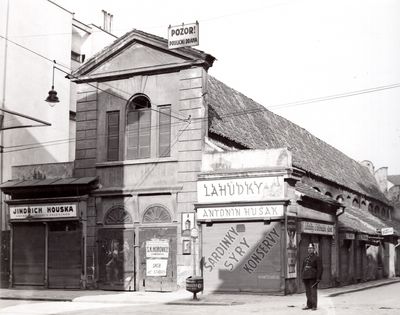
Even today, numerous town houses stand as architectural examples of the Late Gothic and Renaissance periods, whilst others were given Baroque or Neoclassical façades during later alterations. In 1554, the meat market, first mentioned in 1337, was completely rebuilt in the Renaissance style; the building, converted into a basilica-style structure with its 14 stalls, served its original purpose until 1899.
Between 1615 and 1621, the Capuchin monastery and St Anne’s Church were built in the early Baroque style. The origins of the three-nave St Nicholas’s Church date back to the time of the town’s foundation; it underwent a late-Gothic reconstruction between 1518 and 1535, but was completely destroyed by fire in 1641. Its present form dates back to the plans drawn up by the Italian architects Giovanni Cipriani and Francesco Canevale (1626–1669) between 1641 and 1649, who had the church redesigned as a simple Baroque building. The magnificent interior decoration was not carried out until after the establishment of the Diocese of Budweis in 1785 and the church’s elevation to cathedral status.
The economic boom in Budweis at the beginning of the 18th century was also reflected in a new wave of construction: The Samson Fountain, erected in the market square between 1721 and 1727 by the South Bohemian sculptor Josef Dietrich (1677–1753) and the stonemason Zacharias Horn (1679–1738), served as a water supply. Between 1727 and 1730, the Renaissance town hall was remodelled according to plans by Anton Erhard Martinelli (1684–1747). Behind the seminary at St Nicholas, the Baroque Chapel of the Agony of Christ was built between 1727 and 1731 on the site of the Gothic cemetery chapel, which had been demolished in 1727.
Evidence of community life and culture includes the former Deutsche Haus, built in 1871–1872 to plans by Ignaz Ullmann (1822–1897) in the Neo-Renaissance style on the banks of the Maltsch; the theatre, originally built in the Empire style, which was remodelled and extended after 1880; and the German Museum, built in the Neo-Renaissance style to a design by Viktor Schwerdtner (1846–1926) in the Neo-Renaissance style; and the building housing the Vorschusskasse, dating from 1935–1936.
History of Theatre and Music
It is thought that, towards the end of the 15th century, a literary brotherhood was founded in Budweis in the choir of St Nicholas’s Church; according to its statutes of 1610, its main task was to provide musical accompaniment for services at early Masses during Advent, as well as on Sundays and public holidays.
Travelling actors are first mentioned in 1735. Following the opening of the grammar school in 1762, biblical and classical plays were staged under the supervision of the Piarists; in 1799, W. A. Mozart’s (1756–1791) *The Magic Flute* was performed in a temporary theatre building. In 1819, a German theatre opened without a permanent company, where Czech plays were also staged. After 1918, the theatre passed into Czech ownership as the Jihočeské národní divadlo (South Bohemian National Theatre) (known as the Jihočeské divadlo since 1956).
History of Literature and the Press
The first newspaper in Budweis was *Der Löwe*, a German-language publication briefly published in 1848 by the municipal official Ernst Franz Richter (1817–1870), which, in the spirit of regional patriotism, promoted the Bohemian lands as the shared homeland of Czechs and Germans. In 1852, Richter founded the *Anzeiger aus dem südlichen Böhmen*(Southern Bohemia Gazette), which gave rise to the *Budweiser Wochenblatt* in 1857 and later to the *Budweiser Kreisblatt*. Between 1901 and 1938, the German-language *Südböhmische Volkszeitung* was published; its editorial team, led by Josef Eibensteiner (1884–1945), took a staunchly anti-communist stance, and it also uncritically supported Konrad Henlein (1898–1945), the leader of the Sudeten German Party, who was close to the Nazis. Following the annexation of the Sudetenland on 1 October 1938, this newspaper ceased publication. The Budivoj, which had been published since 1864, stood in stark contrast to the German newspapers. In 1895, the independent Jihočeské listy was added, soon becoming the most important Czech-language periodical. Among the South Bohemian newspapers, the communist *Jihočeská pravda* gained a monopoly in 1945 (renamed *Jihočeské listy* in 1992 and *Českobudějovický deník* in 2007).
In 1915, the writer Jaroslav Hašek (1883–1923) stayed at the local military hospital, where he found inspiration for his novel *Osudy dobrého vojáka Švejka za první světové války* ( *The Adventures of the Good Soldier Švejk during the First World War*).
Bibliography
- Zdeněk Šimeček: České Budějovice v období husitském [České Budějovice in the Hussite Period]. In: Jihočeský sborník historický 34, 1965, pp. 14–30.
- Ibid.: The Trade Ledger of the Budweis Iron Merchant Nikolaus Bartholome, 1560–1568. In: Mitteilungen des Oberösterreichischen Landesarchivs 17, 1993, pp. 31–203.
Karl Adalbert Sedelmayr: Budweis, the Budweis and Stritschitz Language Islands. Miesbach 1979. - Daniel Kovář: The Tragedy of Ondřej Puklic. The Mayor of Budějovice and his Murder on 25 May 1467 [The Tragedy of Ondřej Puklitz. The Mayor of Budweis and his Assassination on 25 May 1467]. Prague 2006.
- Ibid.: *Fundatio civitatis: The Birth of the Royal Town of České Budějovice*. České Budějovice 2015.
- Karl Köpl: Charter Book of the Town of Budweis in Bohemia, Volume I: 1251–1391. Prague 1901.
Historical Atlas of the Towns of the Czech Republic, Vol. 3: České Budějovice. Prague 1996. - Václav Bůžek: Bohemian Budweis. In: Joachim Bahlcke, Winfried Eberhard, Miloslav Polívka: Historical Sites – Bohemia and Moravia. Stuttgart 1998, pp. 46–51.
- Karl Kratochwil, Alois Meerwald: A Local History of the Mining and District Town of Bohemian Budweis, with a Collection of Old and More Recent Legends. Bohemian Budweis 1930.
- Marek Šmíd: Šimon Bárta. Bishop of České Budějovice from 1920 to 1940. Prague 2025.
- Jan Štumbauer: A History of Physical Education and Sport in České Budějovice from the Mid-Nineteenth Century to 1938. Prague 1938 (postdoctoral thesis).
- Jeremy King: Budweisers into Czechs and Germans: A Local History of Bohemian Politics 1848–1948. Princeton 2002.
- Jeremy King: From Budweisers to Czechs and Germans. In: *Jihočeský sborník historicky* 71, 2002, pp. 81–97.
- Daniel Kovář, Pavel Koblasa: Through the Streets of České Budějovice (Names of Public Spaces in Budweis in the Past and Present). České Budějovice 1998.
- Jiří Dvořák et al.: České Budějovice under the Swastika. 2nd ed. Prague 2016.
- Daniel Kovář, Roman Lavička: The Dominican Monastery in České Budějovice. České Budějovice 2017.
- Jiří Petráš: The End of Coexistence between Czechs and Germans in České Budějovice. In: Jihočeský sborník historický, Vol. 66–67, 1997, pp. 147–172.
Periodicals
- Budweiser Zeitung kramerius.cbvk.cz/periodical/uuid:b6ac1138-99ca-4e41-92ef-2d81883c0729
- Budweiser Kreisblatt https://kramerius.cbvk.cz/periodical/uuid:b6ac1138-99ca-4e41-92ef-2d81883c0729
- Jihočeský sborník historický [South Bohemian Historical Collection]
- Archaeological research in South Bohemia
Web links
- https://encyklopedie.c-budejovice.cz (official website on the history of the town of České Budějovice)
- https://www.muzeumcb.cz South Bohemian Museum, České Budějovice)
- https://www.ceskearchivy.cz/statni-okresni-archivy/ceske-budejovice/soka-cb-uvod (website of the České Budějovice District Archives)
- https://www.difmoe.eu/periodical/uuid:725e3570-aa6c-4fb3-a9f3-cec8e48b6717 (Digitalised issues of the Südböhmische Volkszeitung)
- https://www.ceskam.cz/userfiles/files/JIRI%20PLOYHAR%20VYSTAVA%20CBUDEJOVICE%202020.pdf (Photographic documentation of the end of the war in May 1945 in Budweis)
- https://www.pametnaroda.cz/de/johanek-peter-1937 (Interview with the medievalist and local historian Peter Johanek, who was born in Prague in 1937 but had close family ties to Budweis and experienced the expulsion of the Germans there)
- https://www.herder-institut.de/bildkatalog/wikidata/Q8311385 (Images of Budweis from the Herder Institute’s image archive, Marburg)
Notes
[1] Source for the years 1832–2015: Encyklopedie České Budějovice, available at https://encyklopedie.c-budejovice.cz/clanek/obyvatelstvo (21 August 2024).
[2] Source: Czech Statistical Office: Population figures for municipalities – as at 1 January 2024, Prague 2024.
Citation
Thomas Krzenck: Budweis/České Budějovice. In: Online Encyclopaedia on the Culture and History of Germans in Eastern Europe. 2025. URL: ome-lexikon.uni-oldenburg.de/p32357 (accessed 24 October 2025).
Terms of use for this article
Copyright © University of Oldenburg and the Federal Institute for the Culture and History of Germans in Eastern Europe (BKGE), all rights reserved. This work was produced as part of the project ‘Online Encyclopaedia on the Culture and History of Germans in Eastern Europe’ and may be reproduced and published provided the rights holders’ consent has been obtained. Please contact:
If you have any specialist comments or additions to the text, please contact the editorial team, citing relevant literature and source references.