

Königgrätz/Hradec Králové
Königgrätz/Hradec Králové
Hradec is the Old Czech diminutive for ‘small castle’. A fortified complex has been documented here since the end of the 10th century as the administrative centre of the Přemyslids, and was subsequently extended (1073: castrum Gradec). The German name Grätz was derived from this in the 12th century (1259: Gretz; 1352: Grecz). From 1373, the town, which served as a dower town for Bohemian queens, was given the Czech suffix Králové (the genitive form of the noun králová = the king’s consort), Latin Reginae (Hradecz regine), German Königin (1557 Khunigin Gract). The German name was later shortened to Königgrätz (1568 Khuniggräcz).
Location
Králové Hradec is situated at50° 13′ north latitude and15° 50′ east longitude, approximately 115 km east of Prague/Praha.
Topography
This town in north-eastern Bohemia is situated on the upper reaches of the Elbe, at the point where the Adler (Orlice) flows into it, in the foothills of the Krkonoše Mountains at an altitude of 235 metres above sea level.
Political and administrative affiliation
Czech Republic. Administrative centre of the Hradec Králové Region (Královéhradecký kraj) and seat of the diocese.
Common symbolism
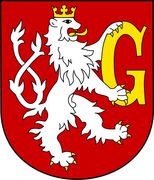
From 1632 onwards, the double-tailed Bohemian lion is attested in the town seal; furthermore, another emblem dates from this period – the capital letter ‘G’, which is thought to be derived from the name ‘Grecz ’. Both emblems were used side by side until the end of the 17th century. Today, the town’s coat of arms features, on a red shield, a snarling, double-tailed silver lion with a golden crown, tongue and claws, holding the golden letter ‘G’ in its forepaws.
Middle Ages
A sustained Slavic settlement has been documented in archaeological and written sources since the 6th century. The origins of Königgrätz itself date back to the later phase of the Middle Hillfort Period, at the end of the 9th century or in the first half of the 10th century. This was linked to the development of Přemyslid administrative centres from the time of the Bohemian Prince Boleslav I (reigned 935–972). Both the courses of the Adler (Orlice) and Elbe (Labe) rivers, as well as the extensive marshlands, provided protection for the early medieval fortified settlement, which covered 13 hectares, and for the castle, the existence of which is reliably attested from the 10th century onwards. First mentioned in 1073 in connection with the founding charter of the Benedictine monastery at Opatovice (Opatovice), Königgrätz was strategically situated at an important ford on the trade route leading from Kraków to Prague. From the 12th century onwards, the castle, with its independently fortified acropolis, served as the princely administrative seat of the Přemyslids.
In 1225, the Bohemian King Přemysl Ottokar I (reigned 1197/1204–1230) several plots of land situated below the castle to the citizens of Königgrätz, thereby enabling the expansion of the gradually emerging town within the suburbium of the Přemyslid castle site, as well as its further administrative organisation in accordance with Magdeburg Law. Königgrätz is thus – alongside Moravian Neustadt/Uničov (1223) and Troppau/Opava (1224) – one of the oldest towns with municipal rights in Bohemia. In 1306, the Bohemian King Rudolf VI of Habsburg (who reigned as King of Bohemia from 1306 to 1307) bestowed the town upon his wife, Elizabeth of Poland-Kalisz (1261/63–1304), the widow of King Wenceslaus II (reigned 1278–1305), the town as a dower (known as ‘Hradecz reginae’ from 1307). In 1308, following the death of her husband, Elizabeth moved with her entire court to Königgrätz, which grew to become a major cultural centre.
By around 1400, the town – comprising several suburbs and divided into four quarters – was fully developed, complete with its city walls and four gates. There is evidence of a town hall dating from 1418. The first hospital in Königgrätz was founded in 1344 in the Prague suburb; this was followed in 1379 by another – associated with the Chapel of St Anthony – in the Mauter suburb.
During the Hussite Wars (1419–1434), Königgrätz was briefly occupied in 1420 without resistance by King Sigismund of Luxembourg (1368–1437) and his crusaders, who were marching towards Prague . From 1423 onwards, it developed – alongside Tábor in South Bohemia – into a centre for the radical Hussites in East Bohemia ( the Orebites).
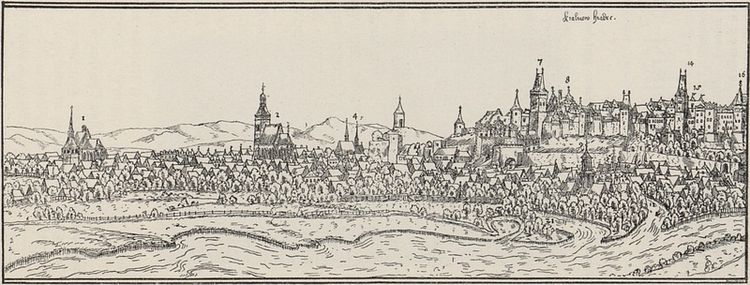
Modern times
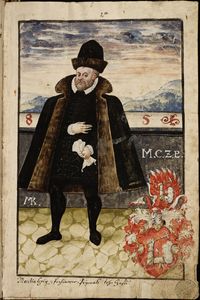
Martin Cejp, who came from one of the town’s wealthiest families, served as mayor on three occasions (including from 1577 to 1590); it was under his leadership that the town acquired its Renaissance architectural character. In 1543, Königgrätz was regarded as the richest town in Bohemia after Prague and Kuttenberg/Kutná Hora.
A great fire in 1586, the plague in 1599 and the course of the Thirty Years’ War – which is only very patchily documented in the sources for Königgrätz – inflicted great financial and material damage on the town, which probably had a population of 7,000–8,000 inhabitants prior to 1618, suffered great financial and material damage as a result of imperial occupation and the subsequent Swedish capture, through quartering, contributions, confiscations and looting. Following the defeat of the Protestant Bohemian estates at the Battle of White Mountain in 1620, the recatholisation also swept through the former Hussite stronghold and led, in two waves in 1626 and 1628, to the emigration of non-Catholic citizens, whose property was subject to confiscation.
During the era of the Theresian and Josephine reforms, the Habsburgs’ decision to build a modern fortress in Königgrätz shaped the town’s development for more than a century.
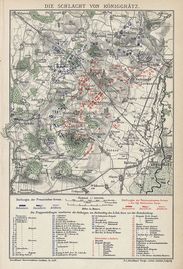

The Battle of Königgrätz on 3 July 1866 decided the question of supremacy within the German Confederation between Austria-Hungary and Prussia. After six hours of fierce fighting in one of the greatest battles of the 19th century, the Prussian troops emerged victorious, paving the way for the proclamation of the German Empire in Versailles in 1871. 178,000 Austrians and 20,800 Saxons on the Prussian side faced 221,000 soldiers.
The entrepreneur, long-standing town chronicler and local politician Karel Collino (1818–1892) rendered great services during the necessary modernisation of the fortified town. The lawyer, National-Liberal member of the regional parliament and poet František Ulrich (1859–1939), who held the office of mayor from 1895–1929, played a decisive role in Kinggrätz’s rise after 1918 to become the ‘Salon of the Republic’, as he ensured the preservation and utilisation of the area surrounding the historic town centre in collaboration with leading Czech architects.
Contemporary History
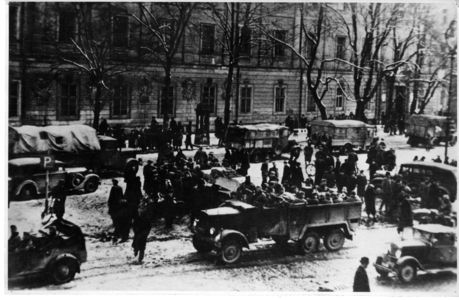
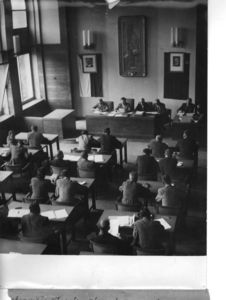
During the First World War, Königgrätz became a medical treatment centre for an ever-increasing number of wounded frontline soldiers, whilst the population suffered from severe shortages of supplies, refugees from Galicia poured into the town and infectious diseases spread. The general strike called by the Social Democrats in January 1918 in protest at the catastrophic supply situation marked the beginning of an eventful year; a further general strike on 14 October culminated on 29 October in a peaceful mass rally on the Großer Platz in support of an independent Czechoslovakia, which had been proclaimed in Prague the previous day.
Three months after the occupation of ‘the rest of Bohemia’ by the National Socialist German Reich on 15 March 1939, a field office of the Secret State Police (Gestapo) was established in the town with around 40 staff, including Sudeten Germans, and a branch of the Reichsführer-SS’s Security Service was also established. From November 1939, the district leadership of the National Socialist German Workers’ Party (NSDAP) was also based in Königgrätz. On 1 April 1942, all local self-governing bodies were abolished by the occupying forces: 10 municipalities were incorporated into Königgrätz, which now had a population of around 58,000. The Czech mayor, Josef Pilnáček (1877–1949), was replaced by the German government commissioner Franz Heger (?–1945). The ‘Aryan Labour Front’, founded in November 1939 by the Czech engineer Bedřich Opletal (1912–1946), spread its National Socialist propaganda throughout Eastern Bohemia, but was particularly active in Königgrätz.
Following the liberation by American forces on 8 May 1945, a National Committee—comprising the Communist Party of Czechoslovakia (KPTsch), Social Democrats, National Socialists, the People’s Party and, later, independents.
An Extraordinary People’s Court, established in June 1945 (Mimořádný lidový soud; MLS), established in June 1945, tried 1,262 people as war criminals or collaborators (653 Germans, 445 Czechs) up until 1947 and sentenced nine people to death.
By October 1946, more than 3,000 Germans still living in and around Königgrätz had been resettled in seven transports to the Soviet (five transports) and American (two transports) occupation zones. In the 1946 parliamentary elections, the Communist Party of Czechoslovakia (KPTsch) also won in the town, securing more than 36 per cent of the vote; following the Prague February Coup of 1948, the Communists henceforth held sole power in Königgrätz as well, whilst political opponents were systematically persecuted, including in the show trial held in 1950 against Alois Hlavatý (1906–2001), who was alleged to be the leader of a 40-strong group accused of subversion and high treason.[1]
During the violent suppression of the Prague Spring in August 1968, Polish units, as part of the invading armies of socialist countries, occupied strategically important positions in Königgrätz, whilst the inhabitants protested vehemently against the occupation. In the subsequent so-called ‘normalisation’, the political conditions that had prevailed before the liberalisation of the 1960s ‘thaw’ were restored and, as it were, cemented in place, a state of affairs ‘confirmed’ by all elections since 1971, including those in Königgrätz. Attempts were made to resolve the pressing housing crisis by constructing several socialist prefabricated housing estates.
The Velvet Revolution – that is, the transition from real socialism to a democratic form of government – began in Königgrätz in November 1989, three days after the events in Prague, on the initiative of the actors and staff of the municipal theatre, who were joined shortly afterwards by most university students. All these actions culminated on 27 November in a two-hour general strike, which also brought about the political turnaround in Königgrätz.
Economy
Owing to its favourable location, Königgrätz emerged in the Middle Ages as an important centre of trade and transhipment (including for lead and silver) between Breslau/Wrocław, Prague and Nuremberg. A major trade route linked the town with Lusatia. The ongoing industrialisation in Bohemia had little impact on Königgrätz for a long time; even in the mid-1840s, there were only five factories and workshops, all of which produced or processed foodstuffs (including coffee substitutes and liqueurs). From 1857, Königgrätz had a railway link (extended around 1870); the Trade Regulations, which came into force in 1859, led to the gradual decline of the guild-organised craft trades.
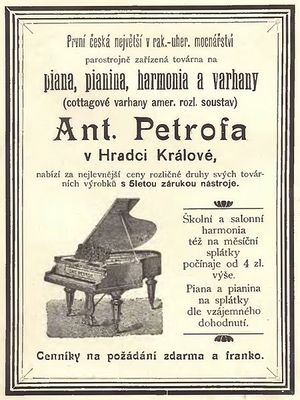
The instrument maker and musician Václav František Červený (1819–1896) worked in Königgrätz from 1842 onwards and expanded his workshop into a globally recognised factory with over 100 employees (1880). His sons later established branches in Russia and America. The piano maker Antonín Petrof (1839–1915), who was born in Königgrätz, opened the piano factory named after him in 1866. In 1899, Petrof was appointed a royal purveyor to the court and soon became the largest piano manufacturer in the Austro-Hungarian Empire.
Today, Königgrätz is a major economic centre in Eastern Bohemia, home to heavy engineering, chemical, food and beverage industries.
Society
After 1820, Königgrätz emerged as a patriotic centre of the Czech national movement. In the pre-March period, the German language dominated in public offices, schools and the army, despite the Czech majority of the population and their efforts towards linguistic and national emancipation – efforts which, however, received a visible new impetus in the revolutionary year of 1848/49. Germans have always played only a very marginal role in the town’s history as a whole. The language issue became a defining feature in the shaping of civil society (not only in schools and clubs). From the 1860s onwards, a broad range of Czech associations began to emerge (1865: foundation of the local gymnastics club Sokol [German: ‘Falcon’], Beseda [a discussion and educational society] in 1872, and the Dobroslav academic society in 1878).
History of Religion and the Church

As early as the 11th and 12th centuries, Königgrätz formed the centre of a parish district which was recognised at an early stage as a major parish and, from the 12th century onwards, as an archdeaconry; this district was of fundamental importance in north-eastern Bohemia and Glatz/Kłodzko, and which served as the ecclesiastical centre until the establishment of the Diocese of Leitomischl in 1344.
After the Prague metropolitan area, Königgrätz had the largest number of monasteries.
The triumph of the Reformation was initially hampered by the strong position of the Calistines and Altutraquists, but from 1562 onwards Lutheran influence grew steadily, partly due to the influx of clergy of a Lutheran persuasion. In the course of the Recatholisation, the Jesuits – who had been institutionally established in Königgrätz since at least 1636 – had the Baroque St Mary’s Church built between 1654 and 1666 to plans by the Lombard architect Carlo Lugaro (1615–1684).
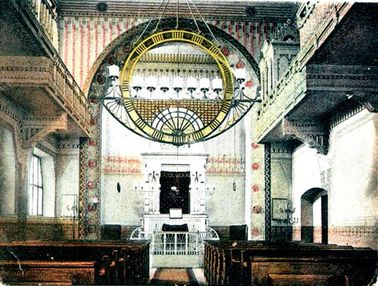
It is thought that no Jews were permanently resident in Königgrätz before 1620; a ‘Judengasse’ is mentioned only for the year 1508. An official register of religious affiliation from 1651 lists 37 Jews living in three houses, though they were, of course, forced to leave the town again as early as 1652.[4] From the 1740s onwards, there was a gradual revival of Jewish life; by 1787, a small Jewish community had re-established itself. By 1930, this community numbered 425 members, who had had their own synagogue since the beginning of the 20th century. During the period of the ‘Reich Protectorate of Bohemia and Moravia’ established by the Nazis (1939–1945), the Jewish citizens of Königgrätz (two per cent of the population) were systematically marginalised, persecuted and dispossessed; from late 1942, they were deported in two transports to Theresienstadt and subsequently to Auschwitz , where most of them perished in the Holocaust .
Education and Science
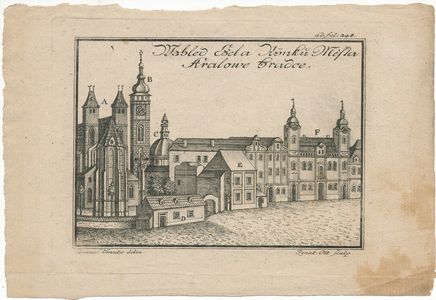
There is evidence of a parish school at the Church of the Holy Spirit dating from 1271 (1399: 30 pupils). Mayor Martin Cejp (1568–1599) supported the construction of the new building for the parish school, which was one of the oldest in Central Europe and where Johannes Campanus von Wodnian (1572–1622), who later became rector of Prague University, taught in 1622.
The influence of Bishop Johann Leopold von Hay (1735–1794), who was shaped by reformist Catholicism and influenced by the Enlightenment and the Josephine reforms, extended far beyond Königgrätz. On the basis of the General School Regulations of 1774, the municipal elementary school was converted into a secondary school (1777), which girls also attended from 1788 onwards. Following the dissolution of the Jesuit Order in 1773, the grammar school was ‘nationalised’ and later converted into a five-form-group educational institution. In 1896, the Municipal Library opened its doors, whilst the Municipal Historical Museum had already opened in 1880. In October 1945, a School of Medicine was established in Königgrätz to provide higher education; shortly before that, the Military Aviation Academy (Letecká vojenská akademie; LVA) had opened. Today, several higher education institutions are based in Hradec Králové. Foremost among these is the University of Hradec Králové, which currently has around 8,500 students and was established in 2000 following the renaming of the former University of Education. In addition, there is the School of Pharmacy and one of the medical schools of Charles University in Prague, as well as the School of Military Health Sciences at the University of Defence (Univerzita obrany).
The politician Rudolf Ritter Lodgman von Auen (1877–1962), who, in 1918, took part in the peace negotiations at Saint-Germain as Governor of the German-Austrian province of German Bohemia and sat in the Prague Parliament as Chair of the German National Party. Other notable figures born in Königgrätz include the Bohemian grammarian Johann Wenzel Pohl (1720–1790), the Czech linguist Václav Hanka (1791–1861), the Catholic poet Jaroslav Durych (1886–1962), the historian Václav Vladivoj Tomek (1818–1905), the film director Otakar Vávra (1911–2011) and the Dominican friar and later Archbishop of Prague, Cardinal Dominik Duka (born 1943).
Art History
The origins of what would later become the Cathedral of the Holy Spirit date back to the 14th century at the latest (choir 1339–1342), whilst the nave itself was completed in the 1360s under the wife of Emperor Charles IV. Elizabeth of Pomerania (1347–1393); the sacristy on the left-hand side of the choir was not completed until 1497. A conflagration destroyed the town and the church in 1484, and in 1639 Swedish troops plundered and pillaged the church. With the establishment of the Diocese of Königgrätz in 1664 as a bastion of recatholisation, the church was elevated to the status of a cathedral; in the course of extensive Baroque alterations in 1788–89, its formerly Gothic appearance was transformed. Between 1864 and 1876, the architect František Schmoranz (1814–1902), a leading figure of the Neo-Gothic movement, radically redesigned the church; Ludvík Lábler (1855–1930) completed the towers in 1901. The bishop’s residence on the market square was built, presumably based on a design by Marc Antonio Canevalle (1654–1711) dating from 1711. To the north of the market square, on the site of the old castle, a seminary was built between 1709 and 1714; it was later (1769–1790) rebuilt in the late Baroque style.
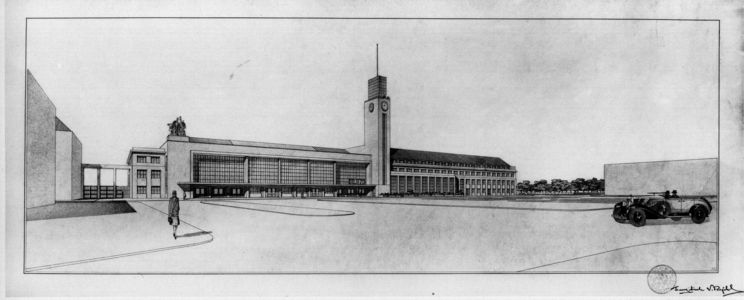
After 1900, the town councillors were able to enlist the pioneers of modern Czech architecture for the development of Hradec Králové: Jan Kotěra (1871–1923) created a significant Art Nouveau masterpiece in 1903–04 with the extension to the Hotel Urban, whilst Josef Fňouk (1884–?) applied this style to the interior design in 1911. Kotěra was also responsible for the construction of the prestigious museum (1909–1912). The library was also built in 1923 according to Kotěra’s plans. Furthermore, Josef Gočar (1880–1945) worked in Königgrätz (1929–1933: State Railway building,1932–1935District and Tax Office), as well as the brothers Václav (1884–1964) and Jan Rejchl (1899–1985) (including the railway station building and the School of Medicine on the banks of the Elbe). In 1962, the historic town centre of Königgrätz was listed as a protected monument.
History of Theatre and Music
The origins of the municipal theatre date back to 1790; six years later, a permanent venue was established in the building known as ‘Beim Goldenen Adler’, although performances were initially staged exclusively in German. In 1885, based on plans by the local architect Viktor Weinhengst (1855–1903), the theatre—built in the Neo-Renaissance and Classical styles and already bearing the name of the Czech grammar school teacher and theatre patron Václav Kliment Klicpera (1792–1859), was opened in Dlouhá Lane. The Philharmonic, founded in 1978, successfully continues the city’s long musical tradition.
History of Literature and the Press
The Königgrätz Manuscript, compiled after 1370, stands as a testament to the cultural flourishing under Charles IV and is a unique collection of Old Czech literature. Martin Kleinwechter’s work is documented for the period 1616–1620[5] is documented for the period 1616–1620; he was the first printer to publish, alongside humanist occasional prints, primarily works of Utraquist devotional literature. On the site of the Jesuit College stood the birthplace of Bohuslav Balbín (1621–1688), who, in 1672–1673, wrote his anonymously composed ‘Apologetic Dissertation in Defence of the Slavic, and in Particular the Bohemian, Language’ (“Dissertatio apologetica pro lingua Slavonica, praecipue Bohemica”) and vehemently defended the right to one’s own language. From the beginning of the 19th century, Königgrätz became a centre of the national movement. The printer, publisher and bookseller Jan Hostivít Pospíšil (1785–1868) published Czech books here, whilst Josef František Rautenkranz (1776–1817) taught Czech to prospective clergy at the seminary, using a grammar book of his own composition. The writer and playwright Václav Kliment Klicpera (1792–1859) worked as a grammar school teacher in Königgrätz from 1818 onwards and played a key role in establishing the town as a centre of Czech culture.
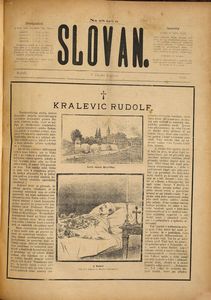
Karl Joseph Biener, Knight of Bienenberg (1731–1798), a lawyer, captain of the Königgrätz district and amateur historian, wrote a history of Königgrätz up to the year 1526 in 1780. The clergyman and historian František de Paula Švenda (Schwenda, 1741–1822), who was born in Königgrätz, attended the Latin school of the Jesuit College in his home town as the son of the mayor and studied theology in Brno andBrno and Prague, published a 15-volume chronicle of the history of Königgrätz at the Tibelli printing house between 1799 and 1818 – a work which remains of great cultural and historical value even today, given the lack of archival records. From the 1870s onwards, several Czech newspapers were published (including *Slovan* and *Ratibor*).
Bibliography
- Karl Joseph Biener von Bienenberg: History of the Town of Königgrätz. Prague 1780.
- Hugo Brückner: The Founding of the Diocese of Königgrätz. Königstein/Taunus 1964.
- Emanuel Poche (ed.): Umělecké památky Čech I [Artistic Monuments of Bohemia]. Prague 1977.
- Otto Urban: Memories of Hradec Králové. The Drama of 1866. Prague 1986.
- Jiří Mikulka: Dějiny Hradce Králové [History of the City of Königgrätz], 4 vols. Hradec Králové 1994.
- Gordon A. Craig: Königgrätz 1866 – A Battle That Shaped World History. 4th ed. Vienna 1997.
- Rainer Bendel, Thomas Krzenck, Königgrätz. In: Joachim Bahlcke, Winfried Eberhard, Miloslav Polívka (eds.): Handbook of Historical Sites: Bohemia and Moravia. Stuttgart 1998, pp. 269–274.
- Miroslav Richter, Eva Semotanová (eds.): Historický atlas českých měst [Historical Atlas of Bohemian Towns], Vol. 5: Hradec Králové. Prague 1998.
- Pavel Bělina, Josef Fučík: Válka 1866 [The War of 1866]. Prague–Litomyšl 2005.
- Jakub Potůček: Hradec Králové. Architecture and Urbanism 1895–2009. [Königgrätz. Architecture and Urbanism 1895–2009]. Hradec Králové 2009.
- Petr Grulich: The Hradec Králové Chamber of Commerce and Trade 1910–1949. (Protector of the economic and national-political interests of Czech entrepreneurs in north-eastern Bohemia.) [The Hradec Králové Chamber of Commerce and Trade 1910–1949 (Protector of the economic and national-political interests of Czech entrepreneurs)]. Hradec Králové 2015.
- Radek Bláha, Petr Grulich, Roman Horký et al.: Hradec Králové (History of Czech Towns) [Königgrätz (History of Czech Towns)]. Prague 2017.
Periodicals
- Yearbook of the East Bohemian Museum: https://www.muzeumhk.cz/eshop/periodika/kralovehradecko-11-2020.html
- Collection of Papers from the East Bohemian Archives: https://vychodoceskearchivy.cz/home/prezentace-archivu/publikace/publikace-soa
Web links
- City of Hradec Králové: https://www.hradeckralove.org
- Museum of Eastern Bohemia: https://www.muzeumhk.cz
- Gallery of Modern Art: https://www.galeriehk.cz
- Hradec Králové – University of Königgrätz: https://www.uhk.cz
- Battle of Königgrätz: https://www.koniggratz1866.eu/Uvodni-stranka.html
- Museum of the War of 1866: https://www.muzeumhk.cz/muzeum-valky-1866/zakladni-info-muzeum-valky-1866.html
- Cathedral of the Holy Spirit, Königgrätz: http://www.dekanstvihk.cz/wp/
State Regional Archive in Hradec Králové – State Regional Archive in Königgrätz: https://vychodoceskearchivy.cz/home/kontakty/statni-okresni-archiv-hradec-kralove/
Notes
[1] See Alois Hlavatý: *Z bláta do louže* [From the Mud to the Puddle], Hradec Králové 1996.
[2] Radek Bláha, Petr Grulich, Roman Horký et al.: Hradec Králové (Dějiny českých měst) [Hradec Králové (History of Czech Towns)]. Prague 2017, pp. 418, 449, 554.
[3] Czech Statistical Office: Population in municipalities – as at 1 January 2024. Prague: Czech Statistical Office. 17 May 2024.
[4] Cf. Lenka Matusíková, Zlatuše Kukanová, Magda Zahradníková (eds.): Register of subjects by faith from 1651. Hradec–Bydžov region [Register of subjects by faith from the year 1651. Königgrätz – Bydžov], Vol. 2, Prague 2000.
[5] Dates of birth and death cannot be determined.
Citation
Thomas Krzenck: Königgrätz/Hradec Králové. In: Online Encyclopaedia on the Culture and History of Germans in Eastern Europe, 2024. URL: http://ome-lexikon.uni-oldenburg.de/p32292 (as at 18 October 2024).
Terms of use for this article
Copyright © University of Oldenburg and the Federal Institute for the Culture and History of Germans in Eastern Europe (BKGE), all rights reserved. This work was produced as part of the project ‘Online Encyclopaedia on the Culture and History of Germans in Eastern Europe’ and may be reproduced and published provided the rights holders’ consent has been obtained. Please contact:
If you have any specialist comments or additions to the text, please contact the editorial team, citing relevant literature and source references.